
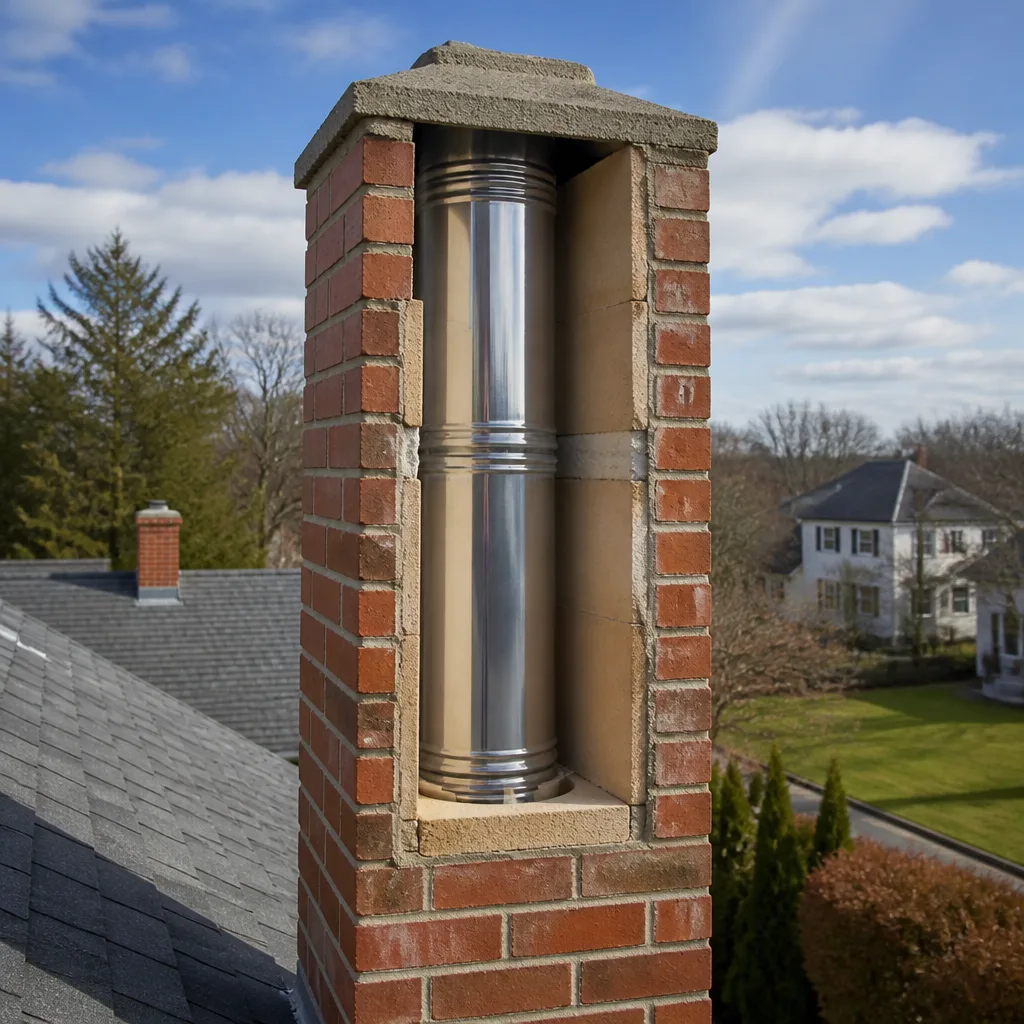
 Flue relining
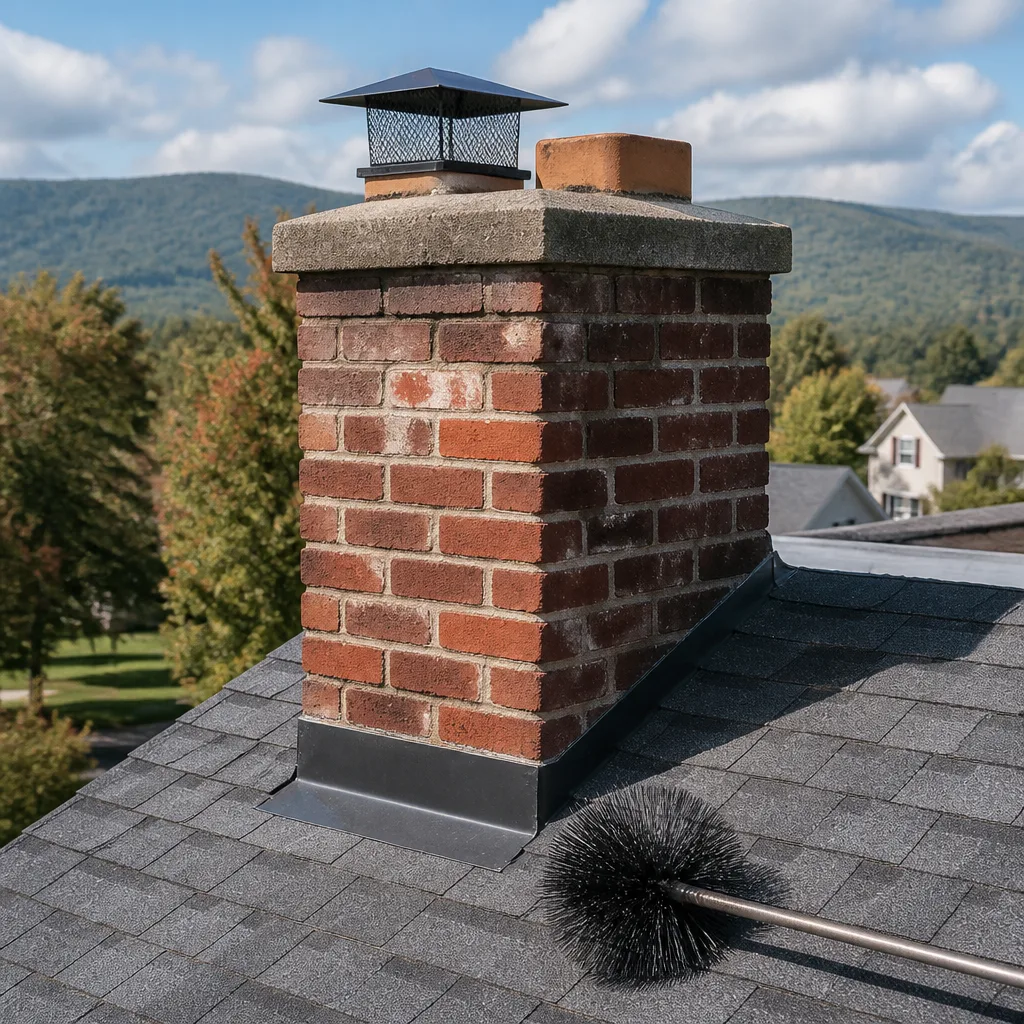 Sweep & inspection
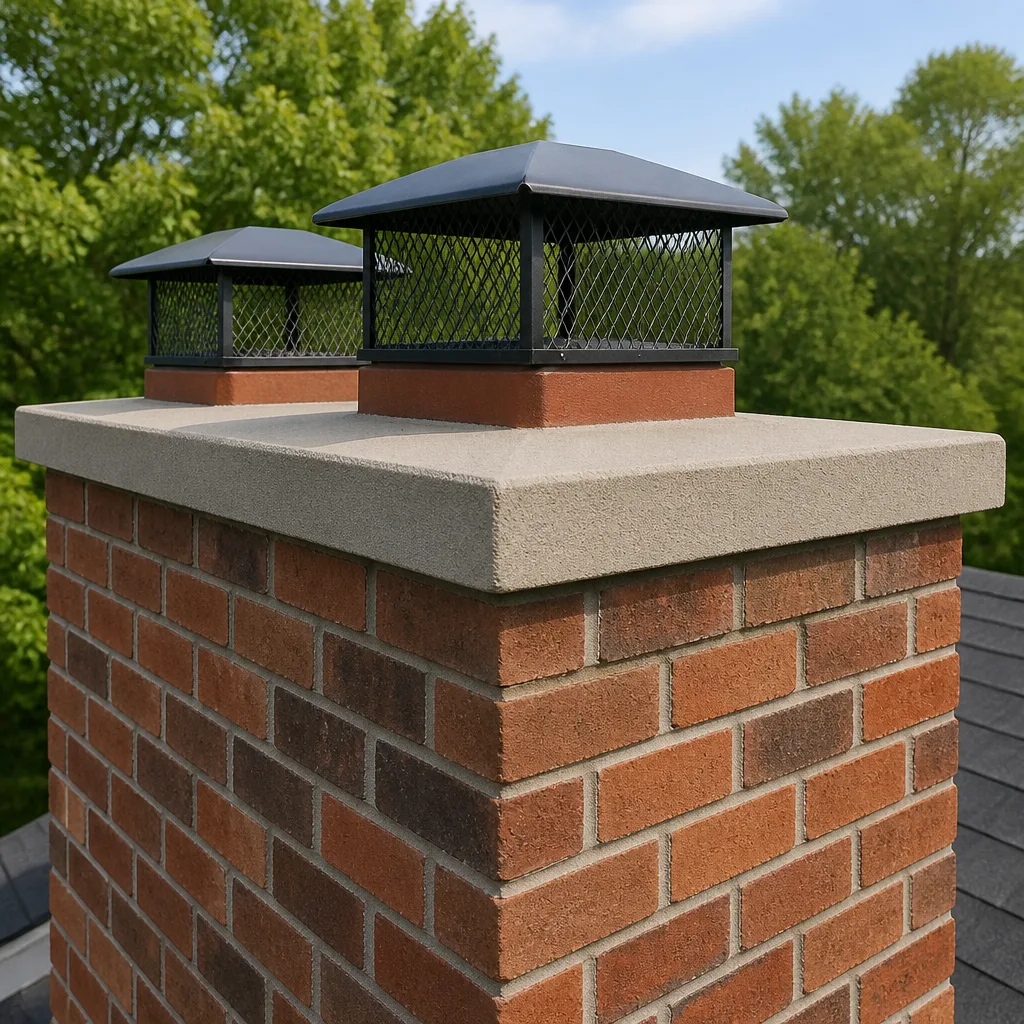 Caps & crowns
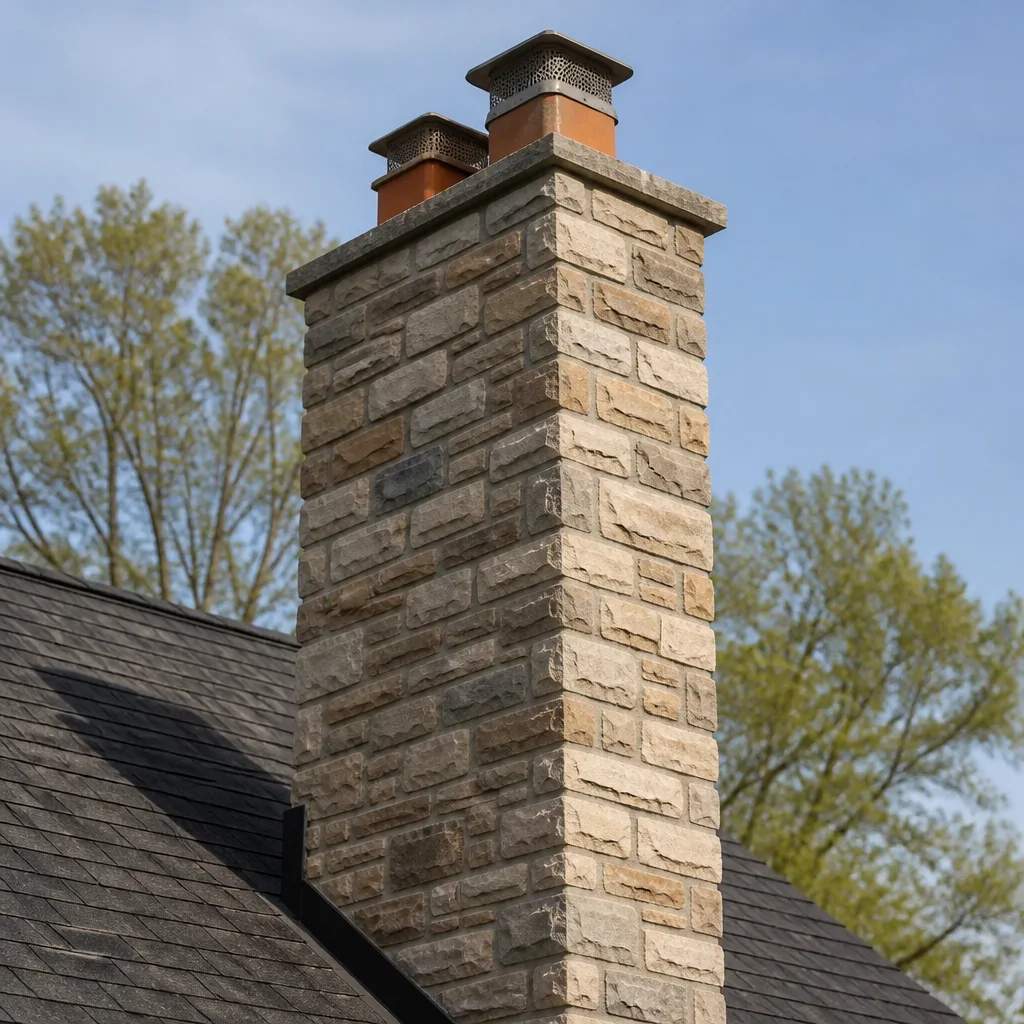 Masonry repair
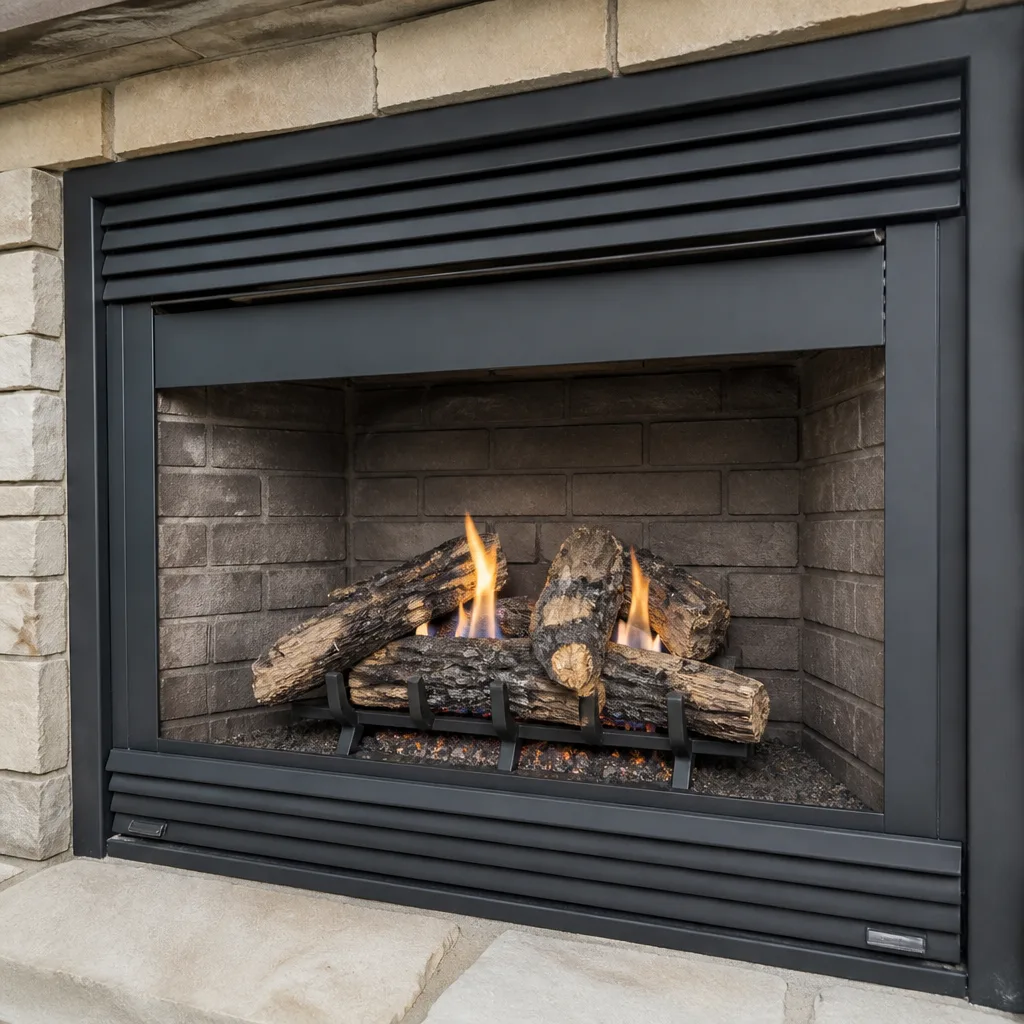 Gas fireplace service
Level 1 sweep and inspection to the NFPA 211 annual standard - flue, crown, cap, and flashing checked and photographed
Chimney sweep logs do not sweep chimneys. They loosen some creosote - which then falls where a brush and vacuum still have to collect it.
DuraFlex Flue Liner Replacement: The Woodland Hills Owner’s Guide
If you have a DuraFlex liner that’s cracked, corroded, or pulling apart at the seam, Hadley Chimney Woodland Hills stocks DuraFlex-compatible replacement components and installs them in Woodland Hills homes, typically for $2,200 to $4,800 depending on the liner diameter, length, and whether we’re relining the full flue or replacing a section. Most replacements are completed in a single visit, and we carry the common 4-inch through 8-inch smooth-wall and corrugated profiles on the truck. The way homeowners usually find us: a sweep or home inspection flags a failing liner, or they notice flaking metal in the firebox, or a gas appliance starts throwing a draft error. You might also smell exhaust in the house on windy days, which is a sign the liner has a breach and combustion gases are backing into the living space instead of venting up and out.
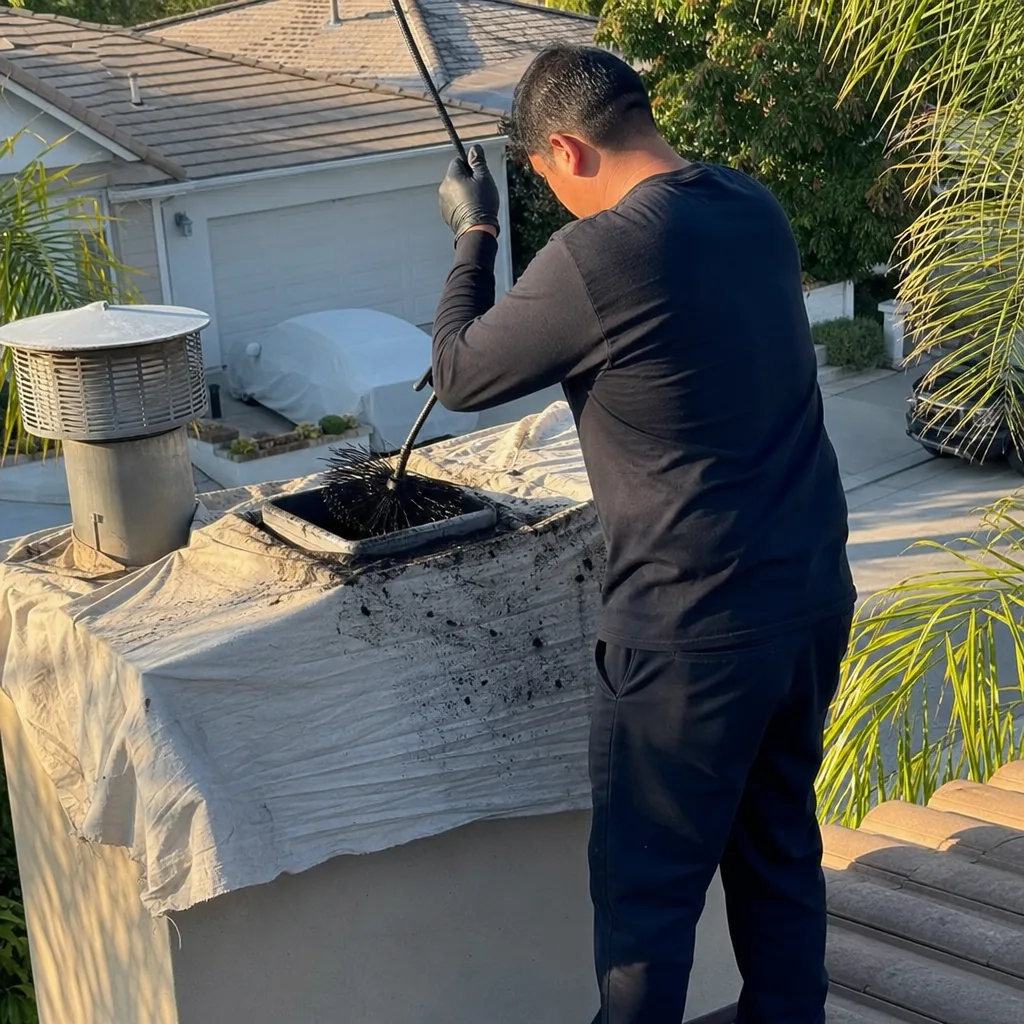
Here’s what we’d tell you if you called us this afternoon: a compromised DuraFlex liner is not a cosmetic issue. It’s the barrier between your flue gases and the framing around your chimney chase. When it fails, you’re asking the masonry or wood framing to do a job it was never designed for. We don’t want anyone in Woodland Hills finding that out the hard way.
Which DuraFlex Models This Applies To
DuraFlex is a brand line from Olympia Chimney, and the most common configurations we see in Woodland Hills are the 316L stainless steel smooth-wall liners and the corrugated flex versions used for both masonry chimney relining and factory-built fireplace retrofits. The compatibility gotcha most homeowners hit: a DuraFlex liner is not universal. You need to match the diameter to the appliance’s BTU output and the flue’s actual inside measurement, not the old liner’s outside dimension. We see a fair number of DIY attempts where someone orders a 6-inch liner because the old one looked like a 6-inch pipe, then it kinks or won’t seat because the real pass-through is closer to 5.5 inches or the offset is too tight for a rigid section.
Identifying what you have takes about two minutes. Look for the etched or printed label near the top section of the liner, which carries the series marking, or measure the inside diameter of the existing pipe opening. If the label is gone, which happens often after a decade of heat cycling, we’ll pull a section at the first joint and match it by profile and wall thickness. For Woodland Hills, we typically recommend genuine DuraFlex components for the liner body because the alloy spec and ridge profile matter for sealing and draw, but we’re honest about aftermarket connectors and caps where a quality equivalent does the same job for less. We are an independent installer; we’re not affiliated with DuraFlex or Olympia Chimney, which means we’re free to tell you when a part is worth the OEM premium and when it isn’t.
Most flues in this part of the San Fernando Valley fall into the 5-inch to 7-inch range, with 6-inch smooth-wall being the workhorse. If you’re not sure what you have, call us and we’ll talk you through how to read the old liner or the appliance tag so you know before we even schedule.
Styles & brands we work with
Signs Your DuraFlex Flue Liner Replacement Is Failing
- Flaking or peeling metal in the firebox. As the stainless steel cycles through Woodland Hills summers and cool, damp winters, the metal expands and contracts. When the protective oxide layer breaks down, you’ll see small silver or rust-colored flakes at the base of the chimney. That’s the liner shedding.
- A drafty smell when the fireplace isn’t in use. The liner is the sealed channel that carries exhaust up and out. When it splits at a seam or pinholes, the chimney becomes a two-way street, and odors from the flue interior or even attic air can push down into the room.
- Visible cracking or separation at the joints. This is the one we see most in Woodland Hills Warner Center tract homes from the 1960s and 70s. Those original riser sections were sometimes joined with lower-grade connectors that corrode first. A gap at a joint is a breach.
- Yellow or lazy flames on a gas log set. If your vented gas logs used to burn crisp and blue and now they’re soft and yellow, the draft isn’t pulling correctly. A compromised liner reduces the venting action, and the combustion quality drops with it.
- White staining or efflorescence on the chase exterior. When liner leaks allow moisture and acidic flue gases to contact masonry, the salts in the brick or stone wick outward and leave chalky white streaks. It’s a tell we look for on nearly every Woodland Hills inspection.
None of these are things to diagnose from the ground with binoculars. The evidence lives inside the flue, and that’s why every Hadley inspection includes a camera run so you can see the condition of your liner on the spot.
See the difference
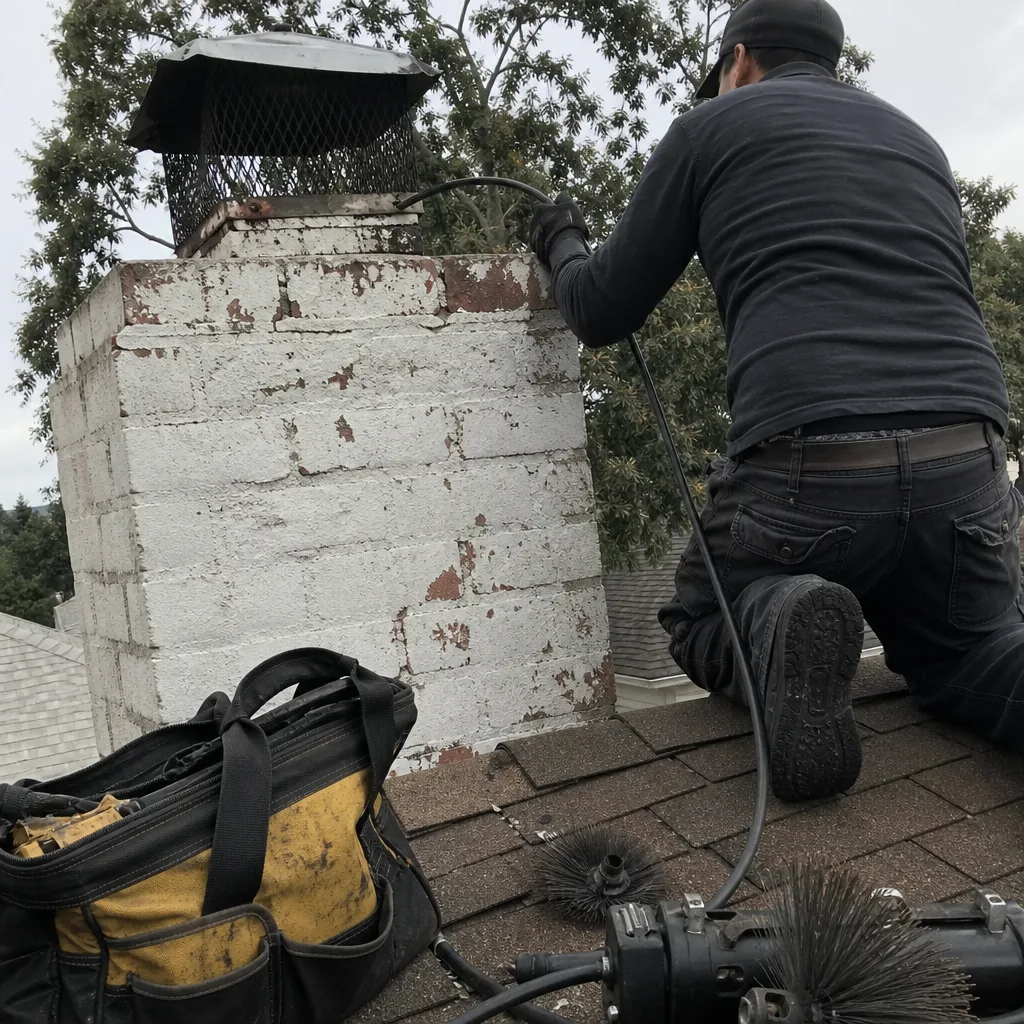 Before
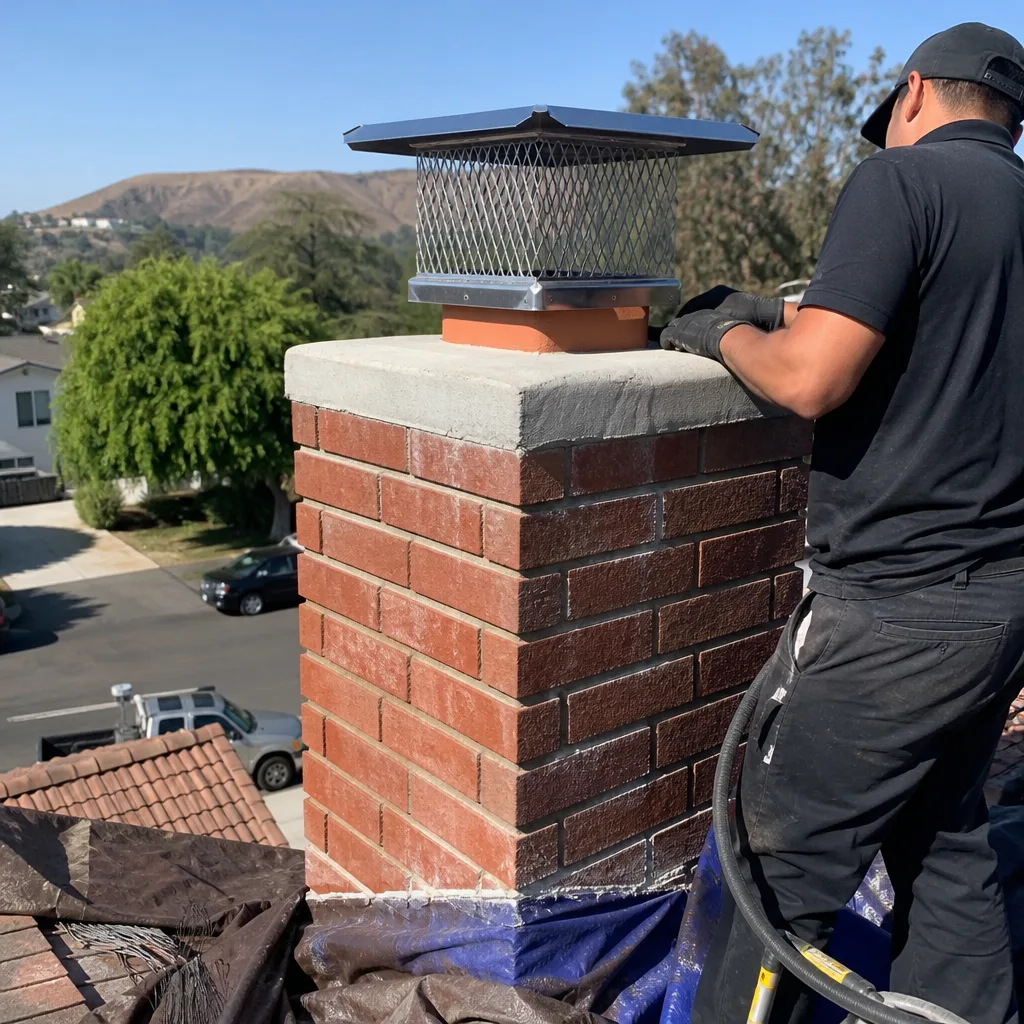 After
After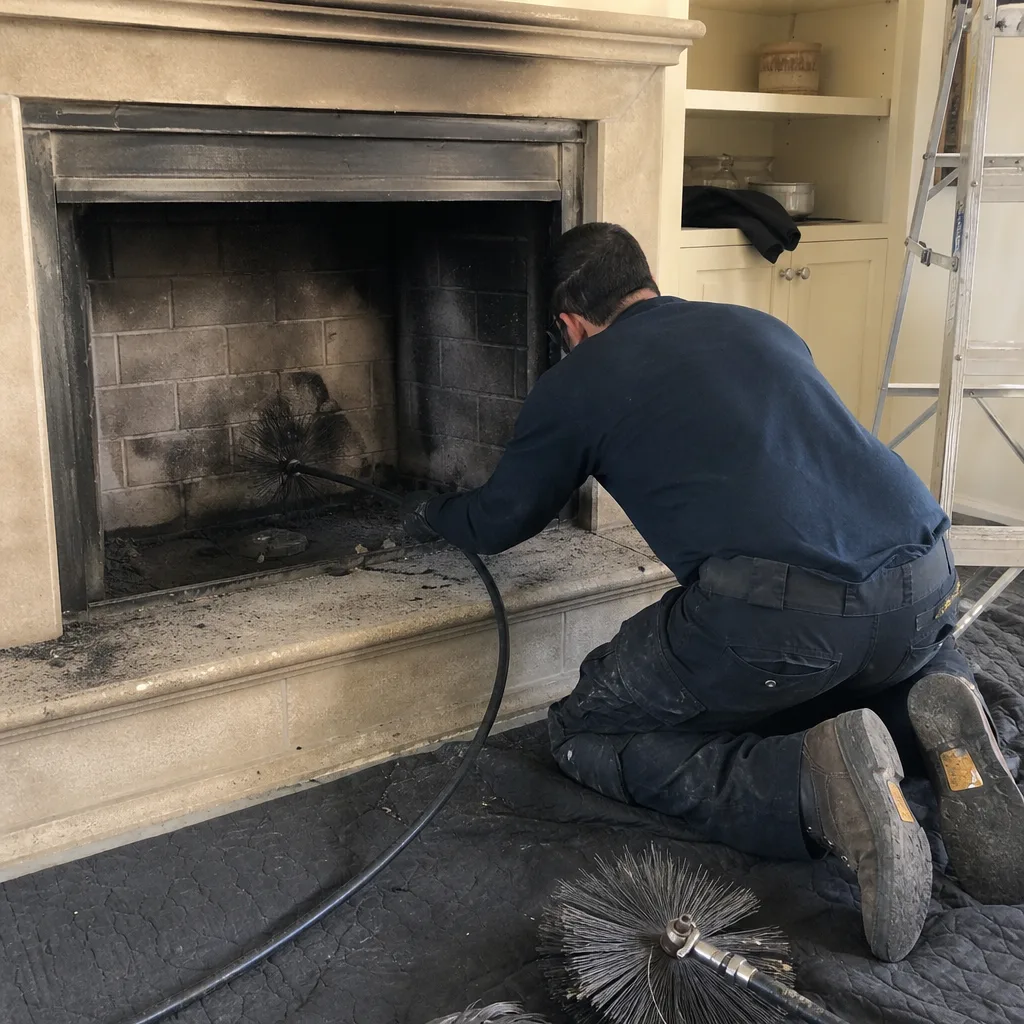 Before
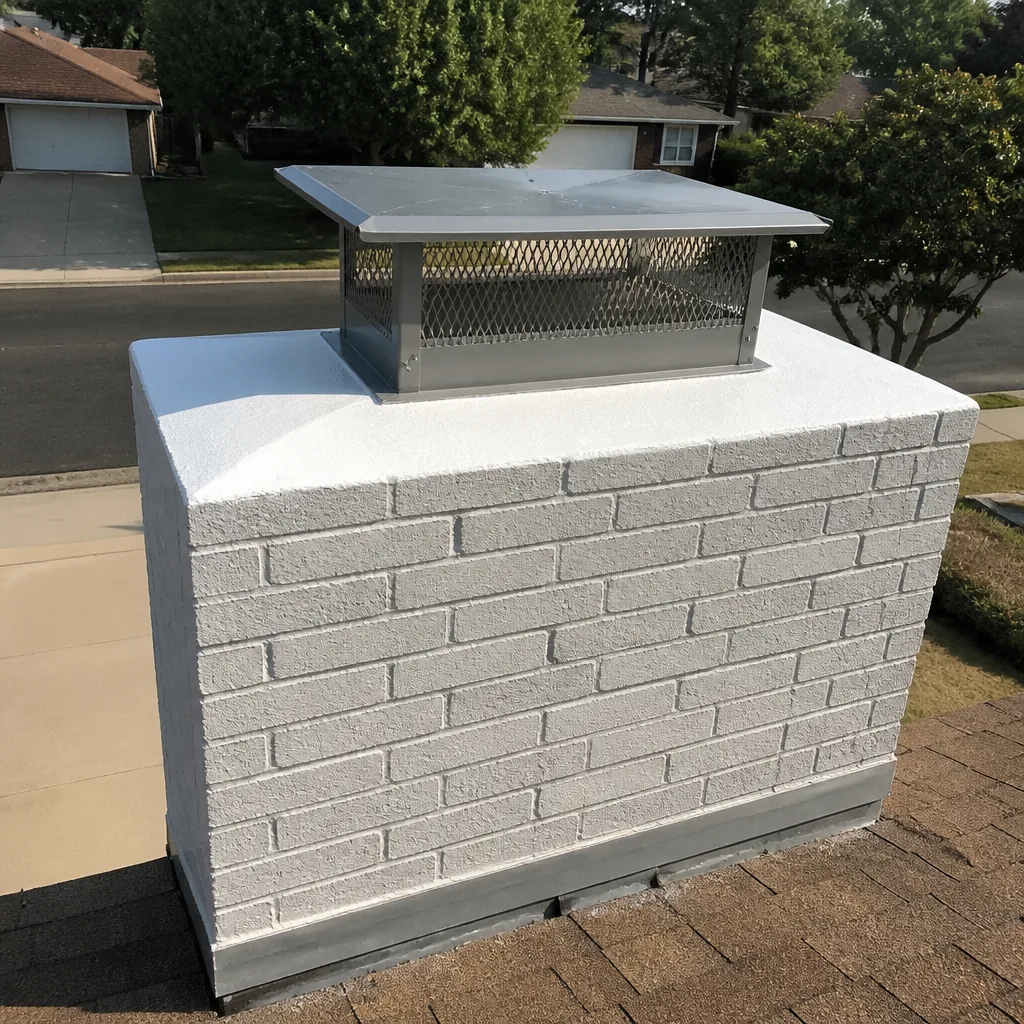 After
After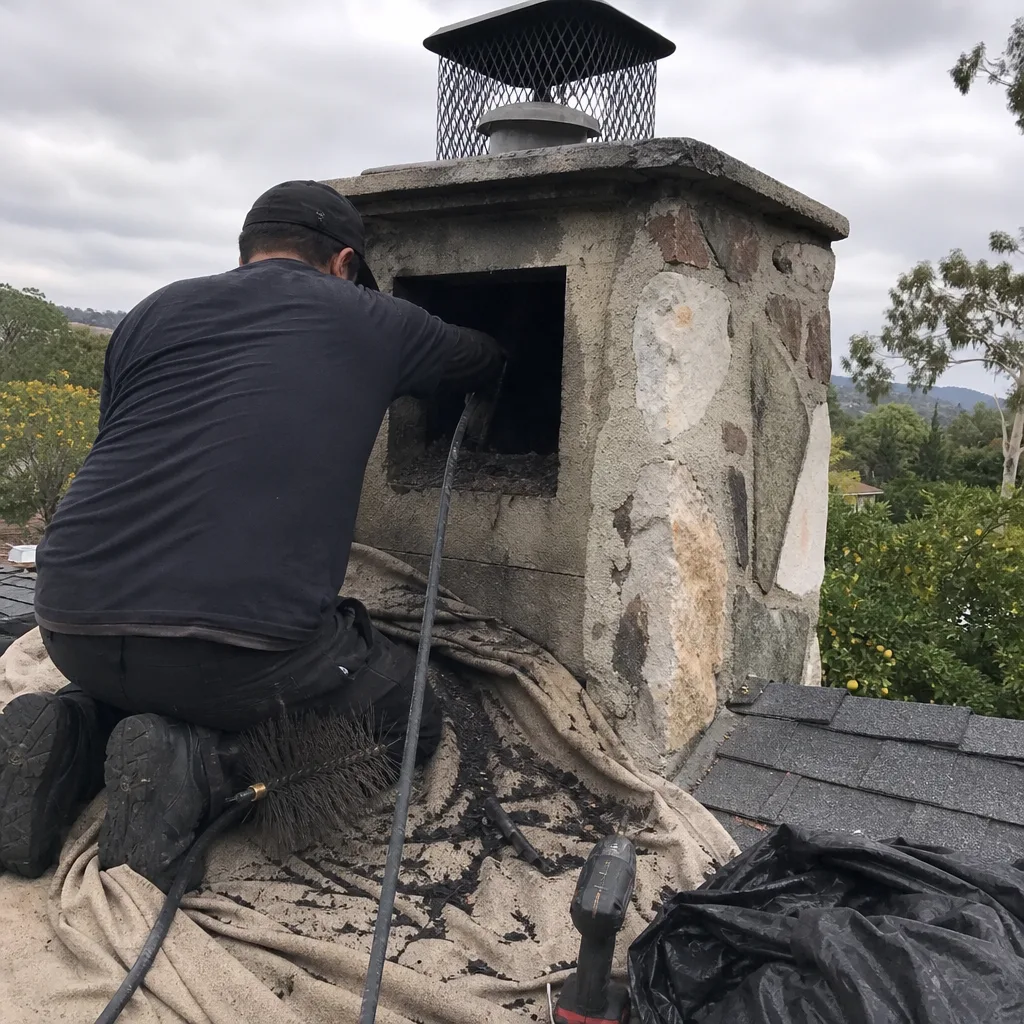 Before
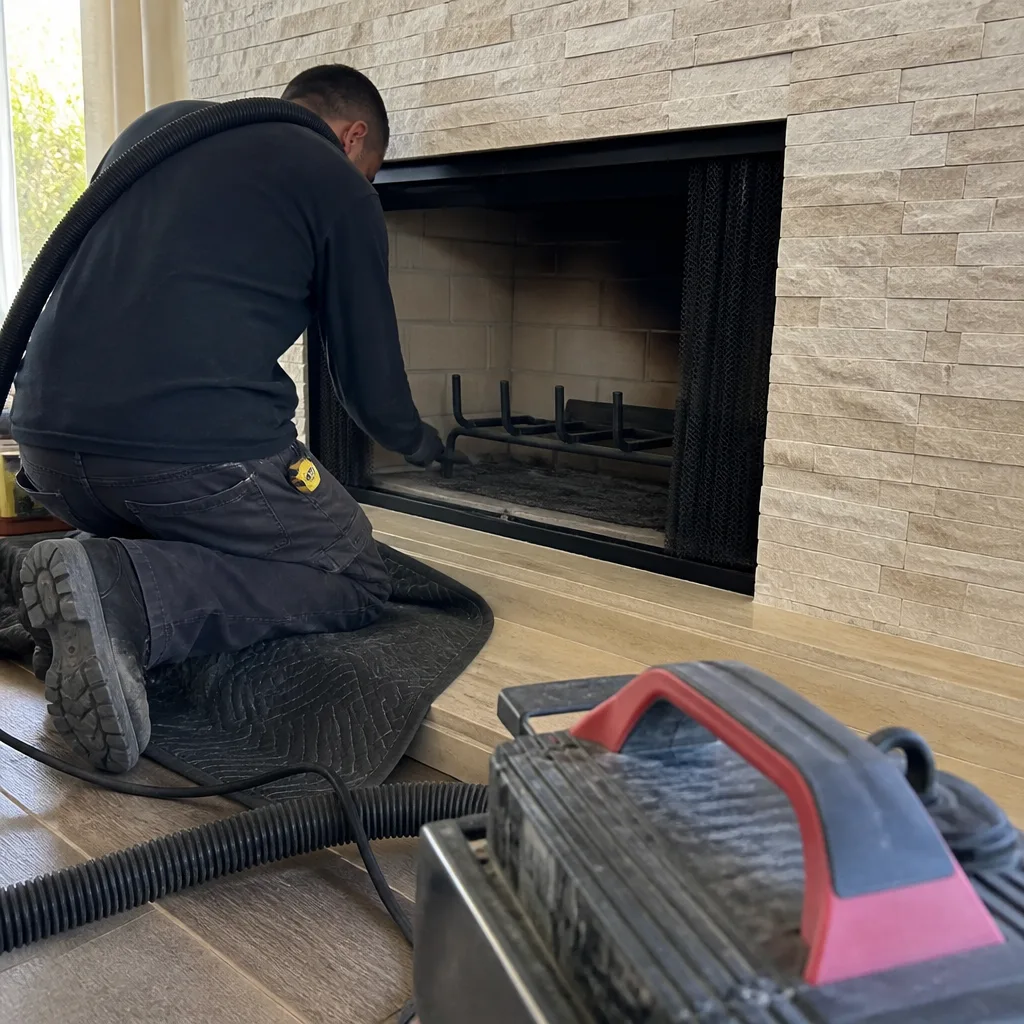 After
AfterReplacement Cost & What’s Included
For a full DuraFlex flue liner replacement in Woodland Hills, you’re looking at $2,200 to $4,800 installed. Here’s how that breaks down. The liner itself runs roughly $450 to $900 depending on diameter, length, and profile. The connector, top plate, rain cap, and termination hardware add another $250 to $500. The rest is labor and safety work: pulling the old liner, inspecting the chase, cleaning the flue walls properly, pulling the new liner into place, and sealing every connection with the right high-temp sealant.
What drives the range is mostly access. A straight vertical flue with good roof access stays near the bottom. A two-story chase, a steep roof pitch, or a liner that’s deteriorated so badly it comes out in pieces pushes you toward the top. You get a written price before we start, every time. That price includes the Removal, the labor, the parts, and our 365-Day Done Right Promise: if the liner fails within a year, we come back at no charge and make it right. That’s a standing commitment, not a promotion.
DIY or Call Us?
There’s a version of this job a homeowner can do, and a version that goes sideways fast. What you can safely check yourself: the visible seams on the liner’s top section if you can see it from the ground, the condition of the rain cap and spark arrestor, and whether you can spot flaking in the firebox. You can also check your homeowners insurance to see if a liner replacement is covered, which occasionally happens if the failure is tied to a documented weather event.
Here’s the honest split. Actually replacing a flue liner means working at roof height, handling a 20-to-35-pound flexible steel section that wants to kink and bind as it drops, and getting the termination sealed correctly so it doesn’t leak the first hard rain. If you’re comfortable with that and have the right diameter matched to your appliance, it’s doable. But a kinked liner reduces draft and can’t be un-kinked. A mis-sized liner is a re-order and a second trip to the roof. A sealed connection that isn’t actually sealed is a carbon monoxide pathway. If any of that gives you pause, call (559) 249-1347 and we’ll handle it. If you’re sitting on the fence, we’re happy to give you the measurements and let you decide.
FAQs
A DuraFlex 316L liner in a properly maintained Woodland Hills chimney typically lasts 15 to 25 years, but the cap and connector hardware usually need attention at the 10-to-15-year mark. Your actual lifespan depends on how often you burn, whether you burn wood or run gas, and how well the top of the chimney seals against our wet winters. If you’d like us to camera-inspect yours and tell you how much life it has left, call (559) 249-1347 and we’ll get you on the schedule.
Sometimes, yes. If the failure is isolated to a single joint or the top few inches below the rain cap, we can often cut out the damaged section and splice in a new one, which keeps the job in the $400 to $900 range. But if the corrosion is running along the seam or the liner is delaminating in multiple spots, patching is a temporary fix that fails again. We’ll show you the camera footage and let the evidence drive the recommendation.
Most DuraFlex liner replacements in Woodland Hills are completed in a single visit, usually four to six hours from setup to final camera verification. Two-story chases, tight offsets, or liners that have to be cut out in sections can stretch it to a full day. You’ll know the timing before we start.
We stock the common diameters on the truck, yes. If your flue needs a less common size or a specific profile we don’t carry, we’ll order it and keep you posted on the exact arrival, then schedule around that, so you’re not stuck with a torn-apart chimney. We work directly with DuraFlex, plus HeatShield and Gelco for specialty repair situations, so we’re not guessing at supply.
Written by Cory Mitchell, Owner & Lead Chimney Technician, Hadley Chimney Woodland Hills at Hadley Chimney Woodland Hills, serving Woodland Hills and nearby areas.