
Last updated October 15, 2026
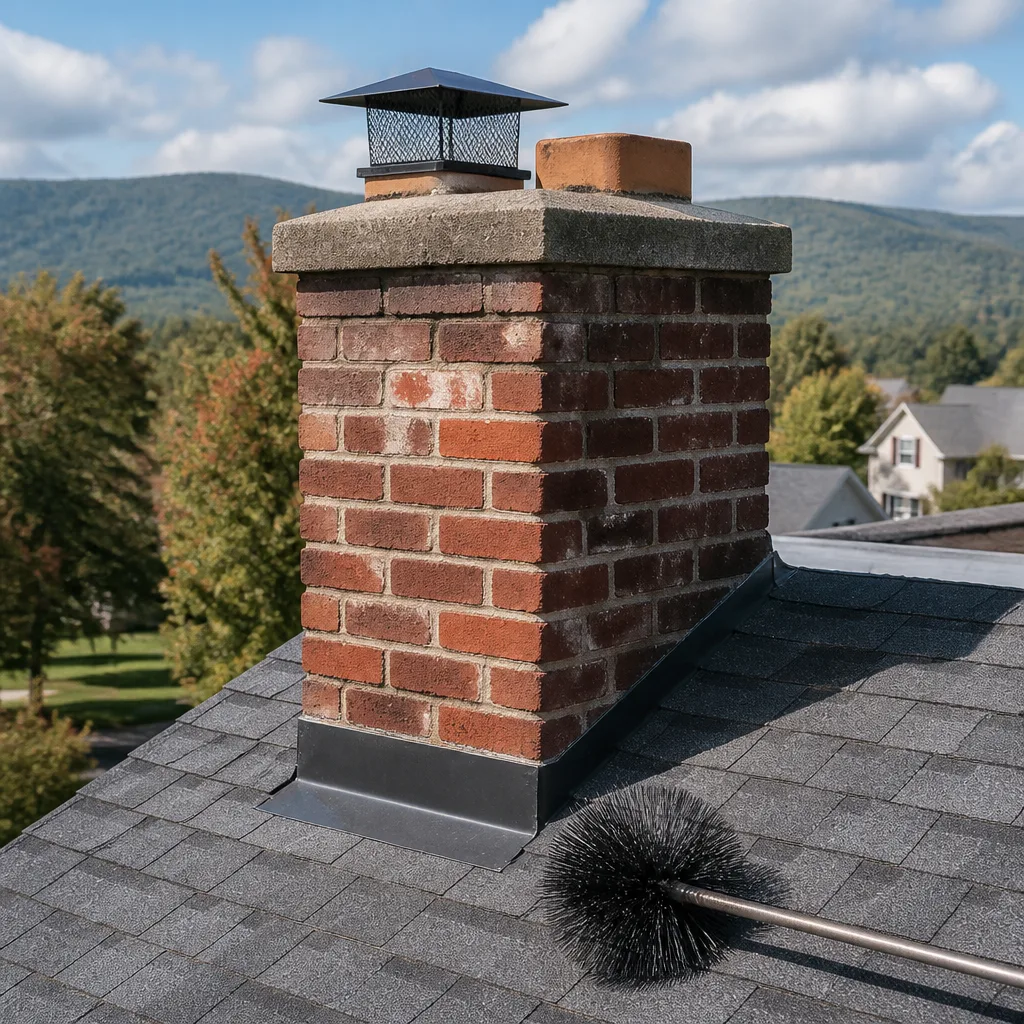 Sweep & inspection
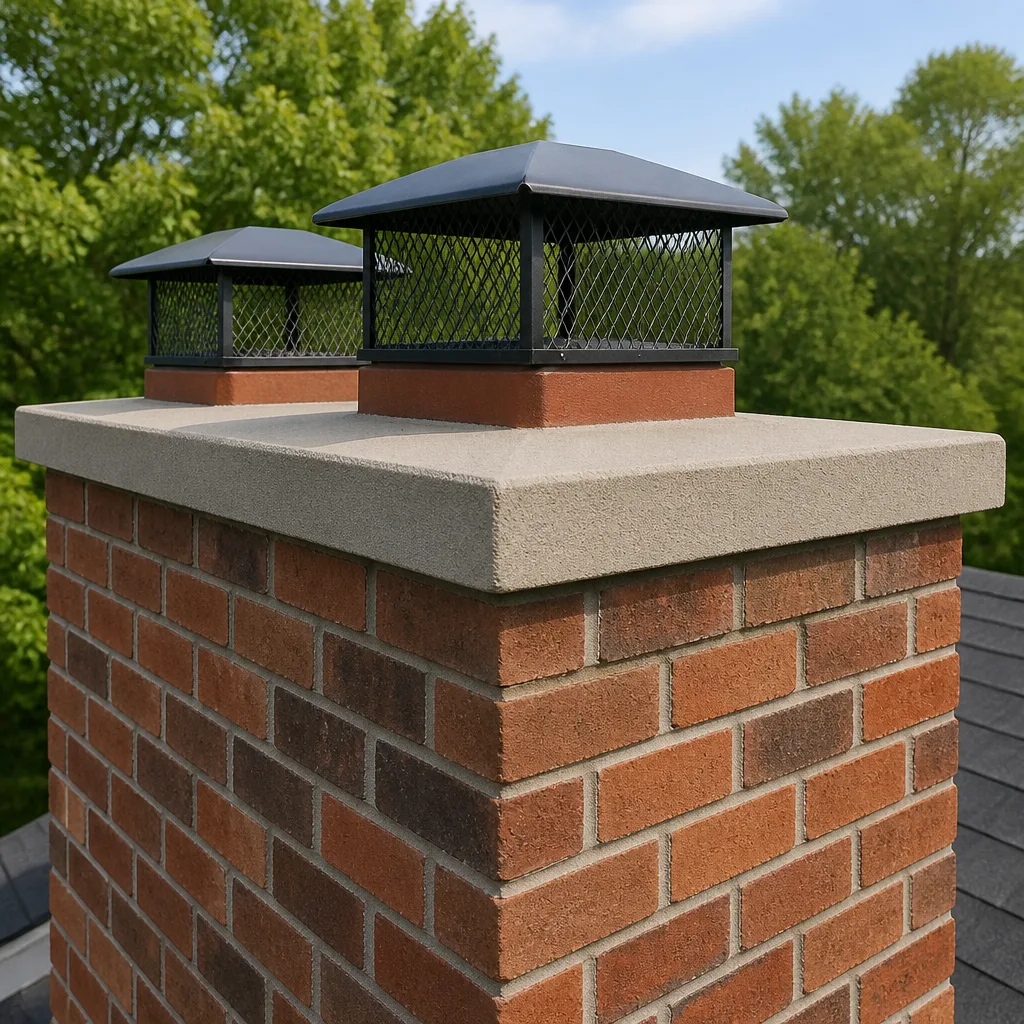 Caps & crowns
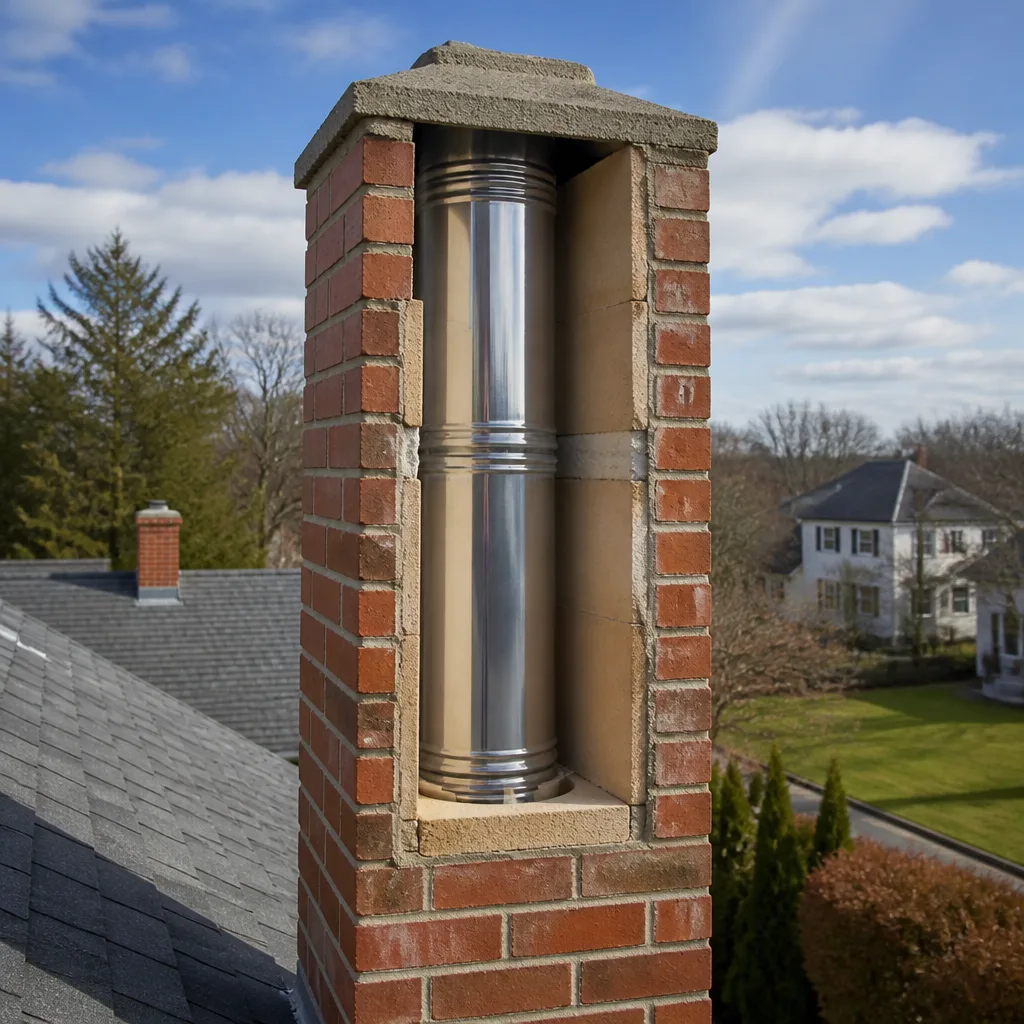 Flue relining
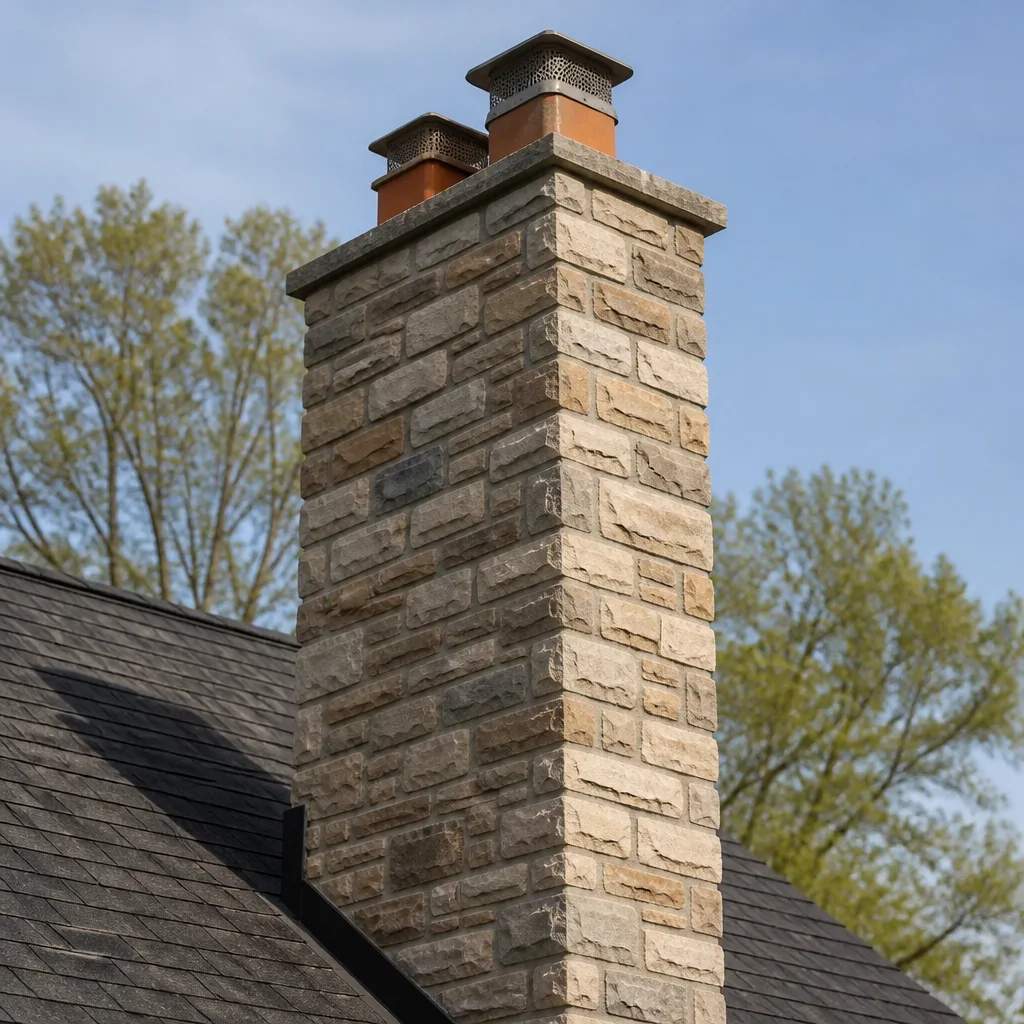 Masonry repair
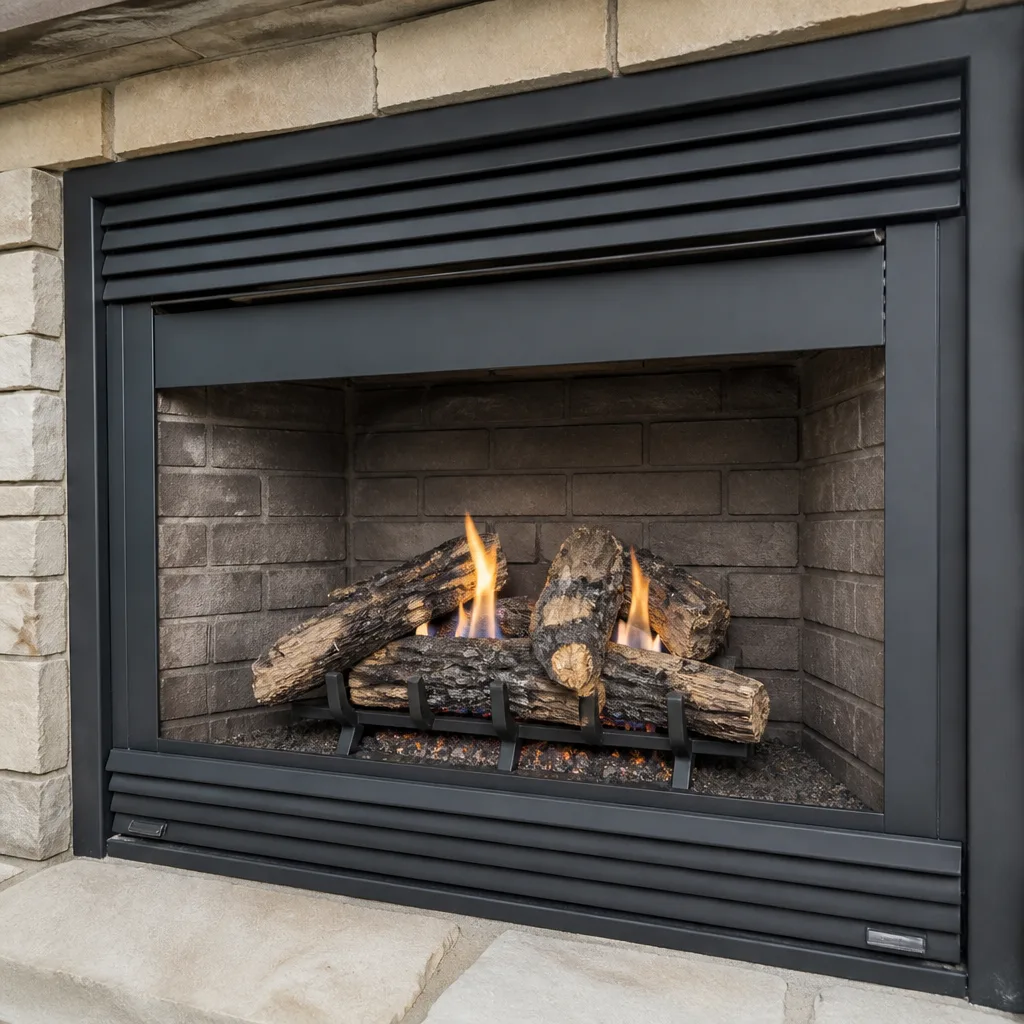 Gas fireplace service
Level 1 sweep and inspection to the NFPA 211 annual standard - flue, crown, cap, and flashing checked and photographed
Chimney sweep logs do not sweep chimneys. They loosen some creosote - which then falls where a brush and vacuum still have to collect it.
DIY vs Professional Chimney Cleaning: The Woodland Hills Homeowner’s Decision Guide
Here’s the uncomfortable truth most chimney cleaning articles won’t tell you: physically pushing a brush through a flue is not the hard part. The hard part is knowing whether the flue is actually sound enough to use at all. Woodland Hills sits inside a California High Fire Hazard Severity Zone, which means your chimney isn’t just a fireplace feature. It’s a fire-containment responsibility with real legal and insurance implications. This guide breaks down exactly where the DIY line should sit for a Woodland Hills homeowner, what you can realistically do yourself, and what genuinely requires a trained eye and equipment you won’t find at Home Depot. For how to hire a chimney cleaning contractor in Woodland Hills, see our step-by-step guide.
Styles & brands we work with
Quick Answer
Most Woodland Hills homeowners can safely handle basic firebox cleaning and a visual damper check themselves, but the moment you’re dealing with glazed creosote, an older liner, or any question about your spark arrestor, professional chimney cleaning is the right call. Our seasonal chimney cleaning care guide for Woodland Hills explains when to schedule these services throughout the year. A DIY sweep costs about $60 to $150 in supplies and a full weekend of work; a professional sweep in Woodland Hills typically runs $180 to $340 and includes the camera inspection that actually catches the problems a brush can’t see. The honest answer: DIY the routine surface cleaning, hire a pro for anything involving the liner, the flue’s upper third, or a chimney that hasn’t been professionally inspected in over two years.
Table of Contents
- What DIY Can Really Handle
- What Requires a Professional, No Matter Your Skill Level
- How Woodland Hills Fire Zone Rules Change the Equation
- The Hidden Costs of DIY Chimney Cleaning
- Creosote: The Three Stages and Why They Matter
- The DIY Decision Matrix: Four Questions That Settle It
- How Professional Chimney Cleaning Actually Works in Woodland Hills
- Common Mistakes to Avoid
- When to Call a Professional
- Frequently Asked Questions
- The Bottom Line
What DIY Can Really Handle
Let’s be clear about what’s genuinely in reach for a careful Woodland Hills homeowner. The firebox, that’s the brick-lined chamber where your fire actually burns, is the most forgiving surface in the entire chimney system. You’re not dealing with structural integrity there. You’re dealing with ash, loose soot, and whatever the last fire left behind. A wire brush, a shop vac with a good filter, and a drop cloth will handle it. You don’t need special training to see if the firebox is dirty.
Here’s what a capable DIYer can realistically do on a weekend:
- Firebox brushing: A stiff-bristle brush works fine for loose ash and light soot on the firebrick. Wear an N95 mask, lay down a drop cloth, and keep the vacuum running as you work. This is low-risk, low-skill, and it’s good basic maintenance between professional sweeps.
- Damper clearing: If your damper sticks or has debris sitting on top of it, you can often clear it from inside the firebox with a brush and some patience. Just don’t force a seized mechanism; a broken damper is a $150 to $400 repair that wasn’t necessary.
- Basic cap check from a ladder: If you’re comfortable on a ladder and the roof pitch is gentle enough not to be a fall hazard, you can visually confirm whether the chimney cap is present and not obviously crushed. You’re looking for big, obvious problems, not doing a code inspection. Spark arrestor mesh sizing is a specific LAFD code requirement that most homeowners don’t know how to evaluate, which is fine. That’s a pro task.
When we’re out in Woodland Hills neighborhoods like Walnut Acres or the flats south of Ventura Boulevard, we see a lot of fireboxes that haven’t been touched in years. The homeowner is usually surprised by how much ash has sifted down behind the andirons and into the ash dump. That’s exactly the kind of cleaning you can and should do yourself between professional visits. It’s not dangerous, it doesn’t require special equipment beyond a decent mask and a vacuum, and it keeps the firebox from becoming the thing that makes your living room smell like a cold campfire every time the wind shifts.
One honest safety note: any time you’re working inside a firebox, wear eye protection. Ash is alkaline. It will irritate your eyes and lungs. And don’t run a household vacuum without a HEPA-rated filter; a standard filter will just aerosolize the fine soot into your living room.
What Requires a Professional, No Matter Your Skill Level
There’s a clean dividing line here, and it’s not about skill. It’s about equipment and consequence. Some chimney tasks genuinely cannot be done safely or effectively with consumer-grade tools, and in Woodland Hills, the consequence of getting one of these wrong isn’t just a dirty fireplace. It’s a house fire.
Here’s what stays in the professional column, always:
- Glazed creosote removal (Stage 2 and 3): A brush will not remove glazed creosote. Period. Once creosote has baked into a hard, shiny, tar-like coating on the flue walls, it requires rotary power cleaning with a steel whip head, and in severe cases, chemical treatment first. This isn’t a question of elbow grease. It’s a question of hardness. The glazed layer is physically harder than any brush bristle you’re going to push through there.
- Liner camera inspection: The single most valuable part of a professional chimney sweep isn’t the sweeping. It’s the camera inspection of the flue liner before and after. A hairline crack in a clay tile liner is invisible from the firebox, invisible from the roof, and completely invisible to a brush. But it’s the difference between a safe fire and a fire that escapes into the chimney chase. You cannot see this yourself. The camera equipment costs thousands of dollars and requires training to interpret what you’re looking at.
- Flashing assessment: The flashing is the metal joint where your chimney meets your roofline. In a High Fire Hazard Severity Zone like Woodland Hills, a failed flashing joint doesn’t just leak water; it can allow embers into the attic space during a wind-driven fire event. Evaluating flashing condition requires getting onto the roof safely and knowing what a failing seal looks like before it’s visually obvious.
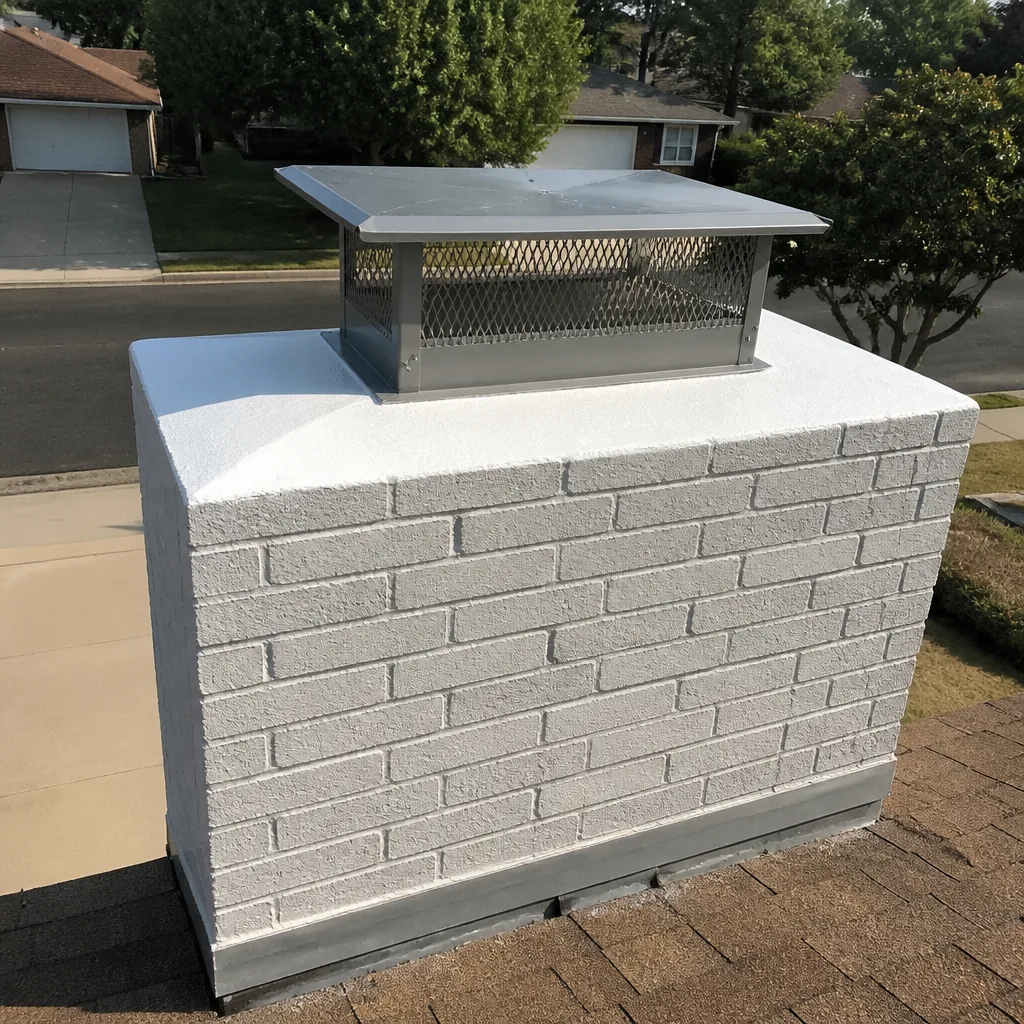
- Spark arrestor code compliance: Los Angeles Fire Department requires spark arrestors with specific mesh dimensions on any chimney serving a solid-fuel appliance. If your arrestor is missing, damaged, or the wrong mesh size, you have a code violation and a genuine fire risk. Most homeowners can’t tell the difference between compliant mesh and screen-door material.
- Structural assessment of the chimney crown and brickwork: The crown is the concrete cap on top of the chimney. Cracks there let water in, and water is what destroys chimneys from the inside out over years. Crown repair is not a homeowner task.
We’ve seen chimneys in Woodland Hills that look perfectly fine from the ground and from the firebox, but the camera shows a liner that’s separated at the joint and is dumping heat into the chimney wall instead of out the top. That’s not a scare story. That’s a Wednesday. And it’s the entire argument for professional cleaning with camera documentation.
How Woodland Hills Fire Zone Rules Change the Equation
Woodland Hills is not just any Los Angeles neighborhood when it comes to fire risk. Much of the community sits within a designated High Fire Hazard Severity Zone, which is a California state designation with specific requirements for property maintenance, defensible space, and building features. Your chimney is part of that equation.
The practical implication for a homeowner is this: if you run a fireplace that hasn’t been properly cleaned and inspected, and a fire starts in or around that chimney during a high-risk season, you’re not just dealing with property damage. You’re dealing with a scenario where your insurance company will ask whether the chimney was professionally maintained. In California fire-prone zones, insurers have become aggressive about this. A DIY sweep with no documentation and no camera inspection is not the same evidentiary standard as a professional sweep with dated before-and-after photos and a written report.
There’s also the ember risk specific to our climate. Woodland Hills gets hot, dry Santa Ana winds in the fall. An ember that escapes a chimney without a proper spark arrestor during a Santa Ana event isn’t a theoretical risk. It’s how structure fires start in foothill communities. The LAFD spark arrestor requirement exists for exactly this reason. If you’re doing your own chimney work and you don’t know the mesh specifications, you’re not just sweeping a chimney. You’re maintaining a fire-containment feature, and the standard for that is higher here than in, say, a coastal neighborhood with marine fog.
This is the part most generic “DIY vs professional” articles miss, because they’re written for a national audience. They don’t account for a specific fire zone designation or the practical insurance consequences of DIY maintenance in a state where wildfire risk has rewritten the property insurance market. Your chimney in Woodland Hills is doing environmental work. It deserves professional attention at least every couple of years, even if you’re comfortable doing the routine surface cleaning yourself.
The Hidden Costs of DIY Chimney Cleaning
Most DIY-versus-pro cost comparisons stop at the brush kit. They count the $60 to $80 rod set, maybe a drop cloth, and call it done. That’s the wrong math. For a detailed look at pricing, see our chimney cleaning cost breakdown for Woodland Hills homeowners. Here’s the real cost picture if you decide to DIY properly.
First, there’s the vacuum problem. You cannot safely clean a chimney with a standard household shop vac unless it’s running a true HEPA filter and a drywall dust bag. A normal filter will blow the finest, most hazardous soot particles right through the exhaust and into your living space, coating your furniture in a fine black film and worse, putting microscopic particulate into your lungs. A proper HEPA filter for a shop vac runs $40 to $80 on its own, and you’ll want a dedicated vacuum you don’t mind sacrificing to the cause, because chimney soot does not wash out of a vacuum canister nicely.
Then there’s the creosote disposal. In California, creosote waste is classified as hazardous household waste. You can’t just bag it and toss it in the green bin. Los Angeles County requires creosote debris to go to a SAFE collection center or a hazardous waste disposal event. That’s a trip, a line, and often a small fee. It’s not a dealbreaker, but it’s a real time cost that no one puts on the box of the brush kit.
And then there’s the time. A first-time DIY chimney sweep is not a two-hour job. It’s a full day, and realistically a full weekend when you account for setup, the ladder work, the trial and error of getting the rods through the damper without binding, the cleaning, the airing-out of the house afterward, and the disposal run. If you’re a Woodland Hills homeowner who values your weekend, that time is worth something. At a minimum, it closes a lot of the gap between the $150 DIY route done right and the low end of a professional sweep.
Finally, there’s the mistake cost. A broken damper from forcing rods through the wrong way is $150 to $400 in parts and labor. A scratched or gouged liner from using the wrong brush or a metal rod without a guide is the kind of damage that doesn’t show up until a pro eventually looks at it, and in a worst case, it’s hundreds or thousands to repair. The cheapest chimney cleaning is the one where nothing else breaks. DIY cost comparisons always assume the job goes perfectly. In our experience with first-time DIYers, it usually goes imperfectly.
Creosote: The Three Stages and Why They Matter
Creosote is the flammable tar-like residue that condenses on the inside of your chimney every time you burn wood that isn’t perfectly dry. Since almost nobody in Woodland Hills is burning kiln-dried hardwoods exclusively, you’re making creosote every time you have a fire. The question is what stage it’s reached, because the stages are wildly different in both danger and removal difficulty.
Stage 1 creosote is a dry, dusty, flaky soot. It brushes off relatively easily with a standard chimney brush, and this is the only stage where the classic DIY rod-and-brush setup genuinely works. If you opened up your flue and this is what you saw, you could clean it yourself and the result would be genuinely satisfactory. The problem is that you can’t see the upper third of your flue from the firebox, and Stage 1 in the firebox area doesn’t mean Stage 1 at the top, where the smoke cools and creosote concentrates.
Stage 2 creosote is the turning point. It’s no longer flaky; it’s hardened, tar-like, and glossy in patches. It doesn’t brush off. It has to be scraped, rotary-cleaned, or chemically softened first. A homeowner with a hand brush will just polish the surface and think the flue is clean. It’s not. Stage 2 creosote is highly flammable and burns hot enough to crack a clay liner.
Stage 3 creosote is the glaze. It’s a hard, shiny, asphalt-like coating that forms when Stage 2 gets repeatedly heated and cooled. It’s the most fuel-dense form of creosote and the most likely to sustain a chimney fire. Removing Stage 3 requires rotary power cleaning with a steel whip head, often after an application of a chemical creosote remover like PCR or a similar product. This is absolutely not a DIY job, and anyone who tells you otherwise is giving you advice that could burn your house down.
Here’s the part most homeowners don’t realize: the stage of creosote you have is determined not just by how much you burn, but by what you burn and how hot. Pine, which is abundant and cheap in Southern California, produces disproportionately more creosote than oak or almond. Green or unseasoned wood makes it dramatically worse. A fireplace used a few times a year with well-seasoned hardwood might stay in Stage 1 for years. A fireplace used weekly with big-box pine logs might hit Stage 2 in a single season. The only way to know is to look, and the only way to actually look at the full length of the flue is with a camera.
The DIY Decision Matrix: Four Questions That Settle It
Instead of vague guidance, here’s a concrete decision framework. Answer these four questions honestly. If the answer to any of them is yes, DIY is the wrong call.
- Has it been more than two years since a professional inspected the chimney? If yes, you’re flying blind. You don’t know the liner condition, the creosote stage, or whether your cap and arrestor are even functional. Cleaning a chimney whose structural soundness you haven’t verified is like changing the oil in a car you’ve never looked under. The maintenance might be fine, but you’re not addressing the actual risk.
- Do you burn more than a cord of wood per season, or burn softwood like pine regularly? High burn volume and softwood both accelerate creosote accumulation and push you toward Stage 2 faster than you expect. If you’re a frequent burner, the creosote you’re dealing with is probably not the brushable kind.
- Was the house built before 1990, and have you never replaced or had the liner inspected? Pre-1990 homes in Woodland Hills often have original clay tile liners that have been through decades of thermal cycling. Clay liners crack eventually. If yours was installed when the house was built and no one has ever put a camera in there, you need a professional inspection before you do anything else, including a DIY brush pass.
- Have you noticed any of the following: a smell of smoke or creosote in the house when the fireplace isn’t in use, visible efflorescence (white staining) on the chimney exterior, or water in the firebox after rain? Any one of these suggests a problem that a brush won’t fix. They indicate liner failure, water intrusion, or draft problems that need diagnosis, not cleaning.
If you answered no to all four, congratulations. You’re in the minority of Woodland Hills homeowners whose chimney maintenance is genuinely simple, and a careful DIY firebox cleaning and damper check is a reasonable way to save money. You should still have a professional inspection every two to three years, because things don’t stay clean forever. But you have a real window where DIY makes sense.
If you answered yes to any of them, the money you save on a DIY kit is a rounding error compared to the risk you’re running. Call a professional. Get the camera in the flue. Know what you’re actually dealing with.
How Professional Chimney Cleaning Actually Works in Woodland Hills
Here’s what happens when you book a professional sweep with a modern company, because the process has changed a lot since the old days of a guy with a brush and a vague arrival window. A transparent sweep should look like this, and it’s what we’ve built our process at Hadley Chimney Woodland Hills home around.
Before anyone touches your chimney, you get a written price. Not a verbal quote with a “we’ll see when we get up there” asterisk. A specific number for the sweep, written down, before the technician picks up a brush. If the camera inspection finds something else that needs attention, you get a second written price for that work, with photos, before anything additional happens. No surprises at the door.
The technician arrives in a tracked window. You know who’s coming, you know when they’re pulling up, and they’re background-checked and uniformed. This is the part of the process that most separates a modern chimney company from the old model. You would never accept a plumber who said “sometime between 8 and 4” anymore. Chimney work should be the same.
The sweep itself typically runs like this:
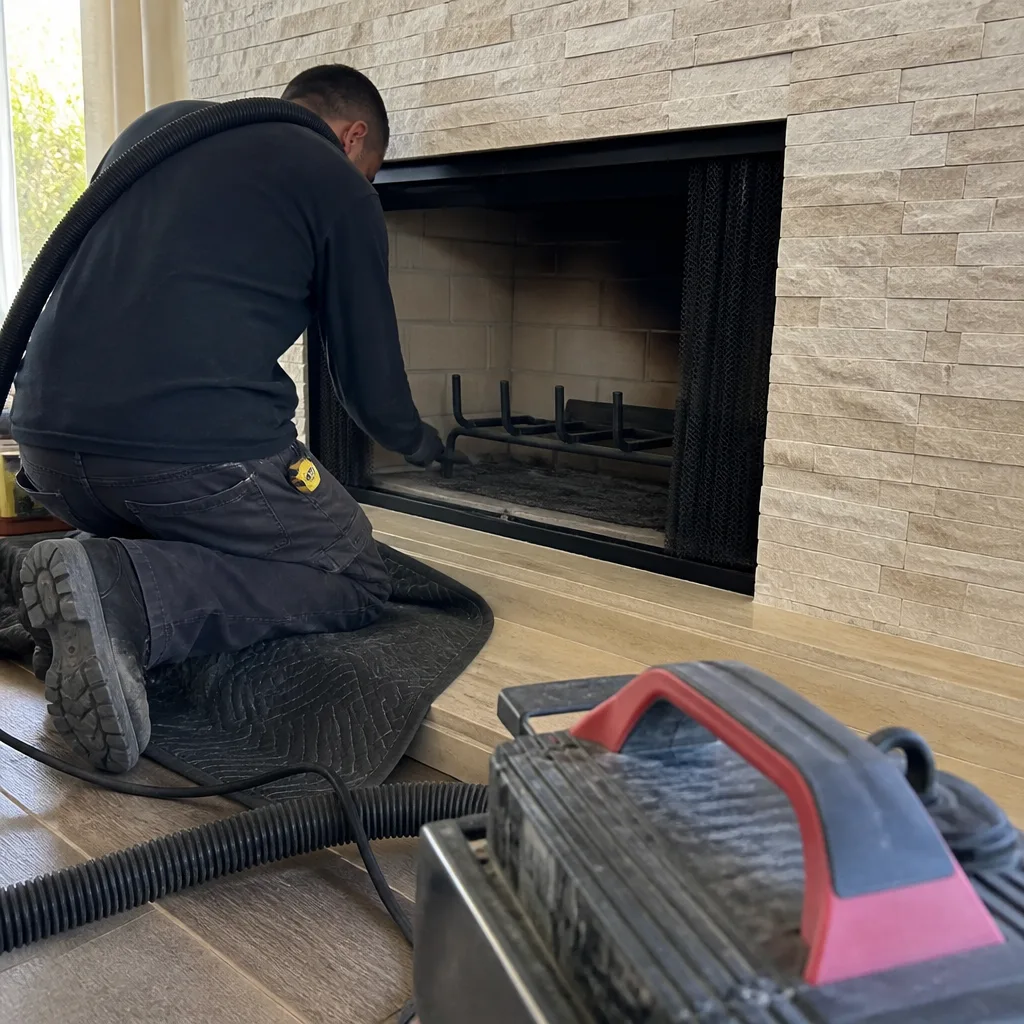
- Setup and protection: Drop cloths and a HEPA vacuum are set up around the fireplace opening. The work area should look the same when we leave as it did when we arrived.
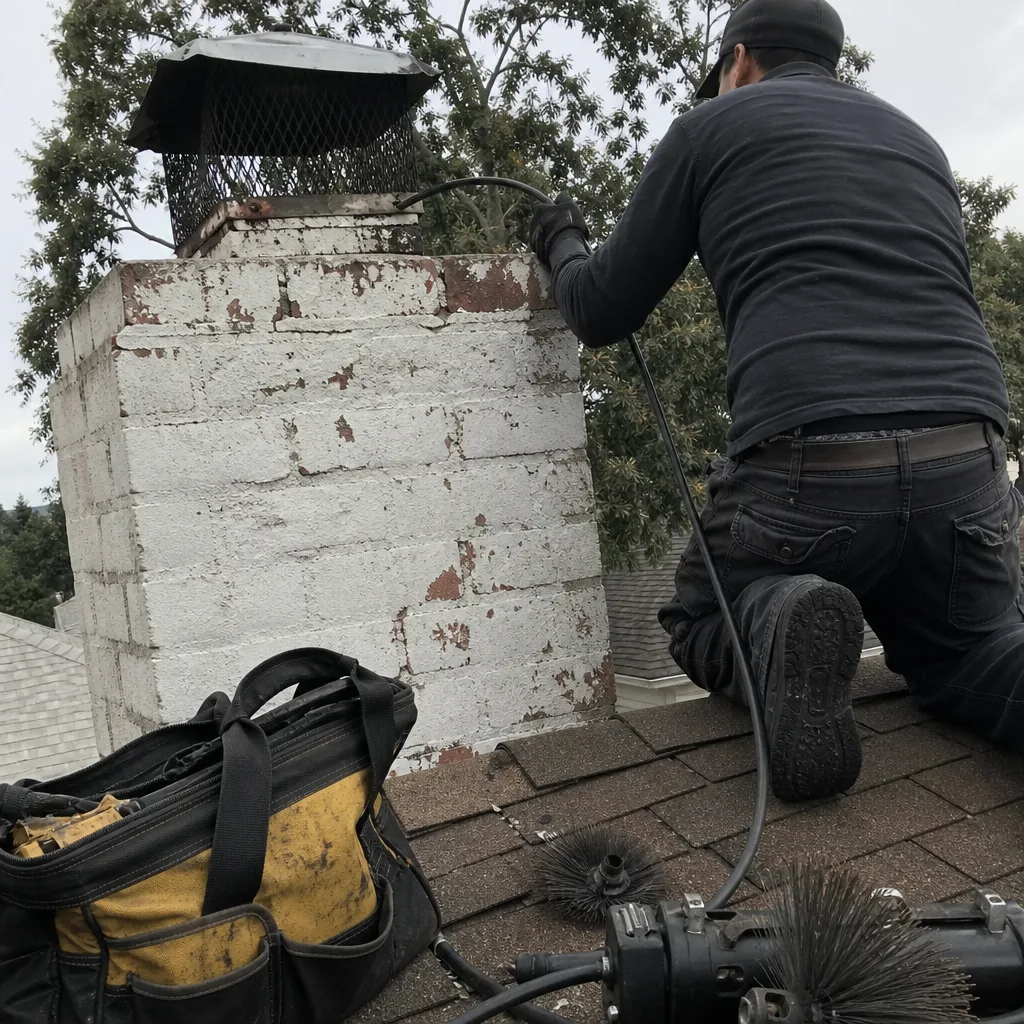
- Visual and camera inspection (before): The technician looks at the firebox, damper, cap, and runs a camera up the flue to document what’s there: creosote stage, liner condition, any cracking, any blockages.
- Mechanical cleaning: A rotary power cleaning head or a properly sized brush is run through the full length of the flue. Stage 1 and 2 creosote comes out; Stage 2 requires the rotary head, which is why the inspection happens first.
- Firebox and damper cleaning: The firebox is brushed, the damper is cleaned and checked for proper operation, and the ash dump is cleaned if accessible.
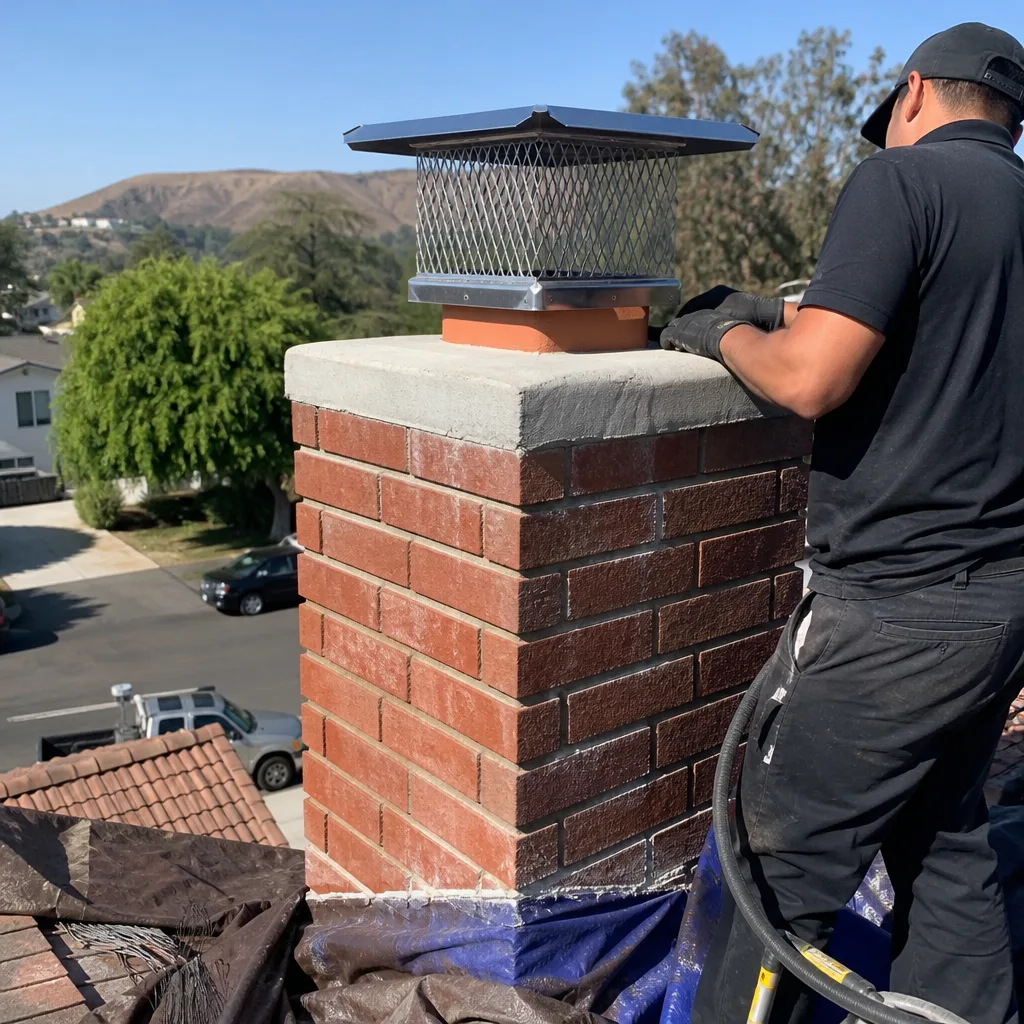
- Cap and arrestor check: If accessible by roof or ladder, the cap and spark arrestor are inspected and cleaned. If they’re damaged or non-compliant with LAFD mesh requirements, that’s documented with photos and quoted separately.
- Camera inspection (after): This is the part that matters most. The technician runs the camera again and shows you before-and-after video or stills. You should be seeing the inside of your own flue, clean, with your own eyes. If your chimney company doesn’t do this, find a different chimney company.
- Written report and digital invoice: You get a summary of what was found, what was done, and what the recommendation is for next time. You pay from a link on your phone.
The whole thing typically takes 60 to 90 minutes for a standard single-flue chimney. And the value isn’t the brushing. The brushing is the part you could do yourself. The value is the camera, the documentation, and the trained read on what’s actually there. If you just want the surface cleaned, your brush kit is fine. If you want to know the chimney is safe to burn, that’s the professional service, and it’s what you’re actually paying for. For more guides & resources on chimney maintenance, visit our blog.
For Woodland Hills homeowners, our Chimney Sweep in Woodland Hills service includes all of this as a flat, quoted price. We work with materials from brands like Olympia Chimney and Copperfield when repairs are needed, and every repair we make carries a written guarantee, with a free second visit if it fails within 365 days. That’s the Done Right Promise, and it’s not an add-on. It’s just how the job works.
Common Mistakes to Avoid
- Using a fiberglass rod kit without a chimney whip or correct brush size. A brush that’s too small doesn’t clean the flue walls; a brush that’s too large binds and can get stuck. If you’re doing this yourself, get the brush diameter that matches your flue tile size exactly, and measure the flue, don’t guess.
- Running a standard shop vac while cleaning. Without a HEPA filter and a drywall dust bag, you’re just blowing fine soot into your living room. This is the single most common DIY mistake, and it turns a savings project into a house-wide cleaning event.
- Forcing the rods through a closed or partially closed damper. This bends the damper, misaligns the mechanism, or snaps a rod inside the flue. If the rods bind, back them out and reassess. Never force anything inside a chimney.
- Cleaning from the roof without proper fall protection. Woodland Hills rooflines run from gentle to genuinely steep in the hills above Ventura Boulevard. If you’re not comfortable on a ladder with both hands free, this is not the project to test that. Falls from roofs are a leading cause of serious homeowner injury.
- Ignoring the spark arrestor because it “looks fine from here.” LAFD mesh requirements are specific, and a missing or oversized arrestor is both a code violation and a fire risk. If you can’t get a clear look at it safely, assume it needs professional attention.
- Doing a DIY clean on a chimney that’s never been professionally inspected. You can’t clean what you can’t see. If no camera has ever been in that flue, you’re doing maintenance on an unexamined system, which is how problems get missed until they’re structural.
- Using chemical creosote removers as a substitute for physical cleaning. Those logs and powders can loosen Stage 2 creosote, but they don’t remove it. They make the professional cleaning more effective. They are not a replacement for it.
When to Call a Professional
Call a professional if your chimney hasn’t been inspected in over two years, if you’re seeing any sign of water damage around the chimney structure, if you smell creosote in the house even when there’s no fire, or if you know you’ve been burning a lot of softwood. Call if you see anything that looks like hardened black glaze in the firebox throat. Call if your spark arrestor is missing, dented, or rusted through. And call if you’ve tried the DIY approach and realized the brush isn’t doing anything. Hadley Chimney Woodland Hills offers free estimates in Woodland Hills, and we’ll show you exactly what we find in the flue with the camera. Call (559) 249-1347.
Frequently Asked Questions
A professional chimney sweep in Woodland Hills typically costs between $180 and $340 for a standard single-flue fireplace, with the price varying based on creosote stage, flue height, and roof accessibility. The higher you go up into the hills, the steeper the roof pitch, and the more labor is involved in safe roof access. Call (559) 249-1347 for an exact written quote before any work begins.
The National Fire Protection Association recommends a professional inspection at least once a year and cleaning whenever creosote reaches 1/8 inch of thickness. For most Woodland Hills homeowners who burn wood seasonally, that translates to a professional sweep every one to two years, with a camera inspection each time. If you burn heavily through the winter or burn pine regularly, lean toward annual.
You can handle basic firebox cleaning and a visual damper check yourself, even with occasional use, as long as the chimney has been professionally inspected within the last two years and the creosote is stage 1 (dry and flaky). What you can’t do yourself is verify the liner condition or the upper-flue creosote stage. Occasional use in Woodland Hills still produces creosote, and occasional use without inspection is the scenario where a problem goes unnoticed for years.
Gas fireplaces don’t create the creosote that wood fires do, so a standard sweep is usually not needed. But gas fireplace venting systems still get dusty, and the assembly can develop issues that affect efficiency and safety. If you have a gas fireplace in Woodland Hills, a different kind of service applies. Our Gas Fireplace Repair in Woodland Hills service covers inspection and maintenance of the gas assembly, heat exchanger, and venting without the creosote-focused work of a wood chimney sweep.
Creosote accumulates, and eventually the heat of a fire ignites it inside the flue. A chimney fire burns hot enough to crack a clay liner, and once the liner is cracked, the next fire sends heat and potentially embers into the chimney structure around it. In a High Fire Hazard Severity Zone like Woodland Hills, that’s the scenario where a contained chimney fire becomes a structural fire that spreads. The sequence is slow, then sudden. A $250 sweep every couple of years is cheaper than a $5,000 liner replacement, and a liner replacement is cheaper than a house.
You mostly can’t, which is the whole point. Warning signs can include pieces of clay tile in the firebox, a strong creosote smell in the house even when the fireplace is cold, smoke that enters the room on windy days, or water in the firebox after rain. But by the time a crack produces visible symptoms, it’s often been there for a while. Camera inspection is the only reliable way to see liner condition, which is why it’s the most valuable part of a professional chimney service.
Yes, if your chimney serves a solid-fuel appliance like a wood-burning fireplace or stove. The Los Angeles Fire Department requires spark arrestors with specific mesh dimensions, and this requirement is enforced more seriously in High Fire Hazard Severity Zones, which includes much of Woodland Hills. If you’re not sure whether yours is present or compliant, that’s a quick professional check. Call (559) 249-1347 and we’ll look at it with a camera and tell you plainly what’s there.
The Bottom Line
The DIY-versus-professional chimney question has a straightforward answer for most Woodland Hills homeowners: DIY the firebox, hire the pro for the flue. You can push a brush through a chimney, sure. What you can’t do is see whether the liner is cracked, whether the creosote is the kind that brushes off or the kind that burns, or whether your spark arrestor meets the fire code that exists specifically for neighborhoods like this one. A professional sweep here runs $180 to $340 and gives you documented, photos-backed evidence of what your chimney actually looks like inside. If it’s been more than two years since you’ve seen the inside of your flue, the responsible move is a Chimney Repair in Woodland Hills inspection, not a hardware store brush kit. Get the camera in there, see what you’re working with, then decide.
Written by Cory Mitchell, Owner at Hadley Chimney Woodland Hills, serving Woodland Hills since 2003.
See the difference
 Before
 After
After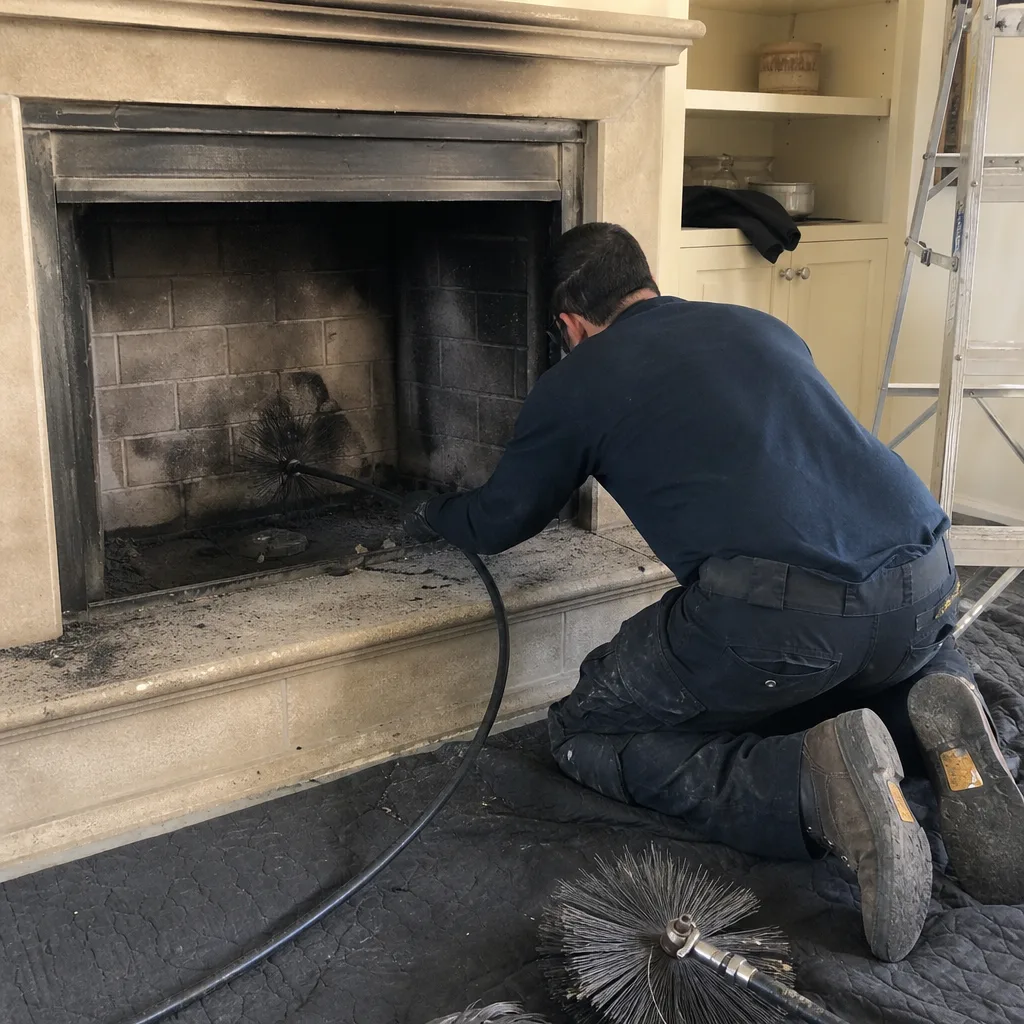 Before
 After
After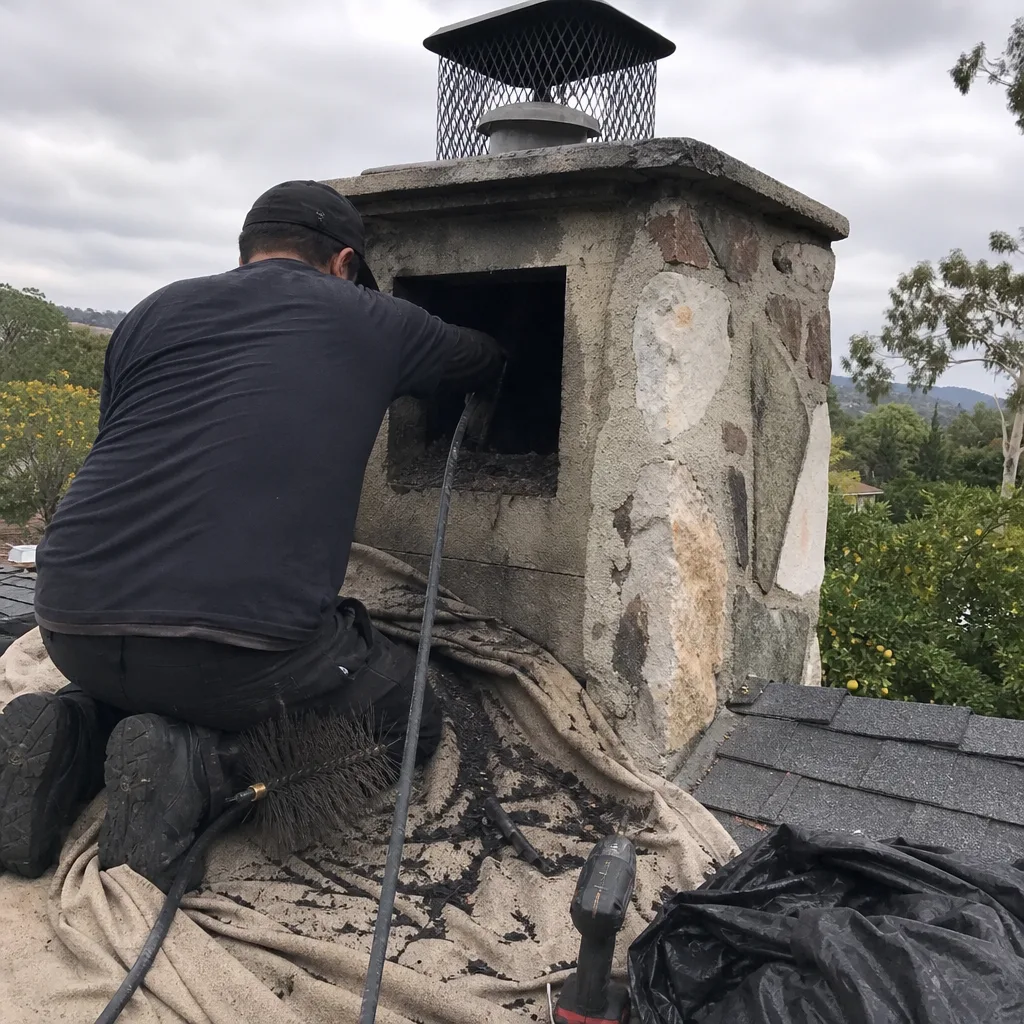 Before
 After
After