
Last updated October 15, 2026
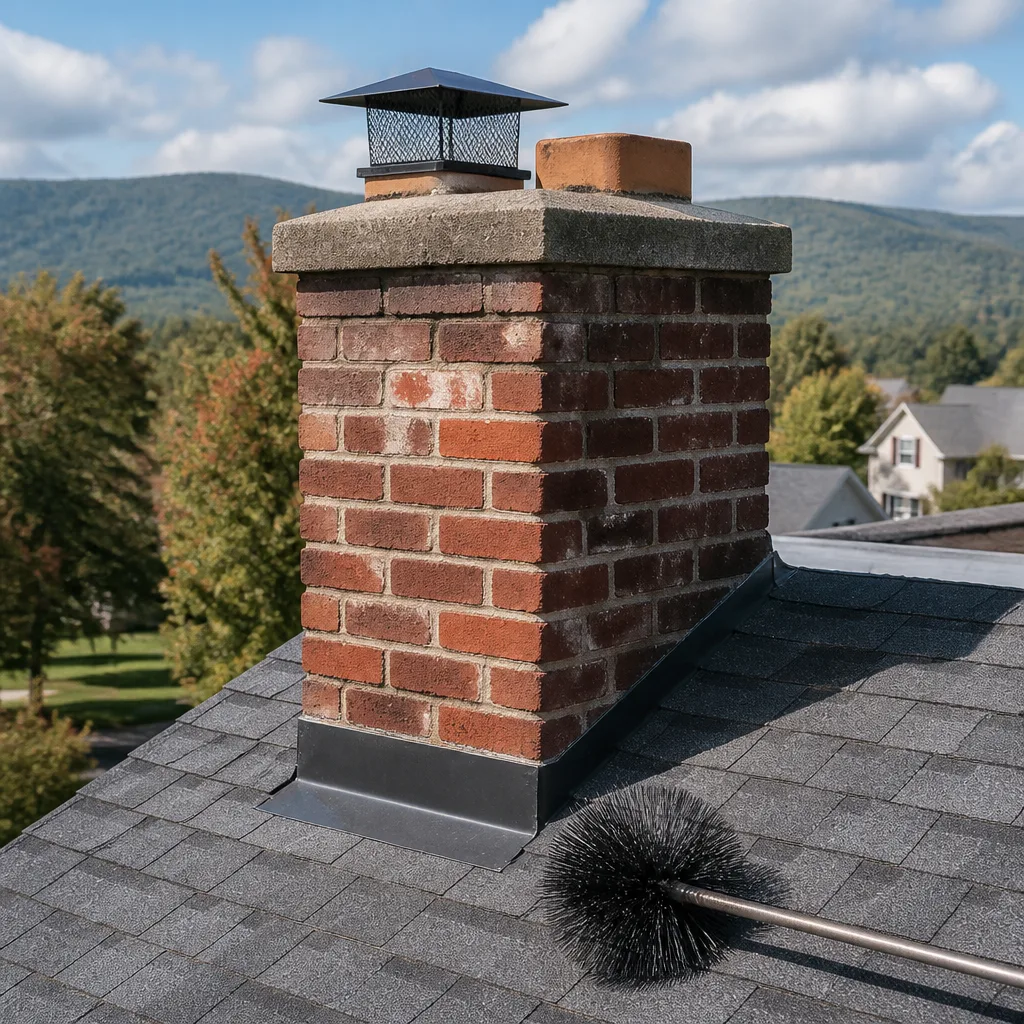 Sweep & inspection
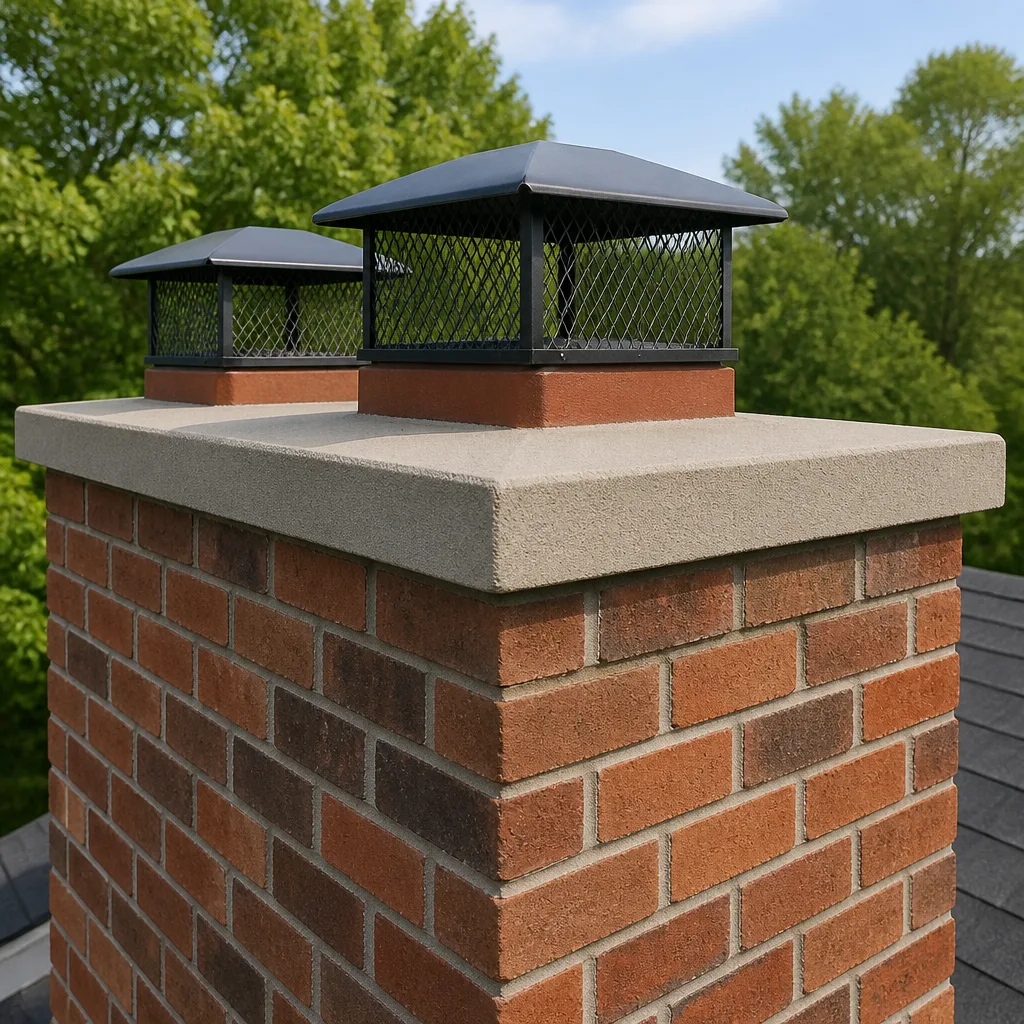 Caps & crowns
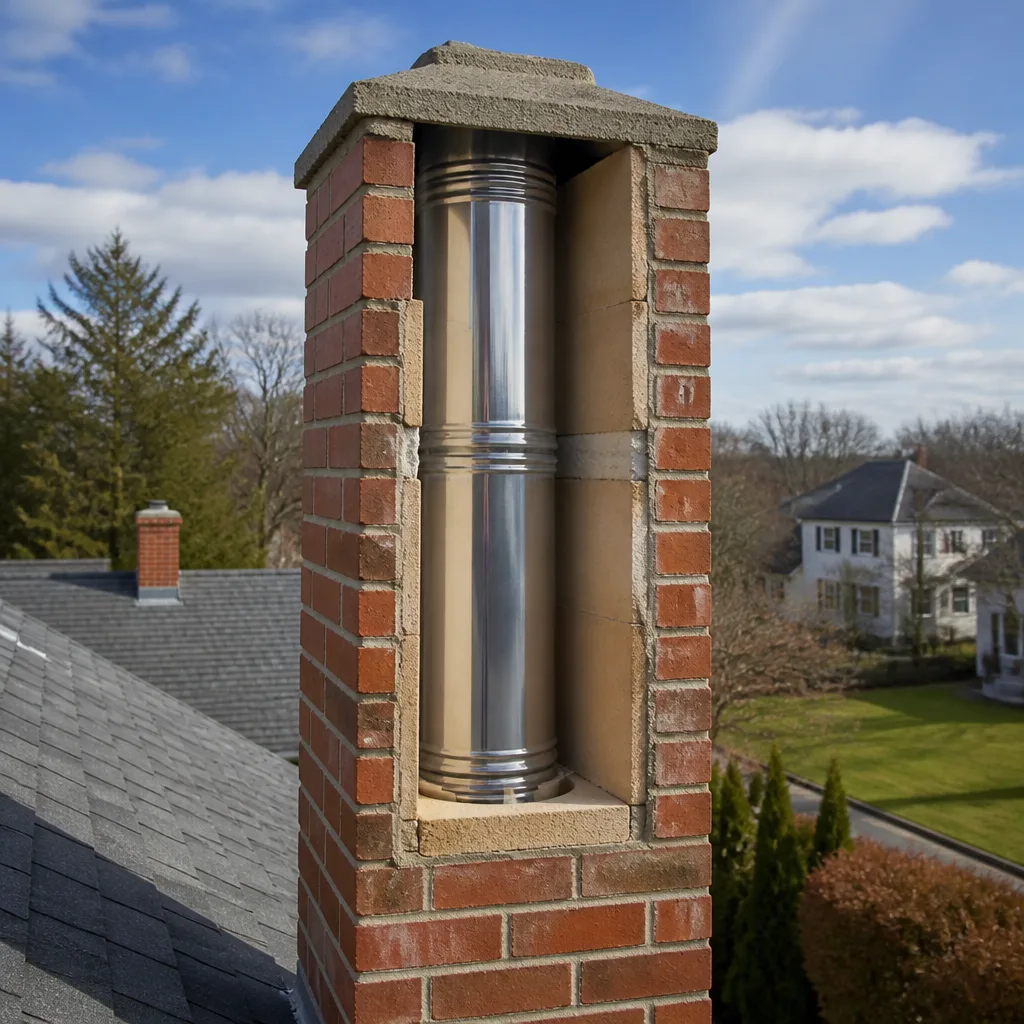 Flue relining
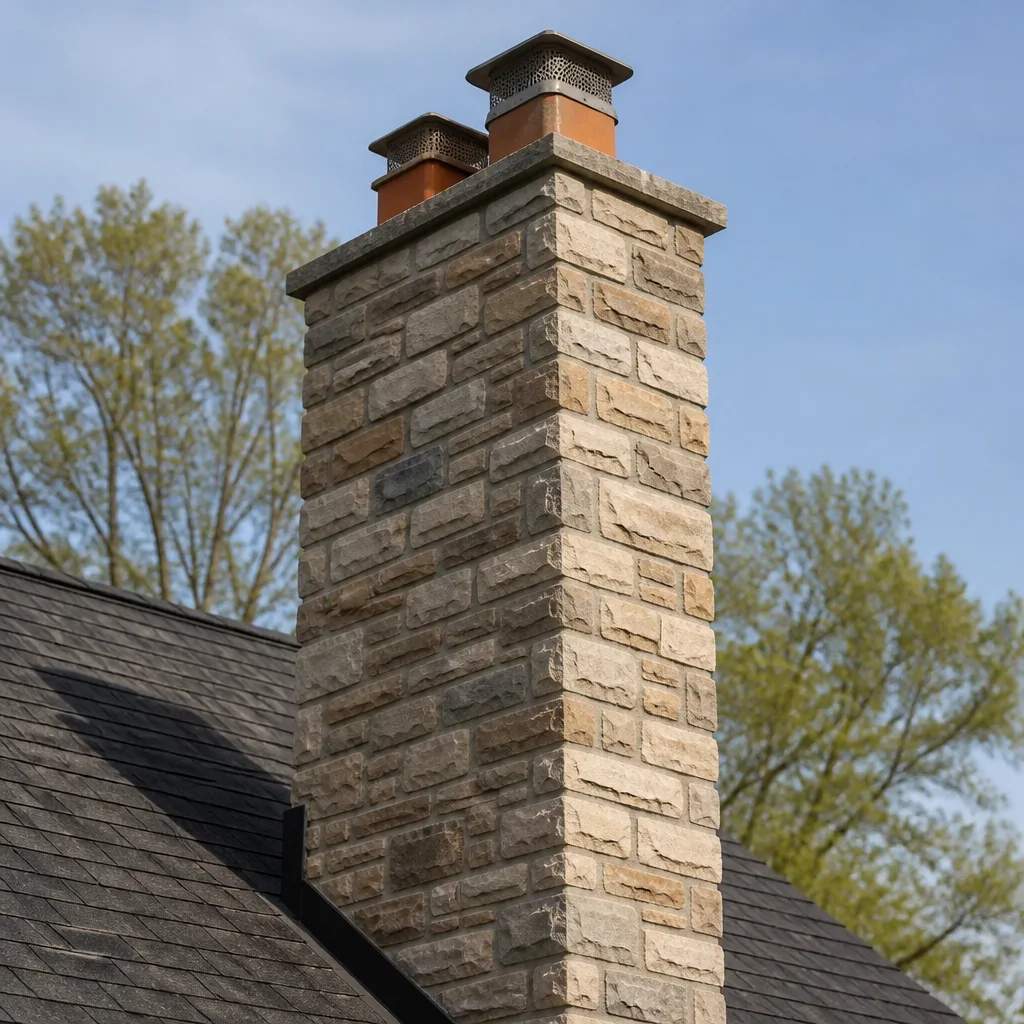 Masonry repair
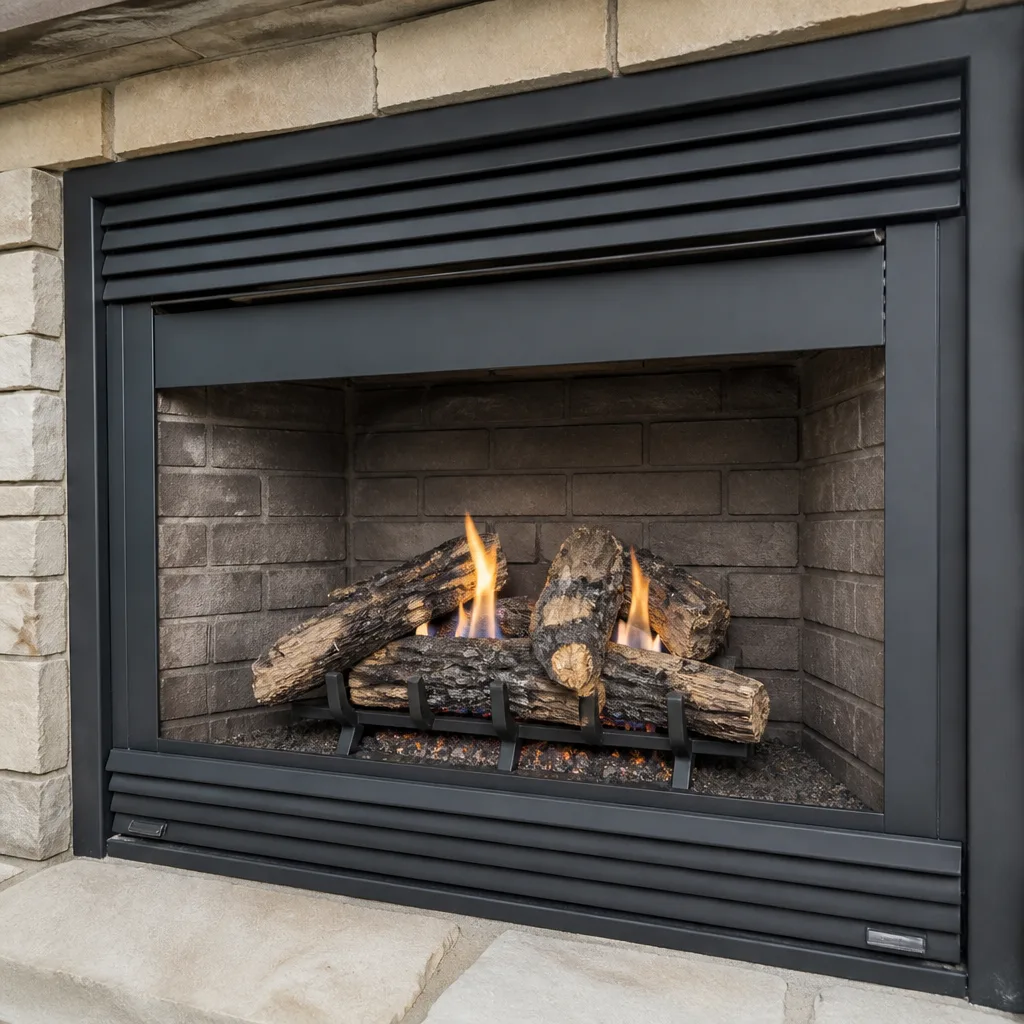 Gas fireplace service
Level 1 sweep and inspection to the NFPA 211 annual standard - flue, crown, cap, and flashing checked and photographed
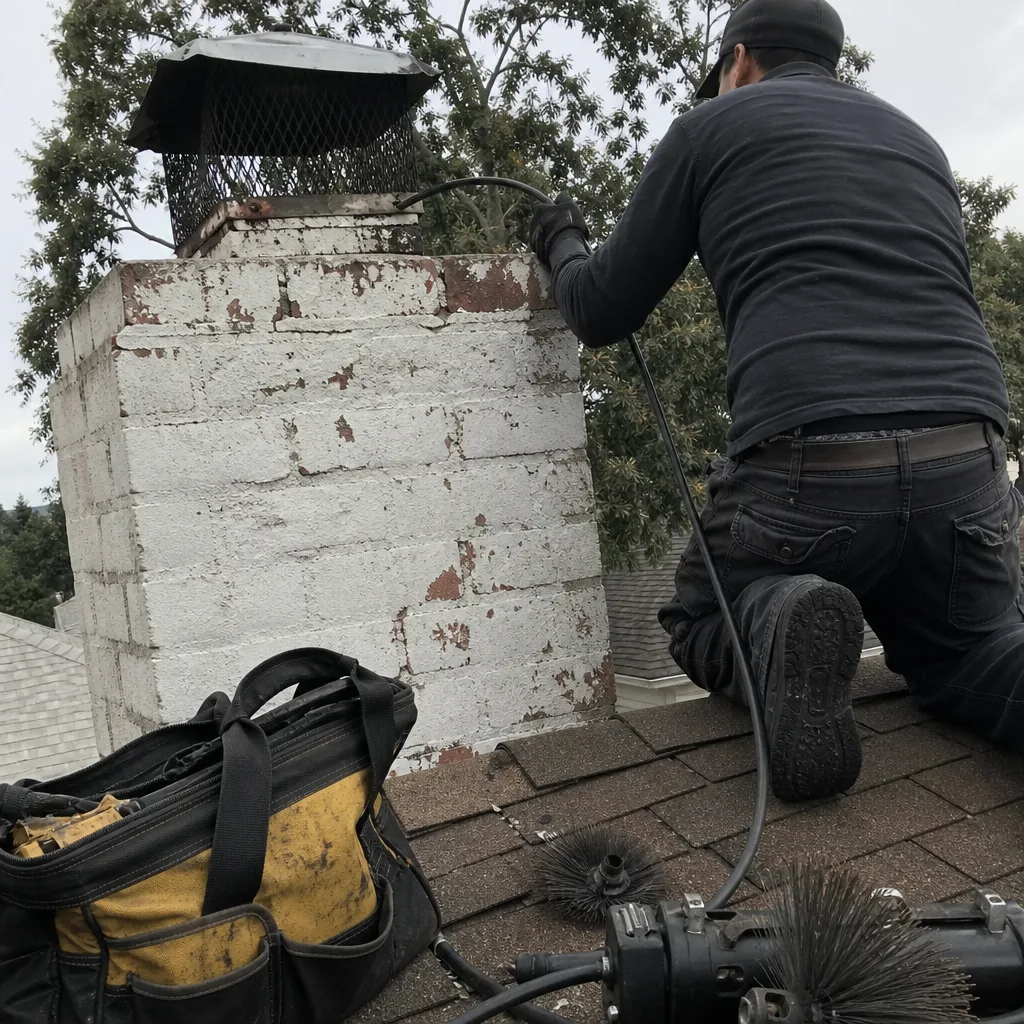
Chimney sweep logs do not sweep chimneys. They loosen some creosote - which then falls where a brush and vacuum still have to collect it.
Chimney Sweep Maintenance Checklist for Woodland Hills Homeowners
Most Woodland Hills homeowners assume a chimney is a set-it-and-forget-it feature of the house. After all, we barely use our fireplaces compared to people in colder climates. That assumption is exactly what makes our local chimneys more dangerous than heavily used ones. Light, intermittent burning produces cooler fires and more condensation inside the flue, which means creosote accumulates faster per fire than it does in a hot, roaring blaze. This guide gives you a realistic, month-by-month maintenance checklist built specifically for Woodland Hills weather, and it tells you exactly which tasks you can do from your living room and which ones require a trained professional with a camera. For DIY vs Professional Chimney Cleaning: The Woodland Hills Homeowner’s Decision Guide, see our dedicated breakdown.
Styles & brands we work with
Quick Answer
A Woodland Hills chimney maintenance checklist should include a visual firebox inspection before the first fall fire, a damper operation check, our Chimney Sweep services once per year (or every 40 to 50 fires, whichever comes first), a post-Santa Ana wind debris inspection, and photo documentation of your firebox at the start and end of each burn season. Most of these checks take under ten minutes from inside the house and cost nothing. The one thing you should not skip, even if you only burn six fires a year, is the annual professional inspection with a camera.
Table of Contents
- Why Woodland Hills Is Different (and Why That Changes Your Checklist)
- The Month-by-Month Woodland Hills Chimney Maintenance Calendar
- The Post-Santa Ana Wind Inspection: What Debris Actually Looks Like Inside a Flue
- Damper, Liner, and Firebox Checks You Can Do From Inside the House
- DIY Observation vs. Professional Action: A Clear Line
- Documentation Habits: Why Photographing Your Firebox Each Season Saves You Money
- How Often Should You Actually Sweep a Woodland Hills Chimney?
- Common Mistakes to Avoid
- When to Call a Professional
- Frequently Asked Questions
- The Bottom Line
Why Woodland Hills Is Different (and Why That Changes Your Checklist)
The Chimney Safety Institute of America recommends an annual inspection for any chimney that gets used. Here’s the thing: “used” in Woodland Hills might mean five or six fires in January, a couple in December, and nothing for the other ten months of the year. That sounds like barely any use at all, so plenty of homeowners here skip the inspection entirely. We get it. But the physics of a rarely used fireplace is not on your side.
When you burn a fire in a Woodland Hills January, the outside temperature might be 55 degrees. That’s cold enough to want a fire, but it’s not the bone-deep freeze that makes people in Vermont burn for six straight months. Your fire burns cooler, the flue stays cooler, and the smoke condenses on the flue walls instead of rising cleanly out the top. That condensation is creosote (the flammable tar buildup that makes chimneys a fire risk), and it forms fastest in cool, short fires, exactly the kind of fires we build here.
Woodland Hills also has a wildfire season that doesn’t affect most of the country. When the Santa Anas blow through the canyons in October and November, they carry ash, dust, and fine particulate straight into uncapped or poorly capped flues. We’ve opened dampers in Woodland Hills homes and found a quarter inch of fine gray ash sitting on the smoke shelf, deposited by winds that never even felt that strong at ground level. The checklist below accounts for these local realities. It’s not a generic once-a-year prompt. It’s built around how people in Woodland Hills actually use their fireplaces.
A quick note on our perspective here at Hadley Chimney Woodland Hills home: we’ve been working on chimneys in this area since 2003, and the problems we see most often are not dramatic collapses. They’re slow, invisible creosote buildup, ash-clogged smoke shelves, and damper assemblies rusted solid from a decade of disuse. This checklist is designed to catch those problems before they become expensive repairs.
The Month-by-Month Woodland Hills Chimney Maintenance Calendar
Here’s the realistic annual rhythm for a Woodland Hills chimney, month by month. You don’t need to do something every month, but you do need to know which months matter and what to check in each one.
September: The Pre-Season Baseline Photo
Before you even think about lighting a fire, take out your phone and photograph your firebox from three angles: straight on, looking up at the damper, and a close-up of the back wall where creosote tends to accumulate. These photos are your baseline. Next September, you’ll compare new photos to these and see exactly how much buildup happened over the season. This single habit takes ninety seconds and gives you more diagnostic information than any visual inspection from memory ever could. More on this in the documentation section below.
October: The Santa Ana Wind Debris Check
By October, the Santa Ana winds have usually kicked up at least once. Before your first fire of the season, open the damper and shine a flashlight up into the flue. If you see twigs, leaves, ash, or anything that looks like it blew in from outside, don’t light a fire yet. Debris in the flue is both a fire hazard and a carbon monoxide risk, because a blocked flue pushes smoke back into the house. If you see debris, call a Chimney Sweep in Woodland Hills to clear it before your first burn.
November: First Fire Test and Creosote Check
Build your first fire of the season. Watch the smoke: if it drafts up cleanly and the room stays smoke-free, your damper is likely functioning. If smoke rolls back into the room, the flue is cold and may need a pre-warmed draft (a rolled-up newspaper lit and held near the damper for thirty seconds usually fixes this), or there may be a blockage. After the fire cools, run a finger along the back wall of the firebox. A fine, dusty residue is normal. A thick, sticky, shiny, or crusty layer means creosote is building up and you’re due for a professional sweep.
December through February: Burn Season Monitoring
During the months when you actually use the fireplace, check these three things once a week: (1) Is the glass or screen staying clear of heavy soot buildup? (2) Does the fire draft consistently, or does smoke occasionally puff into the room? (3) Do you hear any crackling, popping, or hissing sounds coming from the flue that are not coming from the fire itself? Those sounds can indicate active creosote ignition. If you hear them, stop burning and call for an inspection.
March: Post-Season Inspection and Sweep
After your last fire of the season, schedule your professional chimney sweep. This is the ideal time for Woodland Hills homeowners for three reasons. First, the sweep removes all the creosote you accumulated during the burn season, so it doesn’t sit in your flue all summer, hardening and getting more difficult to remove. Second, spring is the slow season for chimney companies, which means easier scheduling. Third, any repair issues the sweep uncovers can be addressed during the summer, before you’re thinking about fires again. If you only do one professional maintenance task per year, this is the one.
April through August: Off-Season Monitoring
During the warm months, your fireplace is dormant, but it’s not maintenance-free. Check for moisture intrusion after any rare summer rain: look for water stains on the ceiling around the chimney chase, or white efflorescence (mineral deposits) on the exterior brick. Both indicate a flashing or crown leak. Also, check that your damper is closed. An open damper all summer lets conditioned air escape, which raises your cooling bill and invites insects and small animals into the flue. In Woodland Hills, where summer temperatures regularly hit the high 90s, an open damper is a quiet, constant drain on your HVAC system.
The Post-Santa Ana Wind Inspection: What Debris Actually Looks Like Inside a Flue
Santa Ana winds are a defining feature of life in Woodland Hills and the surrounding San Fernando Valley. They blow hard, they blow hot, and they carry an impressive amount of material with them. Your chimney is a vertical tube open to the sky, which means during a Santa Ana event, it’s essentially a debris-collection device. Here’s a step-by-step checklist for what to inspect after a significant wind event, all of which you can do from inside the house without climbing on the roof.
- Open the damper fully and look up. You’re looking for anything that is not the smooth, dark interior of your flue. Twigs and leaves are the most obvious, but also look for fine gray dust coating the walls, which is ash carried from wildfire areas or dry brush burning.
- Check the smoke shelf. This is the flat ledge just above the damper. It catches debris that falls down the flue. Shine a flashlight onto it from below or use a small mirror to see it. If it’s covered in ash or debris, that material is one strong draft away from falling into your firebox or smoking up your living room.
- Look for animal sign. Santa Ana winds sometimes blow birds out of their normal flight paths, and disoriented animals look for sheltered openings. Nesting material, droppings, or the sound of scratching when you tap the flue are all signs that something has taken up residence.
- Check the firebox floor. After a wind event, open the damper and look for a fresh dusting of ash or debris on the firebox floor that wasn’t there before. That’s direct evidence that wind-driven material is entering the flue.
- Test the draft with a match or lighter. Light a match and hold it near the open damper. If the flame pulls toward the flue, you have good draft and the flue is likely clear. If the flame flickers, gutters, or leans back into the room, you may have a partial blockage.
If you find debris after a Santa Ana wind event, the fix is usually straightforward: a professional chimney sweep will remove the material and, if this is a recurring problem, recommend a chimney cap or a better-fitted one. We install caps frequently in Woodland Hills specifically because of Santa Ana winds, and they are one of the lowest-cost, highest-return upgrades you can make to a chimney in this area. In our experience serving Woodland Hills since 2003, homes near the foothills on the south side of Ventura Boulevard get hit harder by wind-driven debris than homes down on the valley floor, simply because they sit closer to the open canyons where the winds funnel through.
Damper, Liner, and Firebox Checks You Can Do From Inside the House
You don’t need to be on the roof to catch most chimney problems early. In fact, the majority of actionable maintenance observations happen from inside the firebox opening. Here are the three component checks every Woodland Hills homeowner should know how to perform.
The Damper Check
Your damper is the metal door that seals the flue when the fireplace isn’t in use. A damper that won’t close fully is an energy leak; a damper that won’t open fully is a smoke problem. To check it: open and close the damper three times, listening for grinding, scraping, or sticking. A well-functioning damper moves smoothly and seats cleanly in the closed position. Rust on the damper frame, visible from the firebox, is a sign that moisture has been getting down the flue, usually through a failed cap or a cracked crown. Damper assemblies in Woodland Hills rust faster than you’d expect, because even though we get little rain, the marine layer and morning fog carry enough moisture to condense on cool metal surfaces in an open flue.
The Liner Check (What You Can See)
The liner is the protective channel inside your chimney that contains the heat and gases from your fire. In a masonry chimney, you can often see the first few feet of the liner from inside the firebox with a good flashlight. What you’re looking for: flaking or spalling clay tiles, white or tan staining that indicates water penetration, and cracks that run vertically along the liner wall. If your liner is metal (the kind used with many prefabricated fireplaces), look for rust, warping, or visible seams that have separated. If you see any of these, that’s a call for a professional inspection, because a compromised liner is a fire risk and a carbon monoxide risk. We work with HeatShield ceramic repair compound and Chimney Repair in Woodland Hills services that can often restore a liner without a full replacement, but the first step is always visual confirmation with a camera.
The Firebox Check
The firebox is the chamber where the fire actually burns. It’s designed to withstand high heat, but cracked firebox panels or deteriorated mortar joints create direct paths for heat and gases to reach the framing around your fireplace. Check the firebox at the start and end of each burn season. Look for: cracks wider than a hairline in the firebrick or refractory panels, gaps in the mortar joints where you can fit the edge of a coin, and any areas where the back wall of the firebox appears to have shifted or bowed. These are not cosmetic issues. A cracked firebox needs professional repair before the next fire.
DIY Observation vs. Professional Action: A Clear Line
One of the most frustrating parts of chimney advice online is the vague “when in doubt, consult a professional” line that gets tacked onto every sentence. That’s not helpful. So here’s a clear line, drawn from two decades of working on chimneys in Woodland Hills and the surrounding areas.
Things You Can Do Yourself (Observation Only)
- Inspect the firebox for cracks, gaps, and deterioration using a flashlight and a mirror
- Check the damper for smooth operation and rust
- Look up the flue for visible debris, nesting material, or heavy creosote
- Photograph the firebox, damper, and visible liner at the start and end of each season
- Check for water stains on the ceiling around the chimney chase after rain
- Replace the batteries in your smoke detector and carbon monoxide detector (yes, this is part of chimney maintenance)
Things That Require a Trained Professional (No Exceptions)
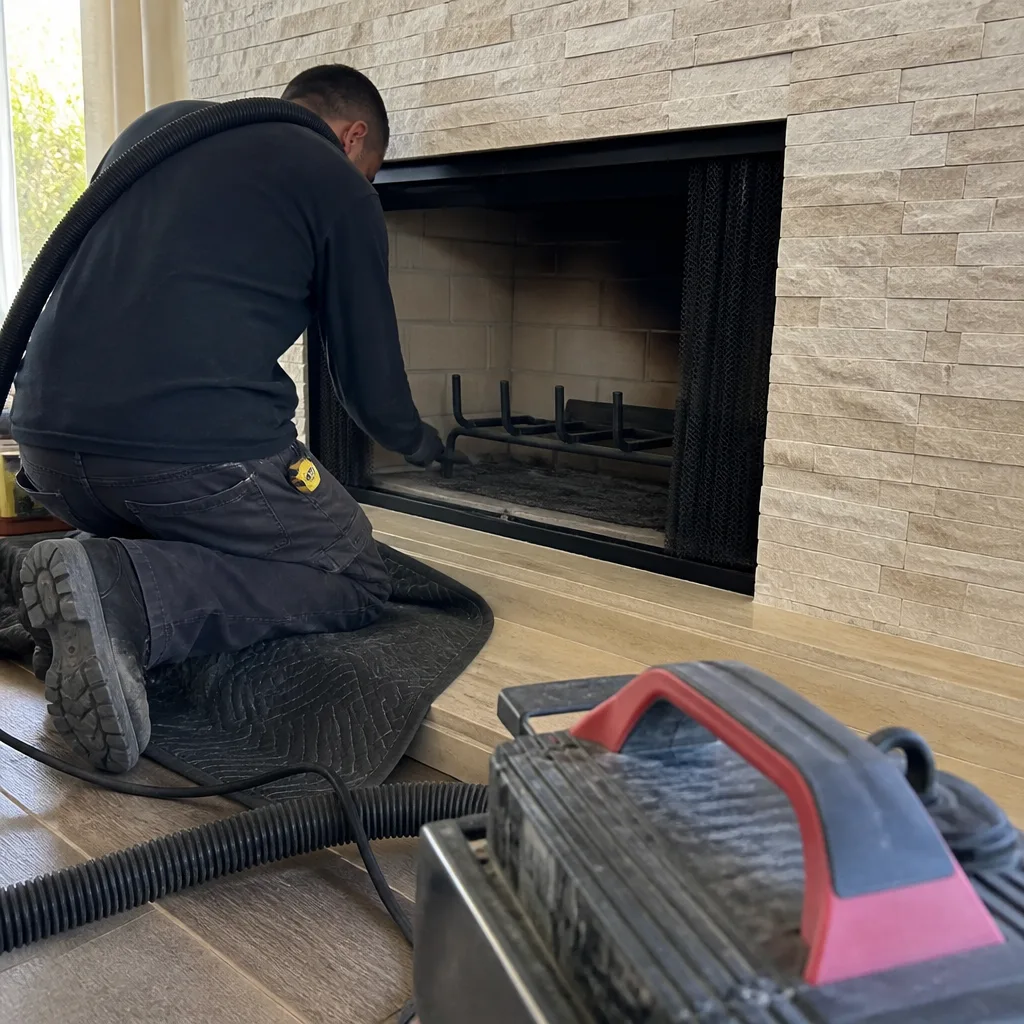
- Removing creosote buildup from the flue (this is a sweep, and it requires specialized brushes and vacuum equipment)
- Inspecting the full length of the liner with a camera (you cannot see most of your liner from the firebox)
- Repairing or replacing any part of the liner, firebox, damper, crown, or flashing
- Removing animal nests or live animals from the flue (live raccoons and birds are protected by state law in California, and removal requires specific protocols)
- Any work that requires accessing the roof or the top of the chimney (steep roofs are a leading cause of homeowner injuries, and chimney work on an elevated surface is not a DIY task)
- Diagnosing persistent smoke problems that don’t resolve with a pre-warmed draft
The reason we draw this line so firmly is not to protect our business. It’s because the dangerous parts of chimney maintenance are genuinely dangerous. Creosote removal without proper equipment sends flammable tar vapors into your living space. Roof access on a two-story Woodland Hills home means working at 20 feet or more with specialized fall protection. Liner repair requires understanding clearance-to-combustibles requirements that are spelled out in the California Mechanical Code and the manufacturer’s installation instructions. These are not things you pick up from a YouTube video.
Documentation Habits: Why Photographing Your Firebox Each Season Saves You Money
Here’s a habit that costs nothing and pays off repeatedly: photograph your firebox, damper, and visible liner at the start and end of every burn season. Store the photos in a dedicated album on your phone or in a cloud folder. This simple practice does three concrete things.
First, it gives you a baseline for comparing year over year. Without photos, you’re relying on memory, and human memory is terrible at detecting slow changes. A creosote layer that doubles from one year to the next is obvious in side-by-side photos and invisible in memory. The photos let you see exactly when a problem started developing, which often helps diagnose the cause.
Second, it protects you in disputes. If you hire a chimney company for a repair and something goes wrong, dated photographs showing the condition of the firebox before the work began are invaluable. The same is true if you’re selling your home in Woodland Hills: a photo history of chimney maintenance is documentation that your fireplace has been cared for, which matters to buyers and inspectors. Our Gas Fireplace Repair in Woodland Hills team sees this all the time during pre-listing inspections.
Third, it makes professional inspections faster and more useful. When our technicians arrive at a Woodland Hills home and the homeowner can show us photos from the previous season, we immediately know what “normal” looks like for that chimney. That’s true personalized service, and it means we’re not spending twenty minutes establishing a baseline that already exists.
We recommend taking photos with the flash on, from at least three angles, and naming the files with the date (for example, “firebox_092025_1.jpg”). If you want to be extra thorough, take a short video of the damper opening and closing. Ten minutes of documentation per year will make every future chimney decision easier and more informed.
How Often Should You Actually Sweep a Woodland Hills Chimney?
The standard recommendation is once per year, and that’s the right cadence for most Woodland Hills homes. But let’s be precise about what “once per year” means here, because the standard recommendation assumes a certain amount of use that many local homes don’t reach.
The more accurate rule from the Chimney Safety Institute of America is to sweep when creosote buildup reaches 1/8 inch thick. You can’t measure that from the firebox, which is why the annual professional inspection exists. But here’s a practical guideline for our area: if you burn fewer than 20 fires per year, an annual sweep is still advisable, but what you’re really paying for is the inspection. The sweep itself may find little to remove. If you burn 20 to 50 fires per year, the annual sweep is doing real work and you should not skip it. If you burn more than 50 fires (rare in Woodland Hills but not unheard of for homes with wood-burning stoves), you may need a mid-season sweep as well.
Here’s the cost reality for Woodland Hills homeowners. A standard chimney sweep in our area typically runs $180 to $350 depending on the size of the flue, the amount of creosote, and whether you have any accessibility issues like a steep roof or a tall chase. That’s a fraction of what a chimney fire or a liner replacement costs, which is $3,000 to $7,000 for a full liner job. The math on annual sweeps is not complicated. And when you book with a company like Hadley Chimney Woodland Hills, you get a written price before any work starts, so there’s no guesswork about what the sweep will cost.
One more Woodland Hills-specific consideration: if you live in a home built in the 1960s or 1970s in neighborhoods like Walnut Acres, Winnetka, or the areas south of Ventura Boulevard, your chimney may have an original clay tile liner that’s now 50 to 60 years old. Clay liners at that age are prone to cracking, and the damage is usually invisible from the firebox. This is exactly the situation where the annual camera inspection earns its keep. We use DuraFlex flexible liner systems when a replacement is needed, and we’ve restored many older Woodland Hills chimneys to safe operation without a full rebuild.
Common Mistakes to Avoid
- Skipping the inspection because “we barely use the fireplace.” This is the most common mistake we see in Woodland Hills, and it’s counterintuitive but true: light use produces cooler fires, which produce more creosote per fire than hot, sustained burns. Your six January fires are doing more creosote damage per fire than a Vermont homeowner’s twenty December fires.
- Leaving the damper open during the summer. An open damper is a hole in your house that leaks cooled air all summer. In Woodland Hills, where air conditioning runs from May through October, that’s hundreds of dollars in wasted energy every year. Close the damper when the fireplace is not in use, and check it after every fire once the ashes are cold.
- Burning unseasoned wood or construction lumber. Wood that hasn’t been split and dried for at least six months burns cool and smoky, which accelerates creosote buildup. Construction lumber and plywood are worse: they burn hot enough to damage your firebox and they off-gas chemicals you don’t want in your living room. Burn only seasoned hardwood, and source it from a firewood vendor who can tell you the moisture content.
- Ignoring the smoke detector placement problem. If your smoke detector is too close to the fireplace, it’ll go off every time you build a fire, and the temptation is to disable it. Don’t. Instead, move the detector at least 10 feet from the fireplace opening, or use a photoelectric detector, which is less sensitive to the fine smoke that wafts out during startup. A disabled smoke detector is worse than no detector, because it gives you false confidence.
- Waiting until November to schedule a sweep. Every chimney company in the San Fernando Valley is booked solid from mid-October through January. If you want a pre-season inspection, schedule it in September or early October, before the first fire and before the rush. The same logic applies to post-season sweeps: March and April are wide open.
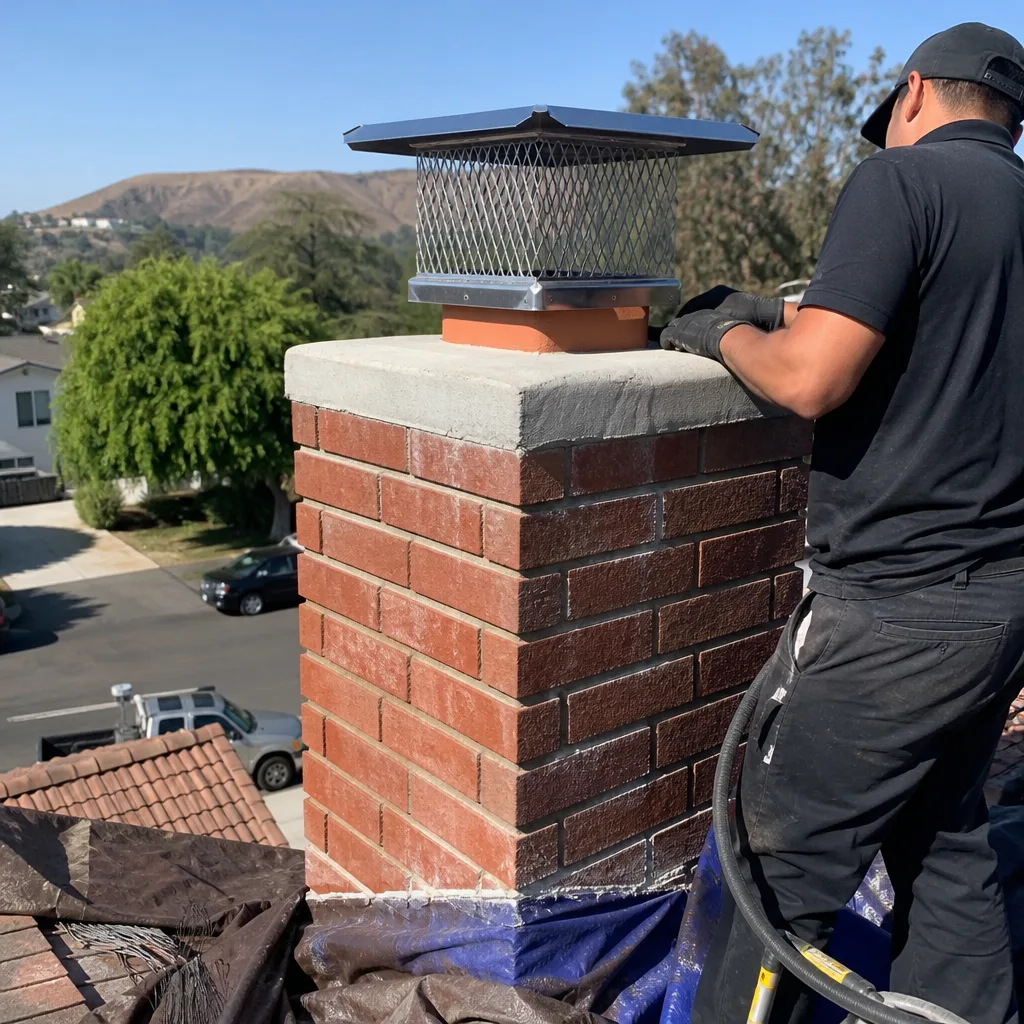
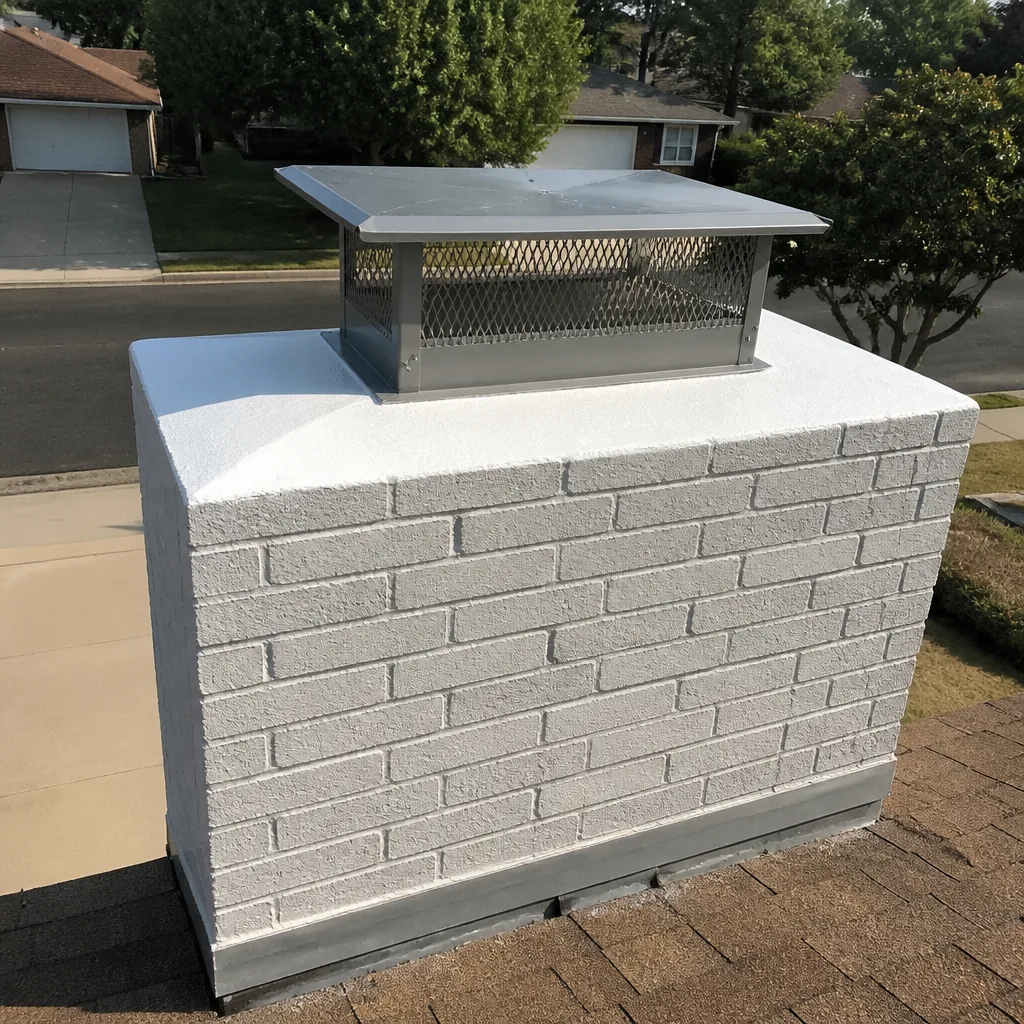
- Assuming a chimney cap is optional. In Woodland Hills, where Santa Ana winds carry debris and where homes sit close to open canyons, a chimney cap is close to mandatory. It keeps out wind-driven debris, rain, and animals. If your chimney doesn’t have one, or if yours is rusted or damaged, that’s a priority repair, not a nice-to-have. We install caps regularly, and they typically pay for themselves by preventing a single debris-related service call.
- Relying on the “fireplace smell test” to detect creosote. Some homeowners assume that if they don’t smell creosote, there’s no buildup. That’s not how it works. Creosote doesn’t off-gas a detectable smell until it’s been heated, which is why people often smell it in the summer after a hot day. The absence of a smell tells you nothing about the condition of your flue. Only visual inspection, ideally with a camera, gives you real information.
When to Call a Professional
Here are the specific scenarios where you should stop what you’re doing and make a call, not next month, but now. If you hear crackling or popping sounds coming from the flue during a fire, that’s creosote igniting, and you should evacuate the house and call 911. If you see smoke entering the room from anywhere other than the fireplace opening, that’s a draft problem or a blockage, and it means carbon monoxide is also likely entering the room. If you smell gas near a gas fireplace, evacuate and call your utility company first, then a gas fireplace repair company. And if your camera inspection reveals cracked liners, a rusted damper, or a firebox with wide cracks, those are professional repairs that cannot wait. Otherwise, the right time to call is before your first fire of the season, during the September or October window when scheduling is easy and prices are stable. Hadley Chimney Woodland Hills offers free estimates in Woodland Hills, call (559) 249-1347.
Frequently Asked Questions
A chimney sweep in Woodland Hills typically costs $180 to $350 for a standard single-flue masonry chimney, with the price varying based on the amount of creosote, the height of the chimney, and roof accessibility. Prefabricated fireplace systems with metal liners sometimes run slightly less, while heavily used chimneys with thick glazed creosote can cost more because the removal process takes longer. The key is that a written price should be provided before any work starts, so you’re never surprised at the door. Call (559) 249-1347 for an exact quote, estimates are free.
Yes, because the fires you build in Woodland Hills are cooler and shorter than fires in colder climates, and cool, short fires produce creosote faster per fire than hot, sustained burns. A sweep that removes even a small amount of creosote also gives a professional the opportunity to inspect the full liner with a camera, which catches problems like cracked clay tiles that you cannot see from the firebox. If you burn fewer than 20 fires a year, your annual visit is mostly about the inspection, and that inspection is what protects you from a $5,000 liner failure.
Once per year is the right cadence for most Woodland Hills homes, scheduled ideally in March or April after the burn season ends or in September or October before it begins. The trigger for a sweep is creosote buildup of 1/8 inch or more, and the only way to know your buildup is with a professional inspection. Homes with wood-burning stoves that see heavy daily use may need a mid-season sweep as well, but that level of use is uncommon in our area.
Missing a few years of chimney maintenance is not an automatic disaster, but it is a gamble, and the odds get worse every year. Creosote hardens over time into a glazed form that is more difficult and more expensive to remove, and moisture intrusion through a failed cap or crown gets worse with every passing rainy season. The most common outcome of long-term neglect is a chimney that needs a $3,000 to $7,000 liner replacement instead of a $200 to $350 sweep. If you suspect your chimney has been neglected, the first step is a camera inspection, not a sweep, because the inspection tells you what you’re actually dealing with. Call (559) 249-1347 to schedule one.
You can try, but the results are usually poor and the risks are real. Hardware store sweep kits don’t have the right brush density or length for most chimneys, and they don’t include the vacuum equipment needed to capture the creosote dust that gets knocked loose. Worse, the dust from a DIY sweep settles throughout your living room and is a respiratory irritant. The dangerous part of a sweep isn’t the brushing. It’s working at height if you’re on the roof, and it’s the containment and cleanup. A professional sweep with proper HEPA filtration keeps that dust out of your home entirely.
Don’t force a stuck damper. The handle or lever is attached to a small cable or rod that is easy to break, and a broken damper mechanism is a more expensive repair than a stiff one. If the damper is stuck in the open position, try cleaning around the damper frame with a stiff brush to remove rust and soot buildup, which is often the culprit. If it’s stuck closed or jammed, stop trying to move it and call a professional. A damper that won’t open means you can’t use the fireplace safely, and the cause is usually rust on the damper seat or a loose connection, both of which are quick professional fixes.
The Bottom Line
The chimney maintenance checklist that works for Woodland Hills is not the same one that works for Vermont or Minnesota. Our chimneys face a specific set of conditions: light, intermittent use that produces fast creosote buildup, Santa Ana winds that carry debris into uncapped flues, and long stretches of disuse during which small problems become bigger ones because nobody is looking at the fireplace. The checklist is simple: photograph your firebox at the start and end of each season, check the damper and firebox from inside the house, inspect for wind-driven debris after every significant Santa Ana event, and schedule a professional sweep and camera inspection once per year, ideally in the spring. Most of these tasks take under ten minutes, and they cost nothing. The one that costs money, the annual sweep, is the single best insurance policy you can buy for a chimney, and in Woodland Hills. For more guides & resources, explore our blog.ills, it’s the one most likely to catch the invisible problems that the naked eye, and the idle eye, will miss.
Written by Cory Mitchell, Owner at Hadley Chimney Woodland Hills, serving Woodland Hills since 2003.
See the difference
 Before
 After
After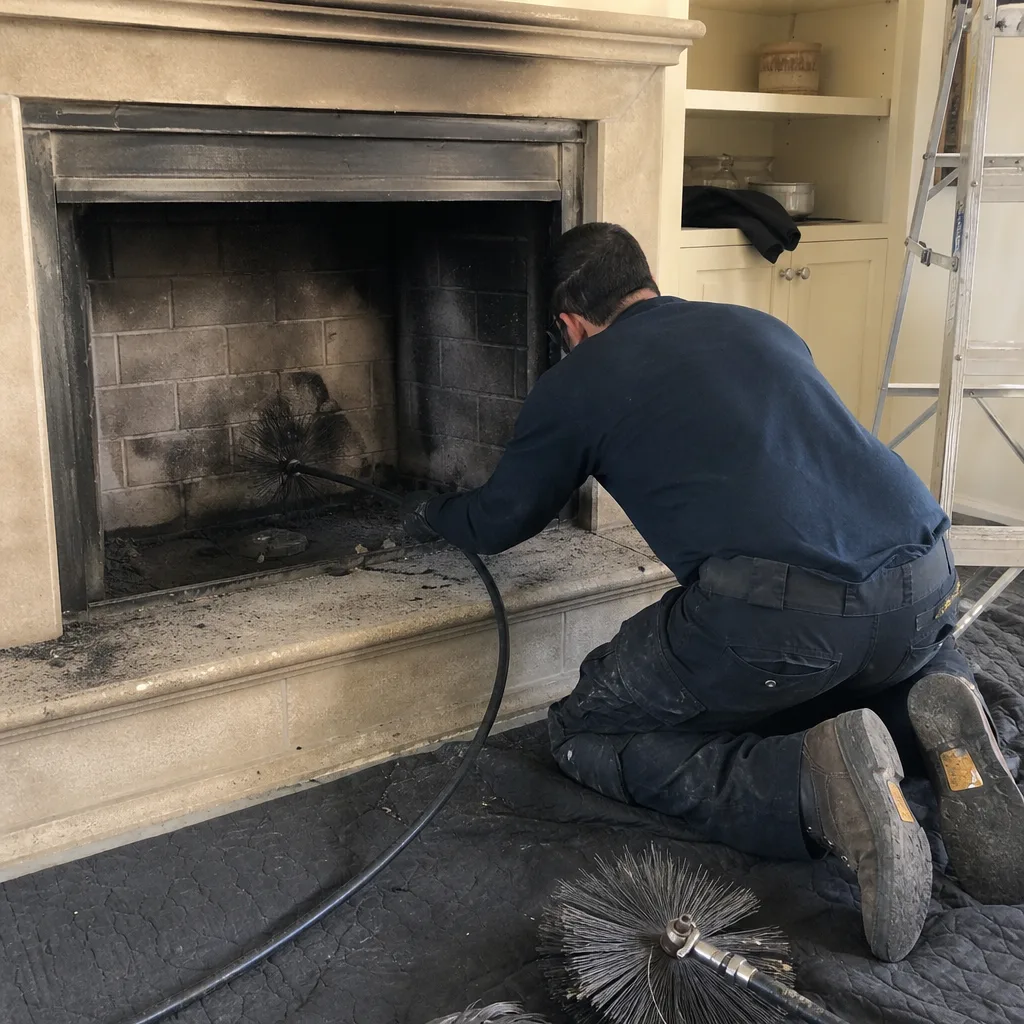 Before
 After
After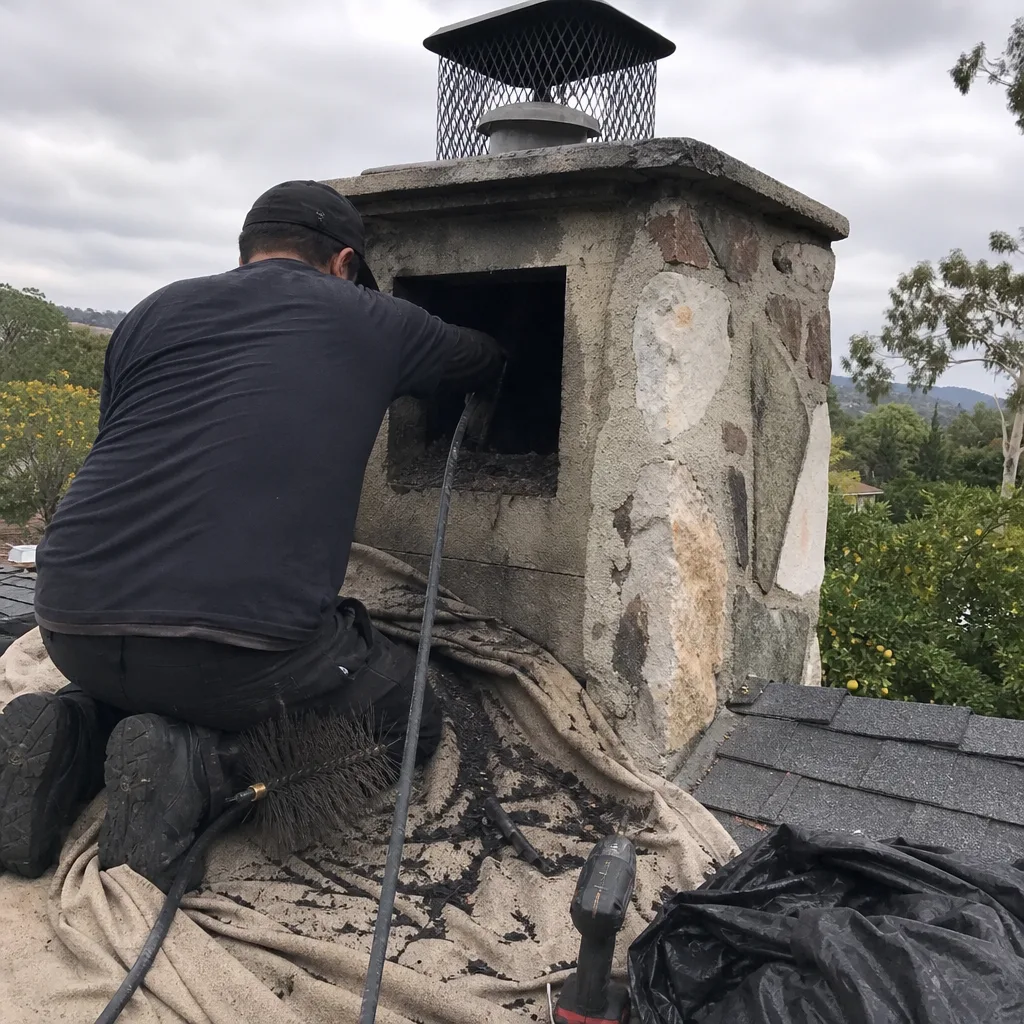 Before
 After
After