
Last updated October 15, 2026
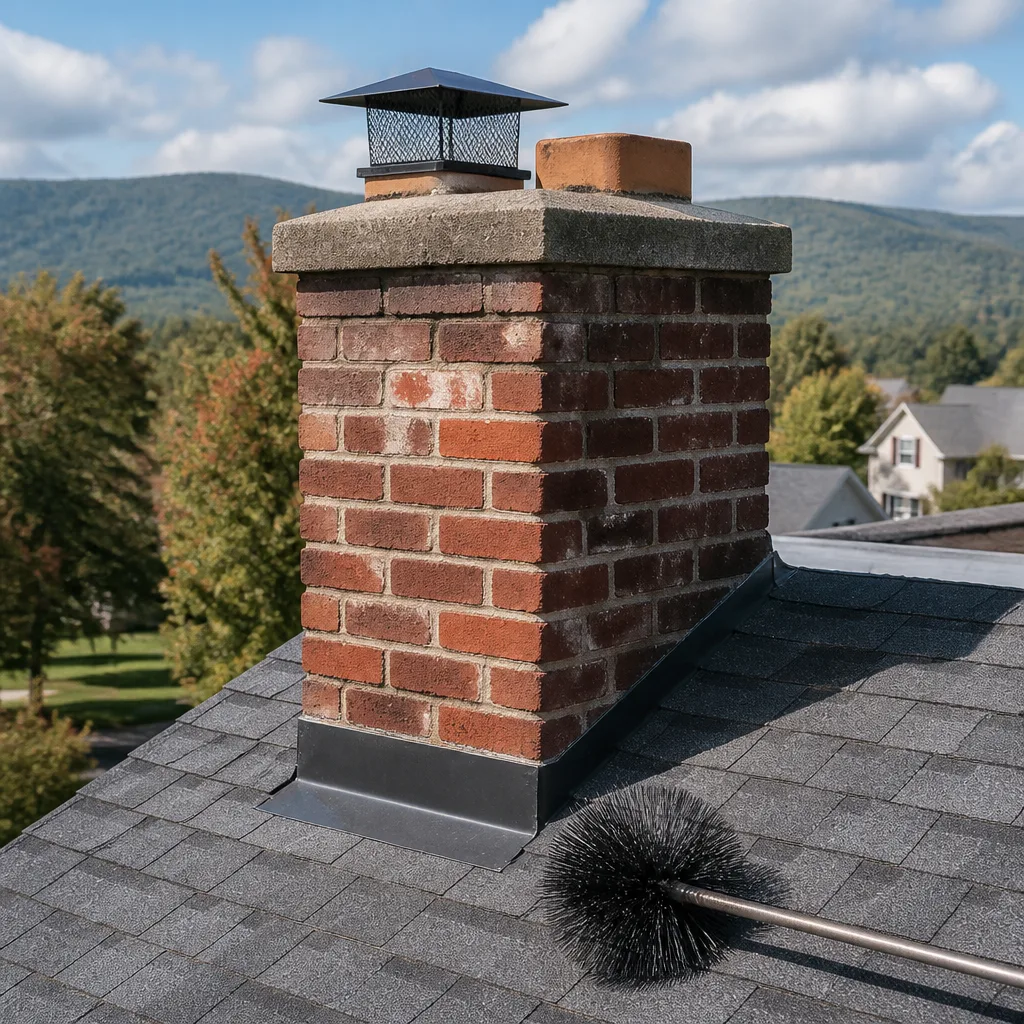 Sweep & inspection
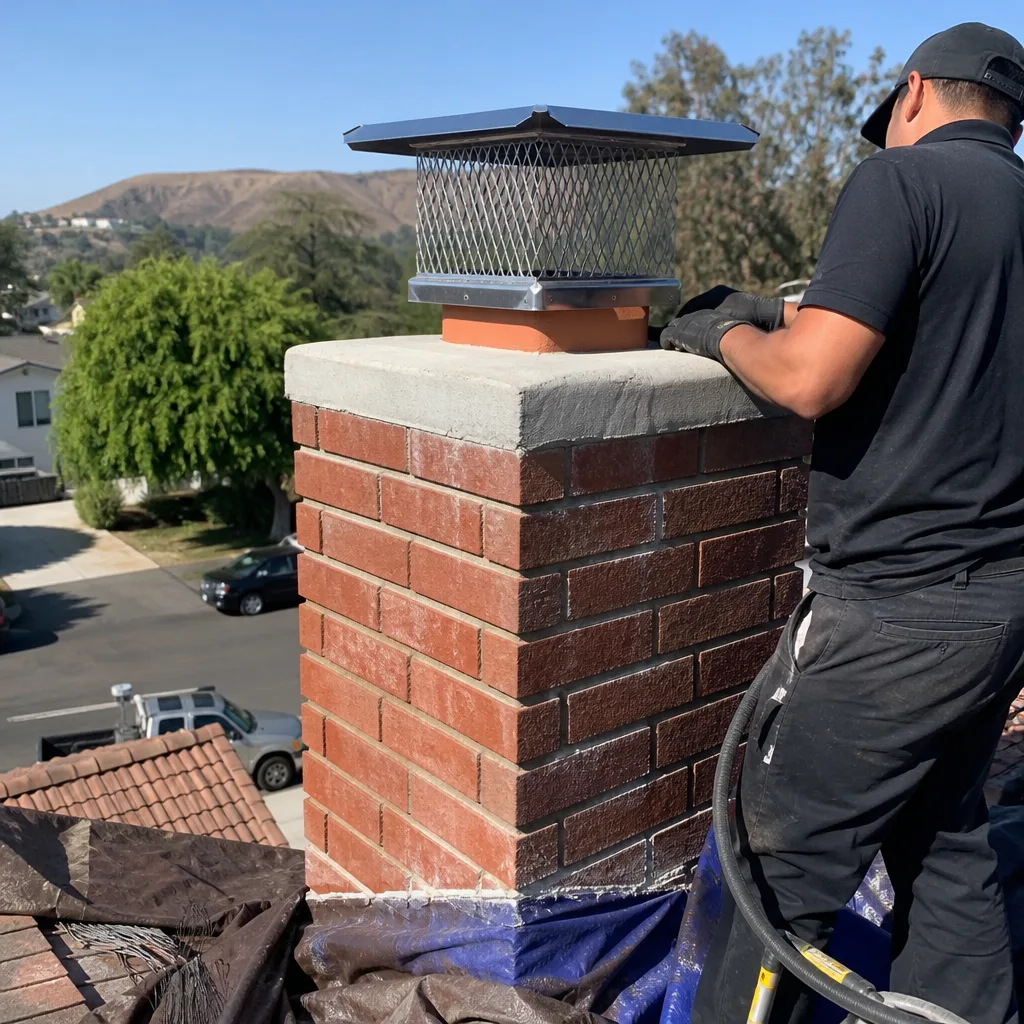
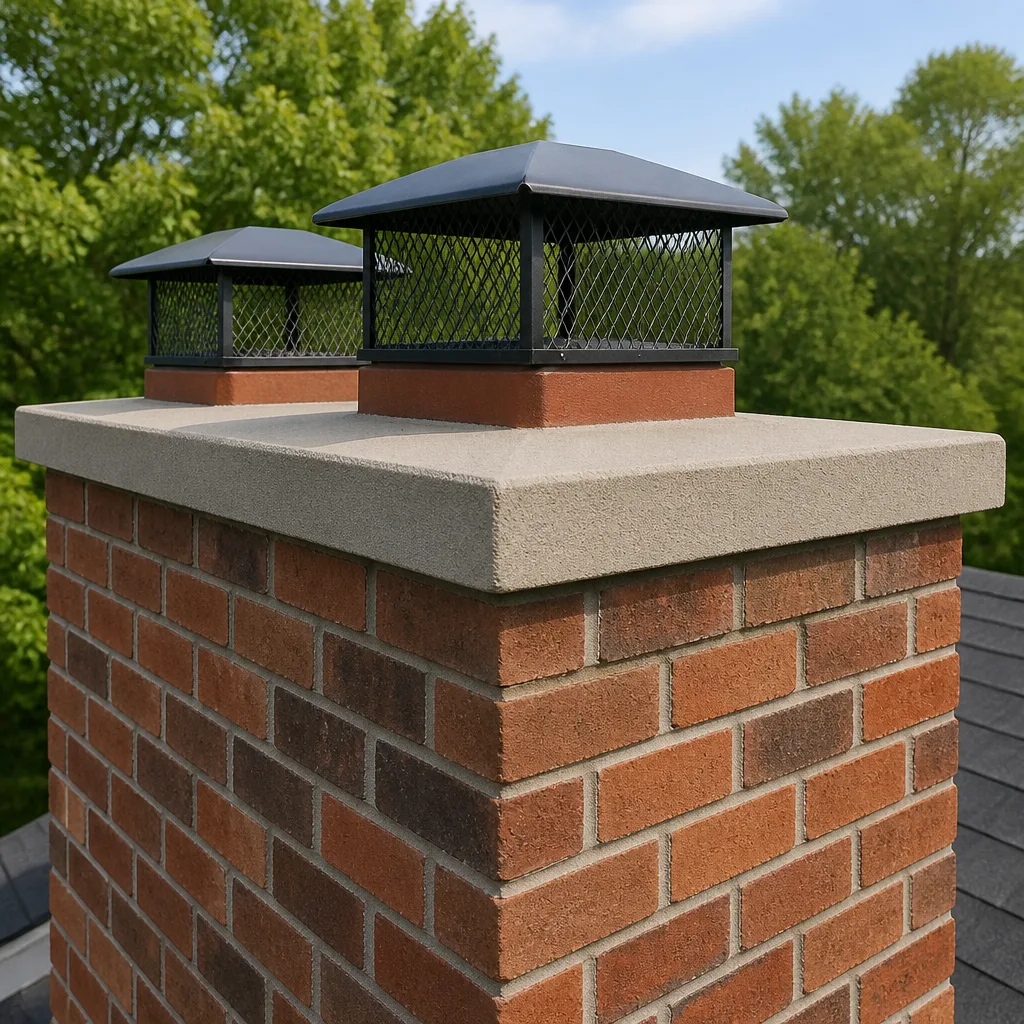 Caps & crowns
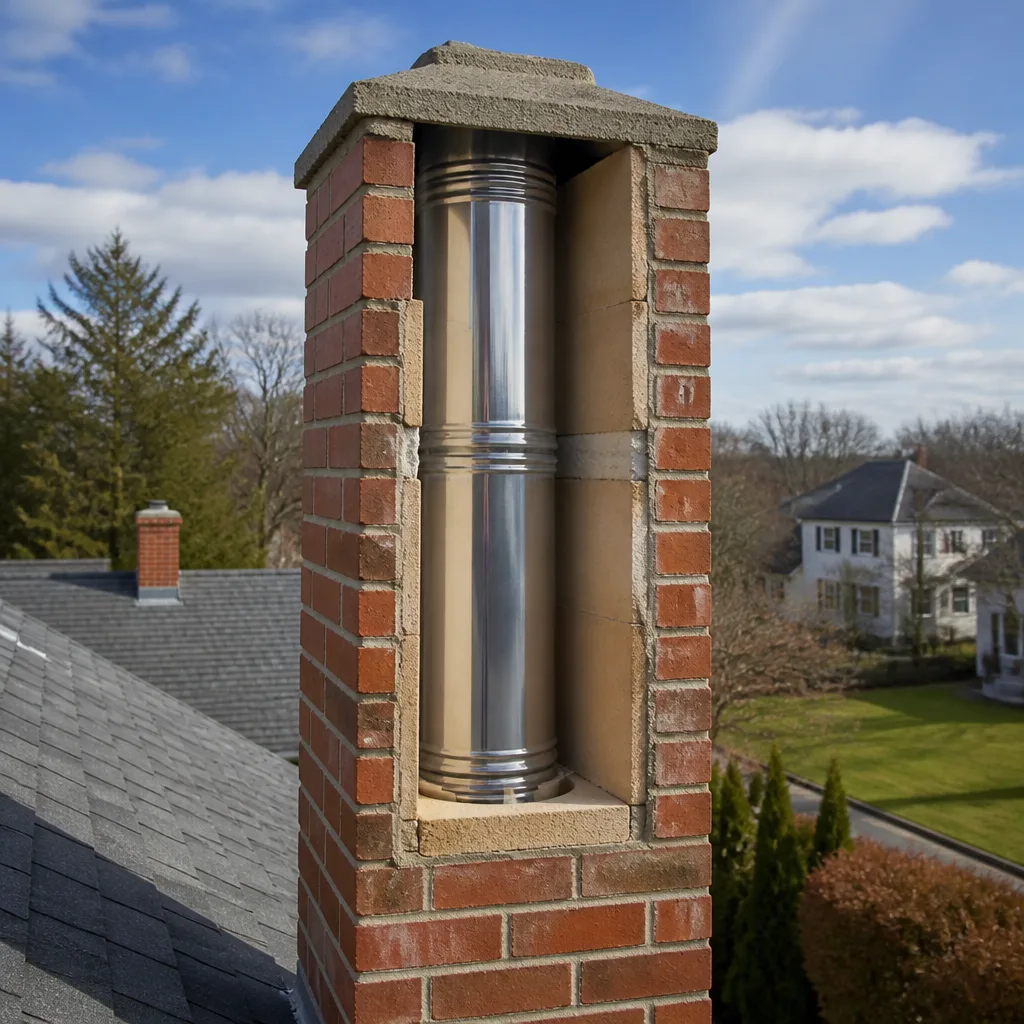 Flue relining
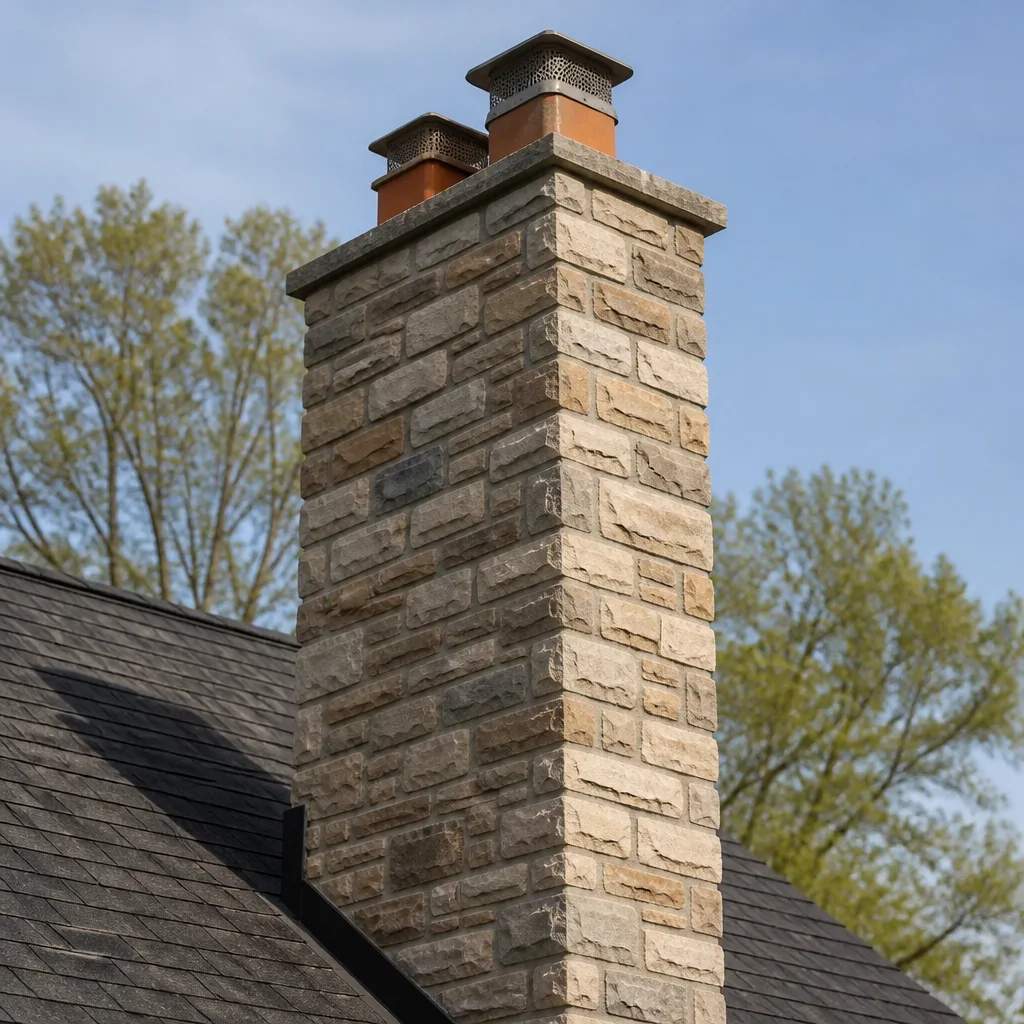 Masonry repair
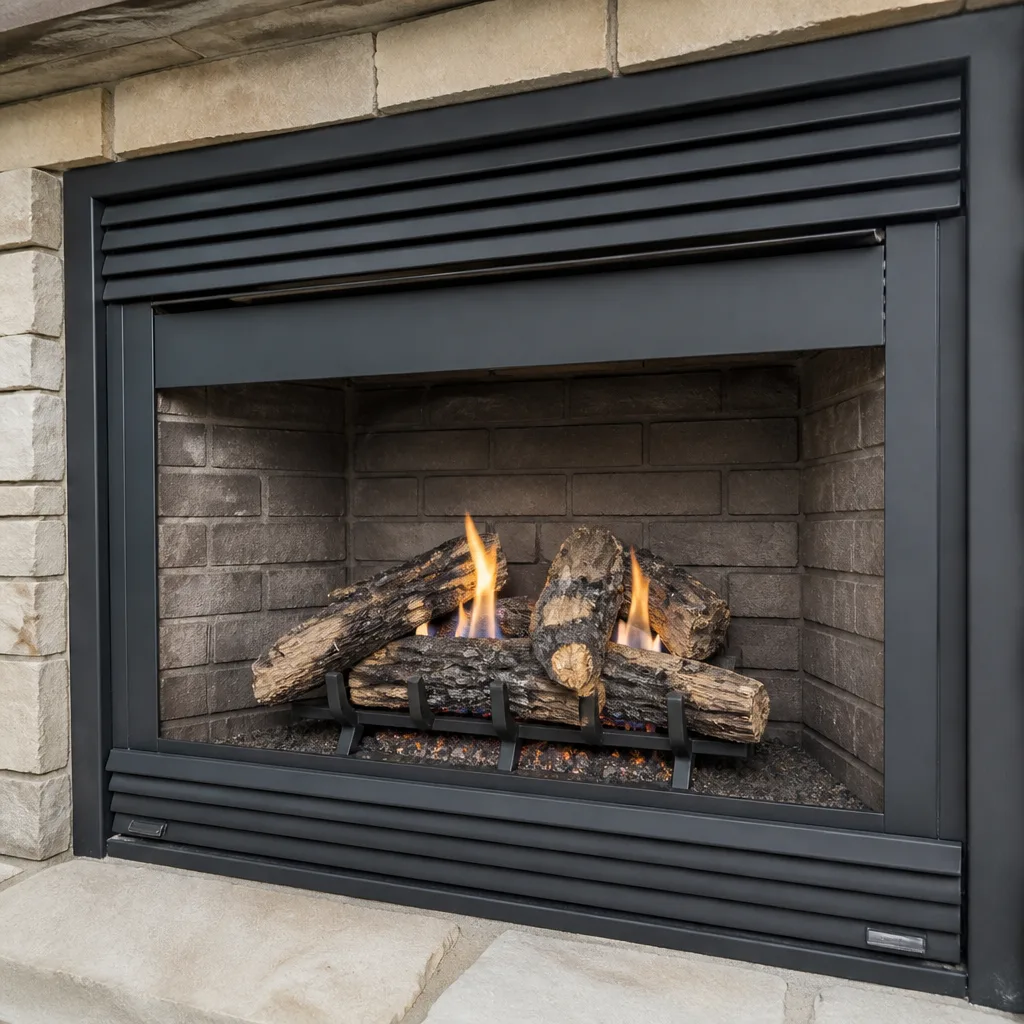 Gas fireplace service
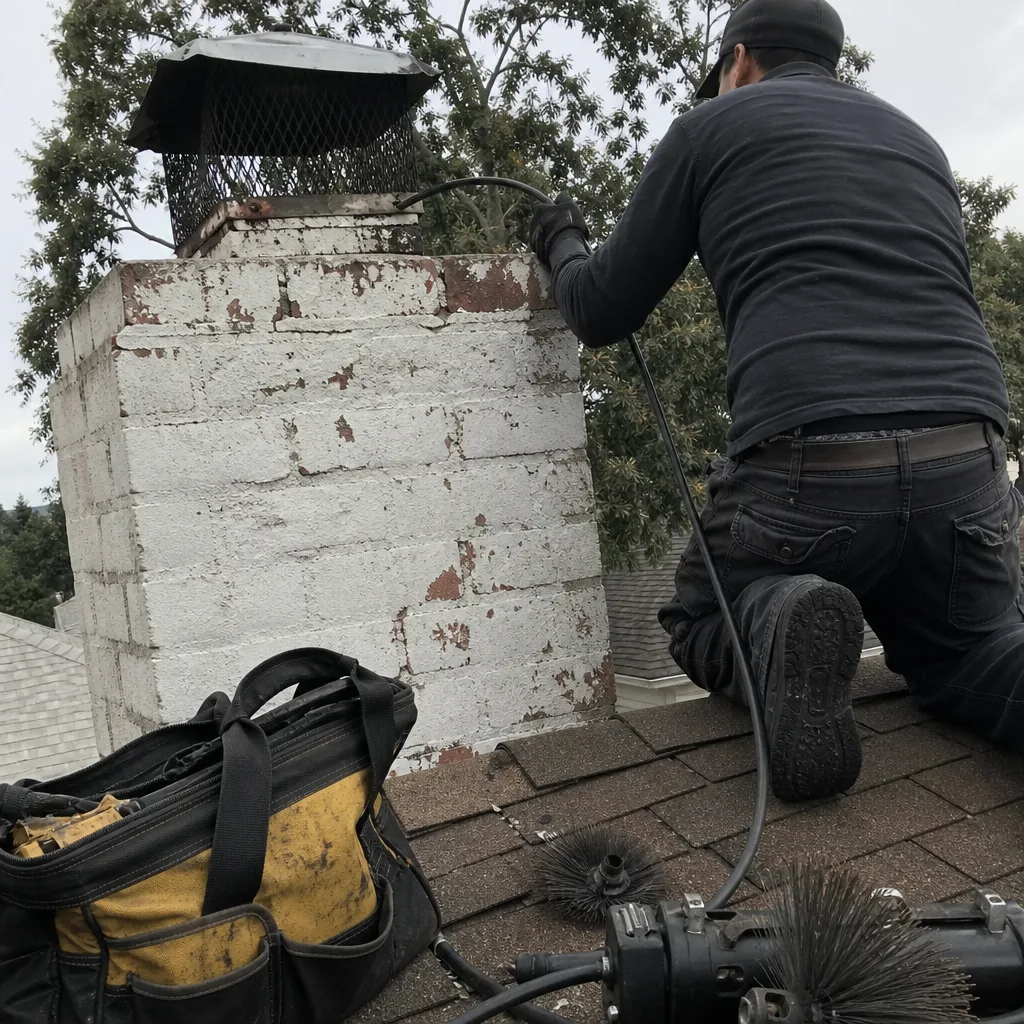
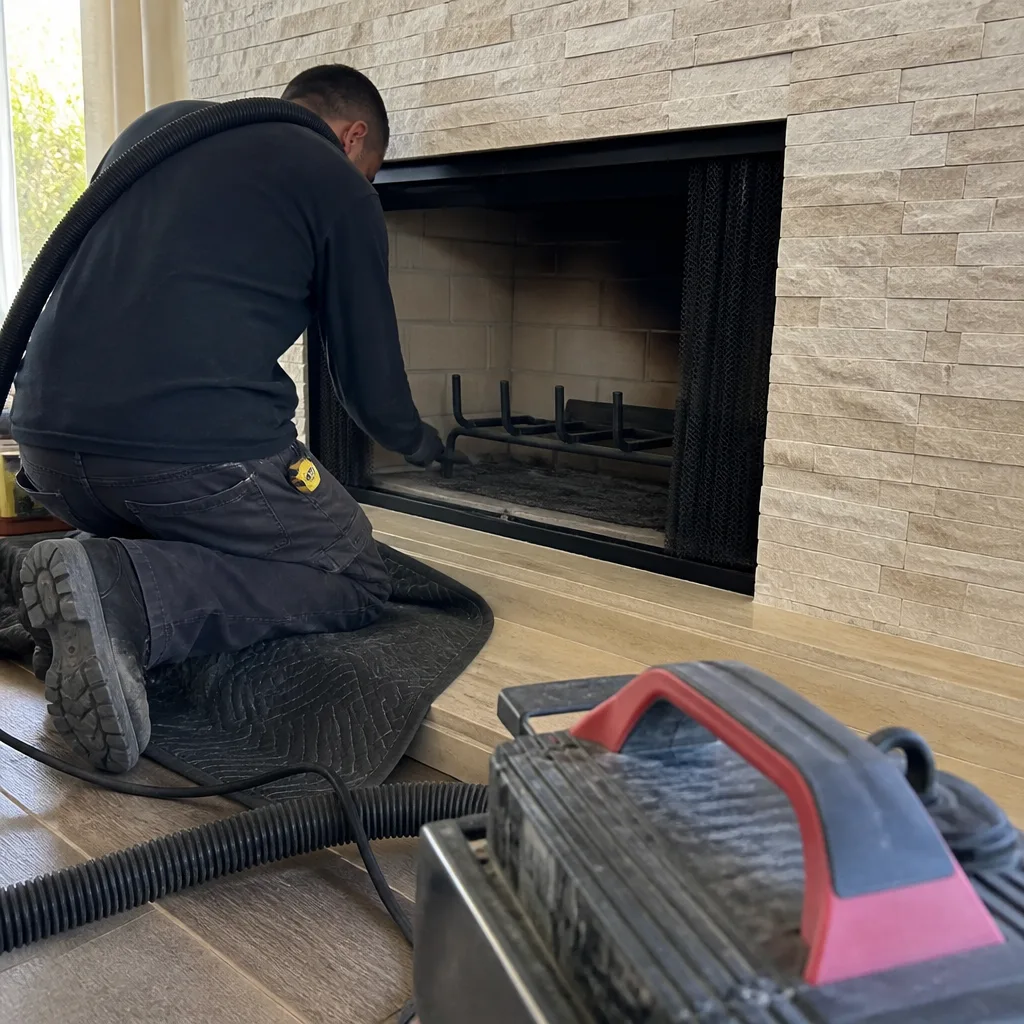
Level 1 sweep and inspection to the NFPA 211 annual standard - flue, crown, cap, and flashing checked and photographed
Chimney sweep logs do not sweep chimneys. They loosen some creosote - which then falls where a brush and vacuum still have to collect it.
Chimney Cleaning Warning Signs: A Woodland Hills Homeowner’s Reference Guide
Here’s the pattern we see again and again in Woodland Hills: a homeowner buys a house with a fireplace, burns maybe eight or ten fires each winter, and assumes that light use means light maintenance. The chimney barely gets used, so how bad could it be? That logic feels sound until you understand how creosote actually behaves. It doesn’t need nightly fires to become dangerous. It needs temperature swings, incomplete combustion, and time. This guide covers the warning signs that show up precisely when you don’t burn often, the ones homeowners routinely talk themselves out of, and what each sign actually means for the safety of your chimney. For a deeper look at keeping your system in top shape, see our Complete Guide to Chimney Cleaning in Woodland Hills.
Styles & brands we work with
Quick Answer
The most common chimney warning signs in Woodland Hills homes are a persistent campfire or asphalt smell when the fireplace isn’t in use, visible dark flaking or shiny tar-like buildup on the damper or firebox walls, smoke that drifts into the room instead of up the flue, white staining on the exterior chimney chase, and wildlife sounds coming from the flue. Any one of these means the chimney needs a professional inspection before the next fire. Several of them mean a chimney fire or carbon monoxide risk is already in play.
Table of Contents
- The Smell Profile: Creosote vs. Wildlife vs. Flashing Leak
- What a Damper That “Seems Fine” Can Be Hiding
- Why White Staining on Your Chimney Chase Matters More in Los Angeles
- Firebox Warning Signs: Spalling, Deteriorating Mortar, and Rust
- Smoke Rollout: Draft Problem, Blockage, or Liner Failure?
- The Low-Frequency-Use Chimney: Why Occasional Fires Create Different Risks
- How Woodland Hills Weather and Geography Affect Chimney Wear
- What Actually Happens If You Skip the Sweep
- Common Mistakes to Avoid
- When to Call a Professional
- Frequently Asked Questions
- The Bottom Line
The Smell Profile: Creosote vs. Wildlife vs. Flashing Leak
Woodland Hills homeowners tell us about three distinct chimney smells, and they routinely confuse them with each other. Each one points to a completely different problem, and treating the wrong one wastes time and money. Here’s how to tell them apart.
Creosote smell is the one most people describe as “campfire” or “barbecue” but the giveaway is that it never goes away. It’s strongest on humid days, especially in late summer and early fall when warm air pushes down the flue. Creosote (the flammable tar and carbon buildup that condenses on the flue walls during incomplete combustion) absorbs moisture and releases odor as it warms. The smell is acrid, slightly sharp, and gets stronger when the air is damp. If you haven’t burned in months and still smell last year’s fires, that’s creosote. And it’s not just a smell issue. Creosote is what chimney fires feed on.
Wildlife smell is entirely different. It’s organic, musky, and often concentrated near the fireplace opening rather than general room odor. Birds, squirrels, and raccoons find their way into uncapped or poorly capped flues across the San Fernando Valley, and in Woodland Hills the tree canopy along Mulholland and in neighborhoods like Walnut Acres makes chimney wildlife intrusion a year-round possibility. A dead animal in the flue smells like rotting meat, not like smoke. A live animal nest smells like a barn. Neither one improves with a fire, and attempting to “smoke out” a nest is a genuine fire hazard.
Flashing leak smell is the one that fools people into thinking the chimney itself is dirty. When the metal flashing that seals the chimney where it meets the roofline fails, water follows the chimney chase down into the wall cavity and eventually into the firebox. That water carries the smell of wet drywall, damp wood, and sometimes mold into the living space. It’s musty and stale, not smoky at all. A homeowner might burn a fire to dry things out, which works for a day or two, then the musty smell returns. If the smell comes and goes with rain, that’s a water problem, not a creosote problem.
We’ve walked into Woodland Hills homes where the homeowner was convinced they needed a chimney sweep when what they actually needed was flashing repair, or vice versa. The photos we take during an inspection usually settle it in about ten seconds.
What a Damper That “Seems Fine” Can Be Hiding
Most homeowners check the damper exactly once: they flip the lever, see the metal plate move, and move on with their day. But “it moves” is a low bar. A damper that opens and closes can still be hiding several problems that directly affect safety and heating efficiency. And because the damper is the boundary between the firebox and the flue, problems in this spot are usually the first visible signal that bigger issues are developing above.
Warped or pitted metal. Firebox temperatures regularly exceed 1,000°F. Over years of heating and cooling cycles, the damper plate can warp enough to leave small gaps even when completely closed. Those gaps let conditioned air escape up the chimney in summer and pull cold air down in winter. Warping is often invisible from the living room side. You have to get below the damper and look up with a flashlight, or feel with a mirror, to see the daylight sneaking through.
Missing or deteriorated gaskets. Modern dampers, especially top-sealing ones, depend on a gasket to make an airtight seal. That gasket is exposed to heat, soot, and moisture, and it breaks down faster than most homeowners expect. A damper plate that looks fine but has a crumbling gasket won’t hold air. The fix is often a simple gasket replacement, but it requires getting into the firebox and confirming the damper frame itself is still square.
Debris seats and rust on the damper plate. Creosote flakes, leaf litter, and even bird nesting material routinely collect on top of the damper plate. When the damper closes onto that debris, the seal is compromised. Even worse, the debris holds moisture against the metal, and rust follows. A rusted damper plate is a structural problem, not just a cosmetic one. Rust thins the metal and eventually makes the damper difficult or impossible to operate, at which point it needs replacement rather than adjustment.
The visual inspection from below. Here’s what we check when we look at a damper: Is the plate seated evenly in the frame? Are there visible gaps when it’s closed? Is there dark, tarry creosote staining the underside of the plate? Does the lever move smoothly or does it stick at one point? Each of those answers tells us something about the flue condition above. A damper that’s covered in Stage 2 creosote (the shiny, tar-like form that ignites easily) is usually a sign that the flue liner above is in worse shape. Dampers don’t get that dirty on their own. The flu is feeding them.
If you want a more complete picture of what a chimney inspection involves, the team at Chimney Sweep in Woodland Hills covers this step in depth with photos in every report.
Why White Staining on Your Chimney Chase Matters More in Los Angeles
White, chalky staining on the outside of a chimney is called efflorescence. It’s salt deposits left behind when water moves through masonry and evaporates on the surface. In humid climates, efflorescence is common and often fairly benign. In Los Angeles, and specifically in Woodland Hills, it’s a much more telling signal.
Here’s why: in the San Fernando Valley, chimneys aren’t exposed to constant rainfall. We get intense but brief storms, then months of dry air. That wet-dry-wet-dry cycle is exactly what pushes efflorescence to the surface. When you see white staining on a Woodland Hills chimney, it means water is getting into the masonry in quantities significant enough to pull mineral salts outward, and it’s happening repeatedly. It’s not a cosmetic blemish. It’s evidence of an active water infiltration pattern.
What the staining is really telling you is that the chimney’s outer defenses have failed, usually one of three things. The crown, which is the concrete slab that seals the top of the chimney, has cracked. Or the brick or stone veneer has developed hairline gaps in the mortar joints. Or the chase top on a prefabricated chimney has rusted through. In each case, water is getting inside the chimney structure, and water inside a chimney does several things at once: it accelerates creosote corrosion (water and creosote form acids that eat mortar joints), it damages the flue liner, and it rusts metal components like the damper and firebox door frame.
Efflorescence in Woodland Hills also matters because of the specific masonry materials used in the area’s housing stock. Older homes in the neighborhood, many built in the 1960s and 1970s, used softer brick and mortar mixes that absorb water more readily than modern materials. We see chimney chases on homes south of Ventura Boulevard that look solid from the street but have mortar joints that crumble under finger pressure. The white staining is often the only visible signal something’s wrong until a chunk of mortar falls out.
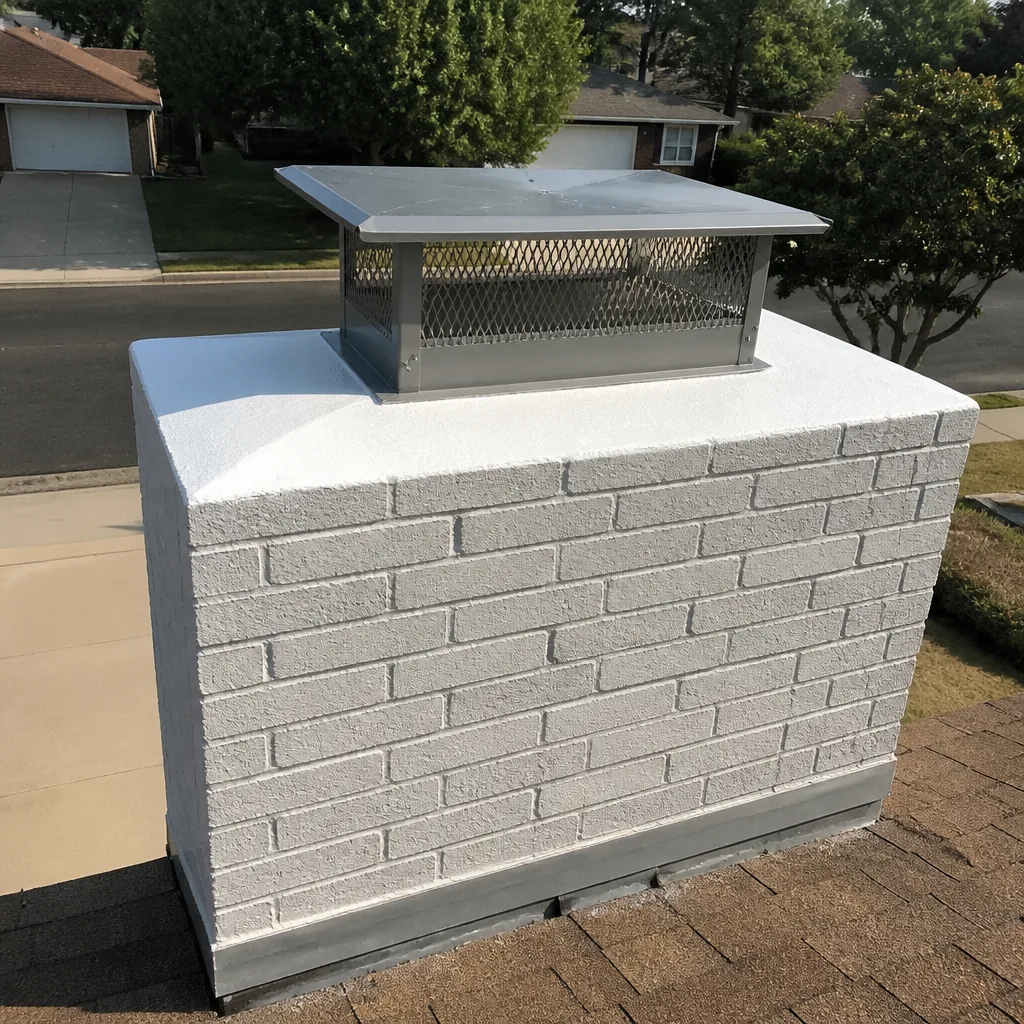
The fix isn’t complicated. It’s repointing the deteriorating mortar, sealing the crown, and in some cases applying a masonry water repellent. But it has to be done before the water reaches the firebox and the framing around the chase. Once the wood framing starts absorbing water, the repair cost jumps by a factor of four or five.
Firebox Warning Signs: Spalling, Deteriorating Mortar, and Rust
The firebox is the part of the chimney you can see without anyone going on the roof. It’s also the part most homeowners look at every day without actually seeing. Here are the specific things we look for in a firebox inspection and what each one means.
Spalling firebrick. Spalling is the technical term for when the face of a brick pops off, usually because trapped moisture turns to steam under heat. The face of the brick literally explodes off, leaving a pitted, rough surface. In a firebox, spalling is serious because firebrick is the barrier that protects the surrounding masonry and framing from the fire’s heat. A spalled area concentrates heat behind the protective layer. Left alone, spalling spreads. In our experience, Woodland Hills fireboxes that go years between inspections show spalling along the back wall where the highest heat collects.
Deteriorating mortar joints. The mortar between firebrick should be flush and smooth. When you run a fingertip along the joints and feel deep pockets, crumbling sand, or joints that have recessed a half inch or more, the firebox is losing its structural integrity. Firebrick and mortar expand and contract at different rates. Over enough heating cycles, poor-quality mortar gets pushed out. That’s not a normal cosmetic issue. Gaps in firebox mortar expose the material behind the firebox to temperatures it was never meant to take.
Rust on the damper plate or the firebox door frame. Rust in the firebox is always a water signal. Chimneys don’t produce water. It comes from above, usually through a cracked crown or failed flashing, and it finds its way down to the metal components. Rust on the damper plate means water has been sitting on the damper repeatedly. It could take months or years before the rust compromises the damper’s operation, but the same water is doing damage at every level it passes through. Rust is the earliest visible symptom of a leak you can’t see.
What to do about firebox damage. A firebox that shows any one of these signs needs repair, not just cleaning. Firebox repair typically involves tuckpointing the mortar joints, replacing spalled firebrick, and addressing the moisture source that started the problem. If you’re in Woodland Hills and seeing these signs, the scope of the repair depends on how far the deterioration has spread. Our Chimney Repair in Woodland Hills service documents everything with photos, so you’ll see the spalled brick before we replace it and the finished firebox after.
One note for anyone with a newer home: some Woodland Hills properties built in the last twenty years have prefabricated fireplaces with refractory panels instead of traditional firebrick. The warning signs are similar, but they show up as cracked panels and separated sheet metal seams rather than spalling brick. The principle is the same. Visible damage in the firebox is never harmless.
Smoke Rollout: Draft Problem, Blockage, or Liner Failure?
Smoke coming into the living room instead of going up the chimney is never a “just a drafty fireplace” situation. It’s a mechanical issue with a specific cause, and the cause determines the fix. Here’s how to tell the difference between the three most common smoke rollout scenarios, because they call for three completely different solutions.
Draft problem. A fireplace relies on a specific pressure relationship between the flue, the firebox, and the room. Warm air rises up the flue, pulling smoke with it. When that flow is disrupted by a house that’s too tightly sealed, an exhaust fan running in the kitchen, or a competing HVAC system, smoke backs into the room. The telltale signs are smoke that only appears when the house has all doors and windows closed, or smoke that starts after the fire has been burning for a while and the house pressure drops. Draft problems are often fixable by cracking a window near the fireplace, but persistent draft issues mean the flue is undersized for the firebox or the chimney height is inadequate for the surrounding roofline. Some Woodland Hills homes on hillside lots with complex rooflines have chimneys that look fine but perform poorly because of how wind moves across the roofline.
Blockage. When the flue is partially blocked by creosote buildup, a bird nest, leaf litter, or fallen mortar from the chimney interior, smoke can’t move through the flue fast enough. The smoke slows down and backs into the room. The telltale sign of a blockage is smoke that rolls out from the beginning of the fire, not gradually. It also tends to be worse on first use after summer, because the blockage has had months to accumulate. If the smoke smells unusually dirty, or if the fire struggles even with dry wood, that’s blockage. A chimney sweep removes the obstruction. Burning through it is how chimney fires start.
Liner failure. The flue liner is the clay or metal tube inside the chimney that contains the smoke and heat. When a liner cracks, gaps form that let smoke escape into the chimney cavity, and the smoke can find its way into the house through wall gaps around the firebox. Liner failure often announces itself with smoke smell in rooms adjacent to the chimney, even when the fire is burning cleanly and the flue is unobstructed. In our experience, liner failure is the most dangerous of the three, because the gaps that let smoke into the house are also exposing the surrounding framing to heat. A cracked liner can allow a house fire to develop inside the walls, far from any visible firebox damage.
The differentiation matters because the repair work is completely different. A draft problem might need a damper adjustment or a chimney cap. A blockage needs a sweep. A liner failure needs a liner repair, often with a product like a HeatShield ceramic coating or a DuraFlex stainless steel flexible liner system, depending on what our camera inspection shows. Treating the wrong one just means the smoke comes back.
The Low-Frequency-Use Chimney: Why Occasional Fires Create Different Risks
Most chimney safety advice assumes you’re burning regularly through the heating season. But the low-frequency fireplace, the one used ten or twelve times a year in a typical Woodland Hills home, creates a different risk profile. Not less. Different.
The problem with sitting creosote. When a chimney is used every night, each new fire partially burns off the creosote from the previous fire. The surface layer gets hot enough to vaporize some of it. That’s not true when a chimney sits for weeks or months between fires. The creosote from the last fire stays in place. It absorbs moisture from the air. It cools, hardens, and chemically transforms. When you finally burn again, that aged creosote doesn’t burn off cleanly. It’s denser and stickier than fresh creosote, and it’s more flammable. Stage 2 creosote, the shiny, tar-like form, develops precisely in chimneys that sit unused for extended periods. The fire that finally lights it can be the one that starts a chimney fire.
The “smells like it hasn’t been used” trap. A homeowner who burns occasionally will often dismiss the creosote smell because they think it’s expected. “It smells like that because we haven’t used the fireplace in a while.” That’s not a harmless explanation. That’s the smell of aging creosote releasing volatile organic compounds as it absorbs moisture. The smell is a symptom of a buildup problem, not a quirk of infrequent use.
Animals move in during the downtime. A chimney that isn’t used for months is a prime nesting site. Birds build nests in the flue. Squirrels sometimes make homes in the chimney chase. We’ve removed raccoon litter from Woodland Hills chimneys more than once. When the fireplace hasn’t burned in a while, an animal has had time to get in, build, and sometimes die there. The first fire of the season in a chimney with a nest is a fire hazard. And a dead animal in the flue is a biohazard and an odor problem that won’t resolve on its own.
The answer to the low-frequency problem is simple but non-negotiable. An annual chimney inspection, even if you only burned five fires. The frequency of inspection isn’t tied to how often you burn. It’s tied to how long the chimney sits unused, because that’s when the most damaging changes happen. Woodland Hills homeowners who only burn a half dozen times a year still need the creosote checked, the animals evicted, and the damper seal verified. Burning less doesn’t mean your chimney needs less attention. In some ways, it means more.
How Woodland Hills Weather and Geography Affect Chimney Wear
Every climate ages chimneys differently, and Woodland Hills has a specific set of conditions that show up in the chimneys we inspect week after week across the neighborhood.
Summer heat and masonry expansion. Woodland Hills is famously one of the hottest corners of the San Fernando Valley, with summer temperatures routinely climbing past 100°F. That heat expands brick, mortar, and concrete. Those materials expand at slightly different rates. Over enough Woodland Hills summers, the differential expansion opens hairline cracks in chimney crowns and mortar joints. Those cracks are where water gets in during the winter rains. The damage pattern is predictable: heat opens the cracks, rain fills them, and the wet-dry cycle pushes the cracks wider. Los Angeles may not have the freeze-thaw cycles of a Northeastern winter, but sustained triple-digit heat takes its own toll on chimney masonry.
Santa Ana winds and downdrafts. The Santa Ana winds that sweep through the Valley each fall don’t just affect fire danger at ground level. They create unpredictable pressure zones around chimneys. A chimney that draws perfectly well on a calm day can push smoke back into the house when a sustained Santa Ana blows across the roofline. In Woodland Hills, where topography channels the wind, draft problems that seem random are often Santa Ana related. A chimney cap with the right aerodynamic profile helps, and we’ve installed Hechler’s appropriately rated caps in a range of weather conditions.
Hillside lots and chimney height. A meaningful portion of Woodland Hills sits on hillside terrain, especially the neighborhoods south of Ventura Boulevard and the communities off Mulholland Drive. Chimneys on hillside homes often need to be taller than they are, relative to the surrounding rooflines, to draft properly. When a neighboring roofline is taller than the chimney, the chimney can’t pull effectively. It’s a physical requirement, not a preference. We’ve resolved smoke problems in hillside homes simply by extending the chimney height the code-appropriate amount.
The surrounding tree canopy. Woodland Hills has a mature urban forest, especially in the neighborhoods north of the 101. Leaf litter, pine needles, and the occasional branch find their way into chimneys that don’t have properly fitted caps. A chimney without a cap in a heavily treed neighborhood is not a matter of if something gets in, but what gets in first. In fall, when the oak leaves come down, uncapped chimneys collect them. The next fire ignites them in the flue rather than the firebox.
These factors are why chimney maintenance in Woodland Hills isn’t the same as chimney maintenance in, say, Torrance or Santa Monica. Explore our more guides & resources for location-specific chimney care advice. The climate, the terrain, and the vegetation each contribute to a wear pattern that’s specific to this part of the Valley.
What Actually Happens If You Skip the Sweep
The consequences of deferred chimney cleaning fall into three categories: safety, financial, and practical. Here’s what really happens when a Woodland Hills chimney goes years without a sweep.
Safety: chimney fires and carbon monoxide. Creosote buildup is the direct fuel source for most chimney fires. A chimney fire burns at temperatures that can exceed 2,000°F. That’s hot enough to crack flue tiles, melt mortar, and transfer heat to the wood framing around the chimney chase. Many chimney fires burn themselves out without the homeowner ever knowing it happened, but the damage is done: a flue liner cracked by a chimney fire becomes invisible carbon monoxide and smoke leak path into the house. Carbon monoxide is heavier than air, odorless, and lethal at concentrations that a standard detector might not register until symptoms appear. The annual sweep is a carbon monoxide safety measure, not just a cleanliness ritual.
Financial: smaller fixes become bigger replacements. A chimney sweep at the first sign of creosote is hundreds of dollars, depending on scope and condition. A flue liner replacement is thousands. Firebox rebuilds are thousands more. Water damage that reaches framing can involve drywall repair, insulation replacement, and potentially roof repair. The cost sequence is alarmingly linear: every deferred cycle of maintenance roughly doubles the cost of the next repair.
Practical: the fireplace stops working. A blocked flue doesn’t just stop smelling bad. It stops drawing. The fire you light next December will smoke into the living room, and no amount of window-cracking will fix it. The damper will eventually rust shut. The chimney, in effect, becomes a liability rather than an amenity. And when it comes time to sell the home, a chimney inspection is part of most California real estate transactions. A neglected chimney becomes a negotiation point.Hadley Chimney Woodland Hills home service area includes the full range of chimney inspection and sweeps to get ahead of these costs before they compound.
- Stage 1 creosote: flaky, sooty deposit that brushes off relatively easily. Normal with regular burning.
- Stage 2 creosote: shiny, hard, tar-like glaze that requires rotary cleaning. Highly flammable. Common in infrequently used chimneys.
- Stage 3 creosote: a dense, solidified tar layer that often requires chemical treatment or liner replacement instead of simple brushing. A verified fire hazard.
Common Mistakes to Avoid
- Burning a fire to “clean out” the chimney. A hot fire does not remove creosote. It can ignite it. Creosote fires burn extremely hot, can crack the flue liner, and often go unnoticed until real damage is done. Burning to clean is how chimney fires start.
- Assuming light use means no maintenance. Chimneys that sit unused develop harder, more flammable creosote than chimneys burned regularly. Infrequent use is a risk factor, not a pass. In Woodland Hills, where many homes use fireplaces only a few times per winter, this mistake is especially common.
- Ignoring the smell because “it’s an old house.” The smell of creosote in humid weather, the musty smell after rain, and the organic smell of wildlife are all different problems with different fixes. None of them are normal. All of them are diagnosable with a professional inspection.
- Treating white staining on the chimney as cosmetic. Efflorescence is water damage evidence, not a style choice. White staining on a Woodland Hills chimney means water is entering the masonry repeatedly. Painting over it with a waterproof coating traps the water inside and makes the problem worse.
- DIY chimney sweeping with store-bought rods and brushes. Without a camera inspection, you can’t see the creosote you’re missing, the liner crack you’re aggravating, or the nest you’re pushing further down. Professional sweeps include visual documentation. DIY versions leave you blind.
- Only calling when smoke rolls into the living room. Smoke rollout is a late-stage symptom. The creosote that causes it has been building for years. Annual inspection catches the problem at the flake stage, not the backup stage.
- Assuming a gas fireplace needs no maintenance. Woodland Hills has thousands of gas fireplaces, and they need attention too. Log sets shift, burners clog, and thermocouples fail. A gas fireplace that won’t stay lit or produces a yellow, lazy flame often needs a gas-specific service like our Gas Fireplace Repair in Woodland Hills.
When to Call a Professional
You should call a chimney professional if you can smell creosote or musty dampness coming from the fireplace when it’s not in use, if you see dark flaking or shiny tar-like buildup on the damper or firebox walls, if smoke comes into the room instead of going up the flue, if you see white staining on the exterior chimney, if you hear animals in the flue, or if the firebox shows spalling brick, crumbling mortar, or rust on any metal component. Any one of these means a problem is active. Several together usually mean the problem has been developing for a while. Hadley Chimney Woodland Hills offers free estimates in Woodland Hills. Call (559) 249-1347 and a live person will answer, 24/7.
Frequently Asked Questions
A standard chimney sweep in Woodland Hills typically runs $169 to $349, depending on the level of creosote buildup, chimney height, and whether animal removal or a camera inspection is needed. Our pricing is written and agreed before any work begins, so you’ll never get a surprise charge at the door. Call (559) 249-1347 for an exact quote. Estimates are free.
Sometimes a cracked or deteriorated flue liner can be repaired with a ceramic resurfacing system like HeatShield, and sometimes it needs a full replacement with a stainless steel system like DuraFlex. There’s no way to know which is right without a camera inspection of the flue interior. We never recommend a liner replacement without showing you the camera footage that justifies it. If the liner can safely be repaired, we’ll tell you that plainly.
The National Fire Protection Association standard is to have the chimney inspected annually and swept when creosote buildup reaches about 1/8 inch. For Woodland Hills homeowners who burn occasionally, the annual inspection matters as much as the sweep, because aging creosote and animal intrusion both develop during the unused months. Most of our Woodland Hills customers schedule a sweep every one to two years, depending on how often they burn.
The realistic sequence is this: creosote accumulates and hardens, the flue gets progressively narrower, draft weakens, smoke begins backing into the house, and the hardened creosote eventually becomes fuel for a chimney fire that can crack the liner undetected. After a liner crack, carbon monoxide can enter the house. Skipping the sweep isn’t just a cosmetic choice. It’s a safety timeline that moves in one direction. Call (559) 249-1347 to schedule before small deposits become liner damage.
You can try, but you won’t know if you’ve done the job correctly without a camera inspection. Store-bought rods and brushes can dislodge some Stage 1 creosote, but they can’t remove Stage 2 or Stage 3 deposits, and they can’t inspect the liner for cracks. A professional sweep in Woodland Hills includes before-and-after photo documentation, so you’ll see what the flue looked like and what it looks like when done. Book a sweep by calling (559) 249-1347 for a written quote.
Yes. Low-frequency chimneys develop harder, more flammable creosote because the deposits sit and chemically age between fires. You’re not cleaning less because you burn less. You’re cleaning to address the specific risk that infrequent use creates. And the inspection confirms the chimney is still safe for those occasional fires. Woodland Hills residents with minimal firebox use still need annual inspections for exactly this reason.
The Bottom Line
The warning signs covered here, a smell that won’t go away, a damper that isn’t sealing, white staining on the chimney exterior, firebox damage, and smoke rolling into the room, each point to a fixable problem. The key is catching them early, and the earlier signal is always subtler than you expect. A Woodland Hills chimney doesn’t announce its problems with a dramatic event. It announces them with a faint smell on a humid day, a hairline crack in the crown, a flake of rust on the damper. The homeowners who call us earliest are always those who noticed the smallest signal and followed up on it. That’s the real lesson of this guide. The warning signs are there. You just have to know what they look like.
Written by Cory Mitchell, Owner at Hadley Chimney Woodland Hills, serving Woodland Hills since 2003.
See the difference
 Before
 After
After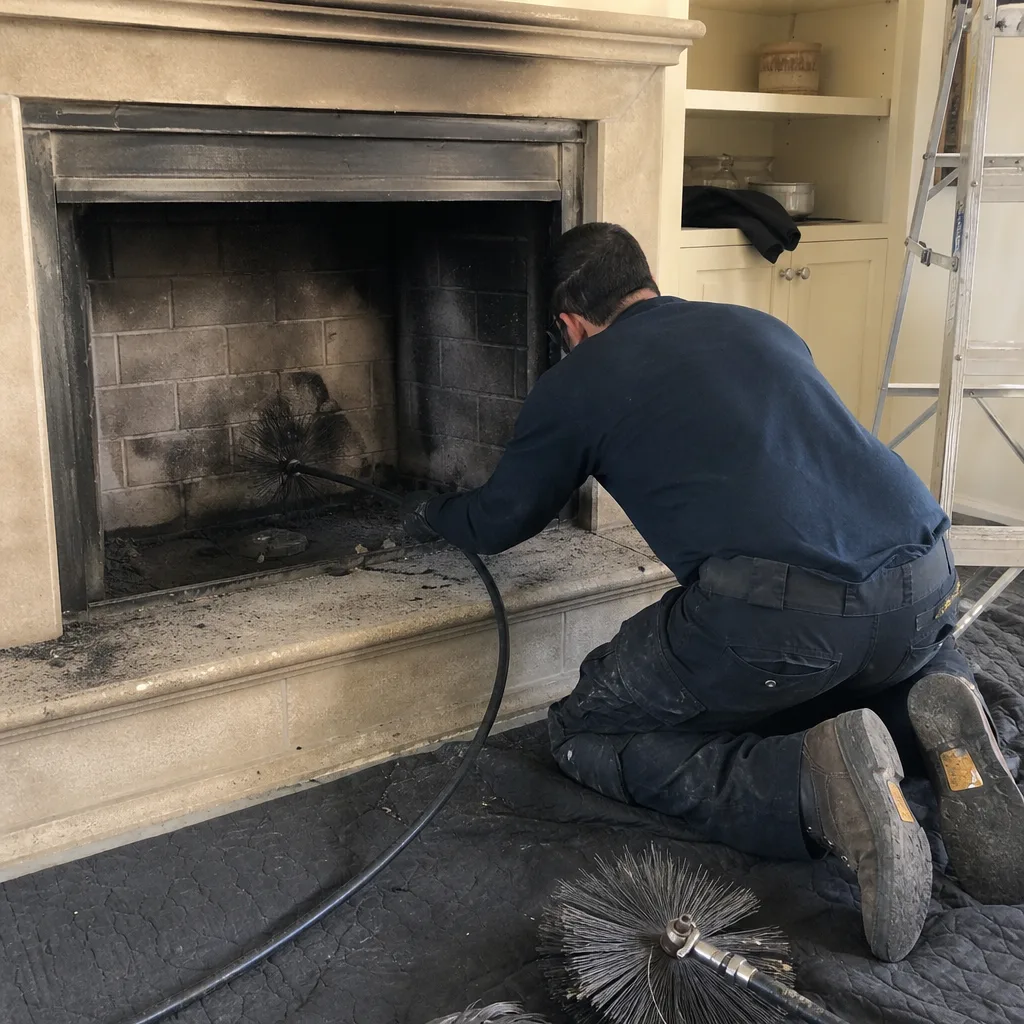 Before
 After
After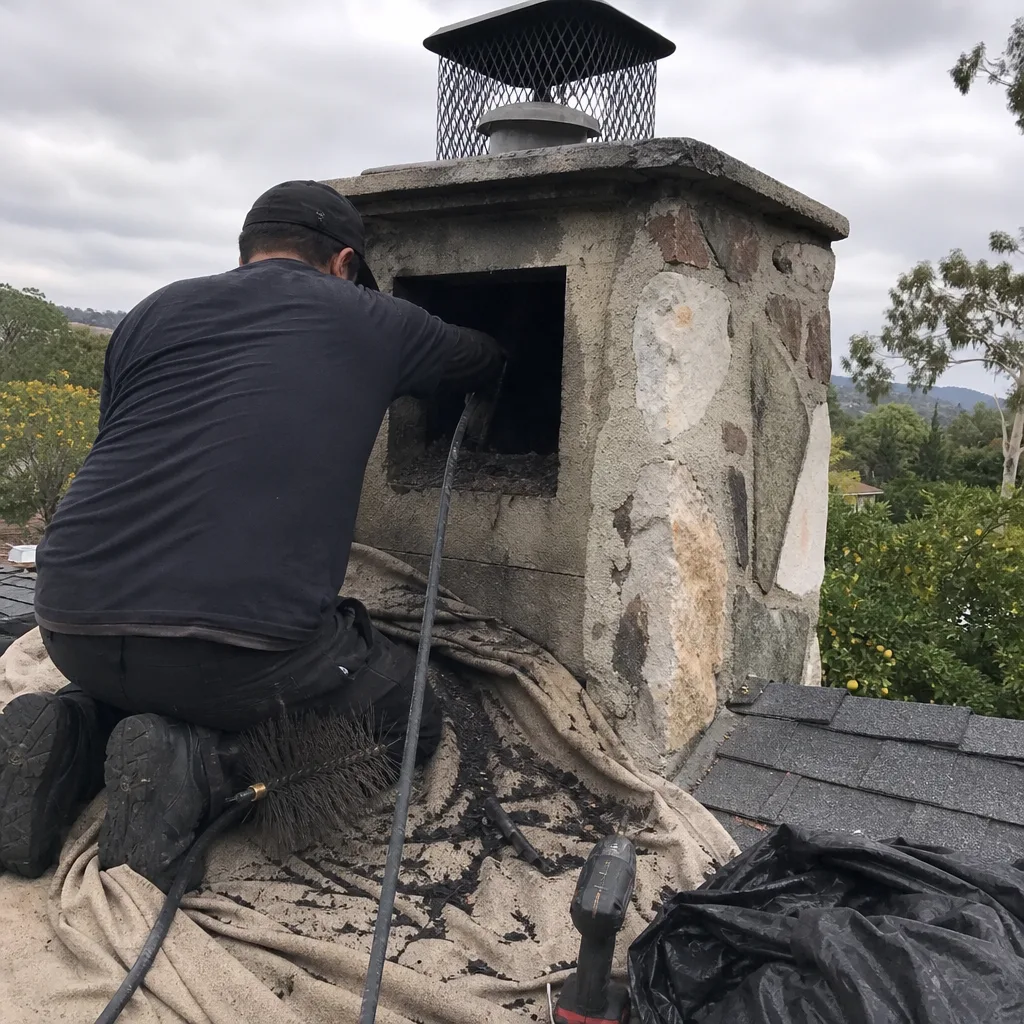 Before
 After
After